Plastic sheets
POM-C sheet – cut to size
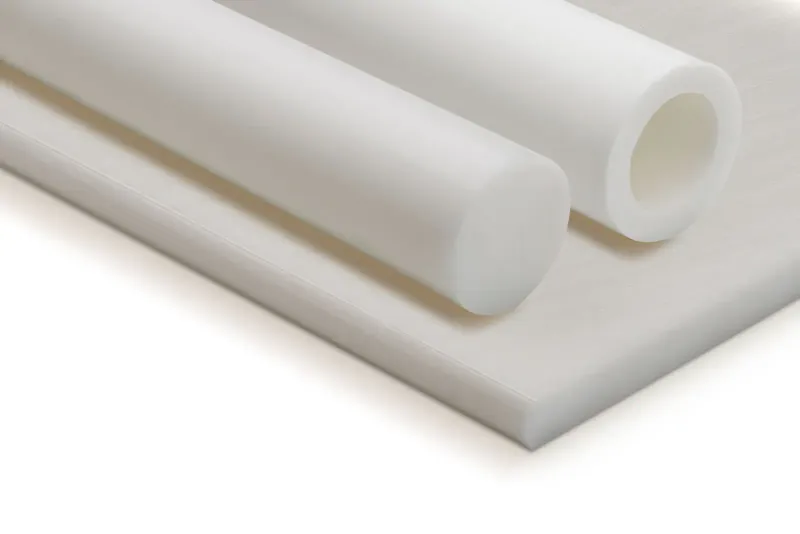
POM-C sheet cut pieces to size Buy POM-C sheets as cut pieces to size. Precision plastic sheets for mechanical engineering, food technology and technical…
Colour
Description
POM-C sheet cut pieces to size
Buy POM-C sheets as cut pieces to size. Precision plastic sheets for mechanical engineering, food technology and technical applications.
Does your company need POM cut pieces for further processing?! Then you have come to the right place. Here you get POM sheet cut pieces in a size of min 20 mm x 20 mm and max 1000 mm × 2000 mm and optionally a thickness of 3 to 100 mm. Our POM sheets prove to be flexibly usable sheets for the most diverse areas of application and requirements.
Buying POM sheets – what to look out for?
Anyone who wants to buy POM sheets should look not only at the price but above all at material quality, dimensional accuracy and processing options. POM is one of the most important engineering plastics in mechanical engineering and is often used for precise components with low friction. Typical applications are sliding guides, gears, rollers, bearing parts or mechanically loaded structural elements.
For many industrial applications, dimensionally accurate POM cut pieces are decisive. Even small deviations can affect the function of components. That is why a supplier who offers CNC cut pieces, individual formats and technical processing directly is recommended. Properties such as low water absorption, high dimensional stability and good chemical resistance also play an important role in material selection.
POM sheets are available in different thicknesses and formats and are suitable both for individual parts and for series production. POM cut pieces are regularly used especially in mechanical engineering, in conveyor technology and in the food industry.
Buy POM-C sheets
You can obtain POM-C sheets from us as cut pieces to size or as a standard format. Depending on the application, various thicknesses and dimensions are available.
POM-C sheet cut to size
POM-C sheets can be cut precisely to individual dimensions and are suitable for applications where high dimensional accuracy and tight tolerances are required. Due to the low water absorption and the high dimensional stability, the material remains reliable and dimensionally stable even under changing ambient conditions.
A POM-C cut piece to size offers advantages in the production of slide rails, guides, spacers, wear parts, machine components and technical structural parts. The material can be machined very well and is ideally suited for milling, turning and drilling work.
At technischekunststoffe24.de you get POM-C sheet cut pieces exactly to your specifications. Width, length and material thickness can be selected individually, so that the material is ready directly for further processing or installation. This reduces processing effort, material losses and storage costs.
Thanks to the good sliding properties, the high strength and the excellent wear resistance, POM-C sheets to size are among the most frequently used engineering plastics in mechanical engineering, in conveyor technology, the food industry as well as in many other industrial applications. Search terms such as POM cut piece, POM sheet cut piece, buy POM cut pieces or POM plastic cut piece are thus specifically covered.
Have POM cut pieces made individually
See some example configurations that you can obtain directly to size from us.
| Thickness (mm) | Widths (mm) | Lengths (mm) |
|---|---|---|
| 1 | 20, 50, 100, 200, 500 | 100, 500, 1000, 2000 |
| 2 | 20, 50, 100, 250, 500 | 200, 1000, 1500, 2000 |
| 3 | 20, 100, 200, 300 | 500, 1000, 2000 |
| 4–10 | 50, 100, 250, 500, 1000 | 500, 1000, 2000 |
| 12–30 | 100, 200, 500, 1000 | 500, 1000, 2000 |
| 35–100 | 100, 300, 500, 1000 | 500, 1000, 2000 |
Note: Cut pieces from 20×20mm to 1000×2000mm can be freely selected at any time directly during ordering.
Ordering POM sheets at technischekunststoffe24.de is also really easy. Choose an available colour, the sheet thickness, width and length. Set the quantity and click on "add to cart". You can now proceed to checkout and order your POM sheets with binding effect.
POM sheets (polyoxymethylene) are the ideal solution when it comes to highly precise technical components. Their excellent dimensional stability, high strength and low weight make them particularly versatile. In this article you will learn more about the advantages of POM sheets, their properties, technical data and the most common areas of application.
Read more about the material at: What is POM? POM 10PE TFPlastic machining
Rely on years of experience in plastic machining.
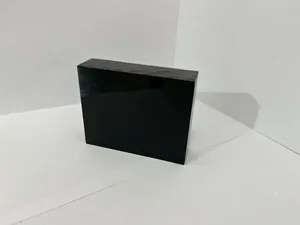
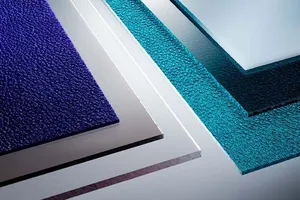
POM sheet black at technischekunststoffe24.de We also machine these plastic sheets for you: multiwall sheets, acrylic glass sheets, ABS sheets, PEEK sheets, PVC sheets, PTFE sheets, PA6 sheets and many more.
POM-C and POM-H
A distinction is made between POM-C and POM-H. C stands for copolymer and H stands for homopolymer. The two plastics differ in terms of their properties and the composition or production of the plastic. Both plastics have the same properties and can only be distinguished by their strengths.
They have good strength, high impact toughness, a low coefficient of friction, good heat resistance, wear resistance, good sliding properties, low water absorption, good machinability, hardness and high creep resistance. It also has good dimensional stability.
Technical properties in comparison of POM-C and POM-H
A differentiated consideration of POM-C (copolymer) and POM-H (homopolymer) is essential, since the two types have different strengths despite fundamental similarity.
| Property | POM-C (copolymer) | POM-H (homopolymer) |
|---|---|---|
| Density | approx. 1.41 g/cm³ | approx. 1.43 g/cm³ |
| Tensile strength | approx. 70 MPa | approx. 75 MPa |
| Impact toughness | very good, even in cold conditions | good, somewhat more brittle at low temperatures |
| Wear resistance | very good | good |
| Chemical resistance | better than POM-H | lower |
| Dimensional stability | very good | somewhat higher |
| Moisture absorption | very low | very low |
| Processing | excellently machinable | also very good |
POM-C is therefore preferred when abrasion, chemical resistance and versatile load-bearing capacity are required. POM-H offers advantages with high rigidity and dimensional stability, especially in heavily stressed mechanical applications with tight tolerances.
These properties are decisive for selecting the optimum material for your application. Both types can be machined excellently and offer a combination of strength, machinability and dimensional stability such as is required for many industrial components.
This means that the plastic POM withstands changing conditions such as temperature, air humidity and light conditions. POM-H is characterised by its higher density, better strength and also hardness. It is also more heat-resistant than POM-C.
POM-C, on the other hand, has the properties of higher abrasion resistance as well as chemical resistance. Polyoxymethylene can be used in a temperature range from -50 °C to 100 °C. For short periods you can also heat the plastic in the temperature range of 140 °C. It does not withstand this for as long, since its own melting temperature is 166 °C.
POM is not resistant to UV rays. This means that if the POM sheets are permanently exposed to UV rays, the plastic can discolour. The surface becomes dull and the plastic can become brittle due to permanent exposure and the plastic can thereby be destroyed.
The plastic POM can only be bonded to a limited extent. It must first be treated by pickling the POM cut pieces with a special agent, then bonding is possible. Or various instant adhesives that have been specially manufactured for this plastic. So-called adhesion promoters are also an option so that you can bond POM sheets.
POM-C or Delrin® – what is the difference?
Delrin® is a brand name for POM-H (polyoxymethylene homopolymer), registered by DuPont and today distributed among others by Celanese. Technically, Delrin® is a particularly pure, highly precise variant of the homopolymer POM, which was designed for very demanding applications.
By comparison, POM-C (copolymer) is the more widespread, more economical variant, which has established itself as the standard in many industrial applications. Both materials belong to the same base material group, but differ in chemical structure, mechanical performance and area of application.
Table: POM-C vs. Delrin® (POM-H)
| Property | POM-C (copolymer) | Delrin® / POM-H (homopolymer) |
|---|---|---|
| Structure | Copolymer, several monomer types | Homopolymer, uniform monomers |
| Machinability | Very good | Excellent |
| Chemical resistance | Higher | Somewhat lower |
| Stress crack resistance | Very good | Medium |
| Surface quality | Good | Very high |
| Coefficient of friction | Low | Very low |
| Dimensional stability | High | Very high |
| Temperature resistance | up to approx. 100 °C (short-term 140 °C) | up to approx. 110 °C (short-term 150 °C) |
| UV resistance | Not permanently resistant | Not permanently resistant |
| Price level | Cheaper | More expensive (branded product) |
Recommendation for practice
For most applications in mechanical engineering, in food technology or in plain bearings, POM-C is the more economical choice. It offers very good performance, can be machined well and is chemically more robust.
Delrin® is particularly recommended for very highly loaded, mechanically stressed components with tight tolerances or when surface hardness and surface quality are especially important.
Both materials are available from stock – please feel free to contact us if you have any questions.
POM-C or PA6 – which plastic is better?
POM-C and PA6 are among the most frequently used engineering plastics in mechanical engineering. Which material is better suited depends on the respective requirements of the application.
POM-C convinces through its high dimensional accuracy, low water absorption and very good sliding properties. The material is particularly suitable for precise components, guides, slide rails, gears and components with tight tolerances. Even with changing air humidity, POM-C remains dimensionally stable and reliable.
PA6, on the other hand, offers high toughness, good impact resistance and high mechanical load-bearing capacity. The material is often used for heavily stressed machine parts, bearings, rollers or structural elements. Due to its higher water absorption, however, the dimensional accuracy can change.
For applications with high requirements for precision, wear resistance and sliding properties, POM-C is often the better choice. If high loads, robustness and cost-effectiveness are the priority, PA6 can offer advantages.
In a direct comparison, POM-C scores above all for dimensional stability, friction behaviour and moisture resistance. PA6 convinces through its high strength, toughness and its attractive price-performance ratio. Both materials can be machined very well and are available as sheet cut pieces for numerous industrial applications.
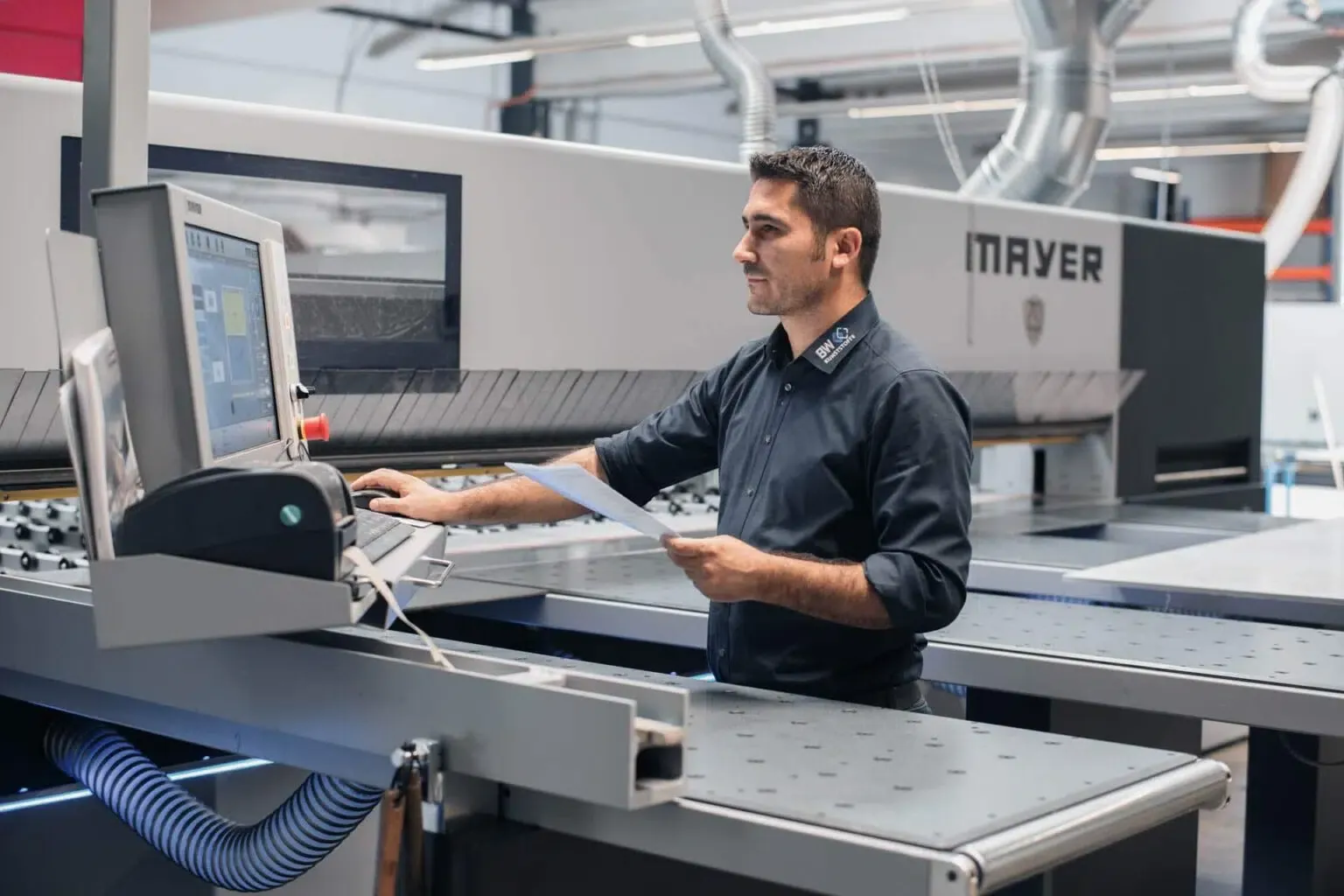
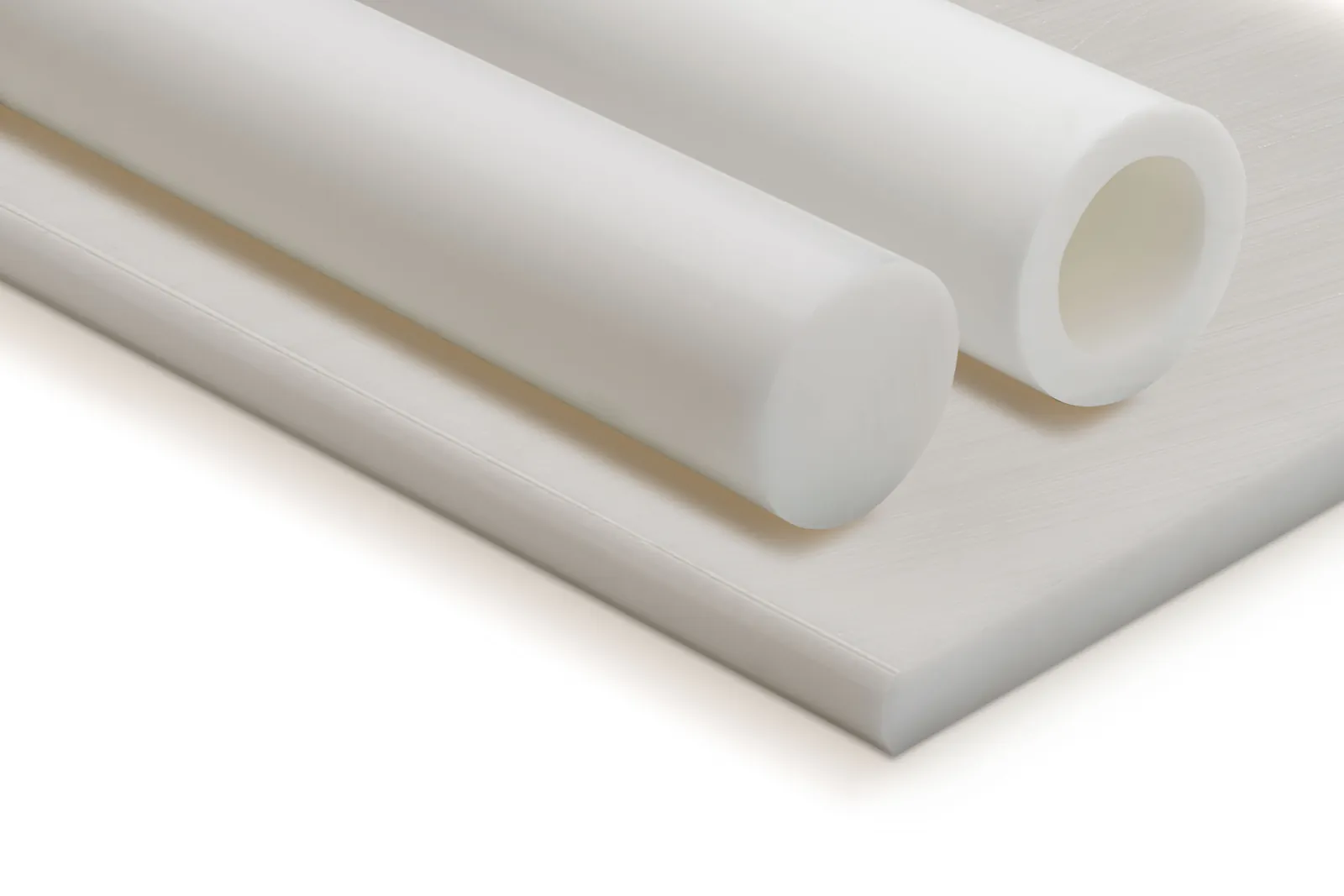
POM sheet and rod in production
MAPOM® is a registered trademark of Martan Plastik San. ic ve Dis Ltd. Sti./Istanbul/Türkiye
Properties
• high strength, rigidity and toughness
• high impact toughness, even at low temperatures
• low moisture absorption (0.8 % at saturation)
• outstanding wear resistance and sliding properties
• outstanding machinability
• good creep resistance
• high dimensional stability
• good hydrolysis resistance (up to approx. 60 °)
• outstanding spring action/recovery elasticity Typical POM applications
• sliding applications
• outstanding design solutions with snap fastenings
• sliding parts such as bearing bushes, rollers, slide rails
• electrical insulating bodies
• components with water contact
• parts with scratch-resistant high-gloss surfaces
• a large number of components for food technology, pharmaceutical technology, drinking water technology and medical technology.
POM sheets are known for their excellent machinability, their high surface quality as well as their resistance to abrasion and chemicals. The most important characteristics are summarised below:
- High mechanical strength: POM offers outstanding stability and is therefore ideal for parts that are exposed to high mechanical loads.
- Low moisture absorption: The material is extremely resistant to moisture, which makes it particularly predestined for outdoor applications.
- Good sliding properties: Due to the low coefficients of friction, POM is outstandingly suitable for moving parts and is a popular choice for bearing and gear components.
Applications
The versatility of POM sheets makes them the ideal material for a wide range of applications:
Mechanical engineering and automotive industry
POM sheets are often used in the automotive industry for precise components such as bearings, bushes or gears. Their stability and low friction make them perfect for the demanding conditions in automotive engineering.
Electronics and electrical industry
In electronics, POM is often used due to its outstanding insulating properties. Components such as switches, plugs and covers are often made of this high-quality material.
Medical and food industry
Thanks to their resistance to chemicals and their food-safe suitability, POM sheets are also used in the medical and food sector. They are outstandingly suitable for precision parts in devices that place high demands on hygiene and accuracy.
POM-C sheets are the first choice when high mechanical load-bearing capacity, dimensional accuracy and low friction matter – for example in mechanical engineering or in plain bearings. For transparent applications such as viewing panels, protective covers or roof lights, however, they offer no solution. This is where polycarbonate sheets for clear covers with technical load-bearing capacity come into play.
POM-C sheets for mechanical engineering
POM-C sheets are among the most frequently used engineering plastics in mechanical engineering. The material is characterised by high strength, outstanding sliding properties as well as very good dimensional accuracy. As a result, POM-C is suitable for numerous components that are permanently exposed to mechanical loads.
In mechanical engineering, POM-C sheets are used among other things for guides, slide rails, gears, bearing components, spacers, wear parts and structural elements. Due to the low coefficient of friction, moving components run particularly low-wear and reliably. At the same time, POM-C convinces through its high rigidity and good load-bearing capacity.
A further advantage lies in the low water absorption. Compared with many other engineering plastics, POM-C remains dimensionally stable and accurate even with moisture. This is particularly important for precise mechanical engineering components and tight tolerances.
POM-C sheets can be milled, turned, drilled and sawn very well. As a result, both simple cut pieces and complex CNC-manufactured components can be produced economically. For many applications, POM-C represents a high-performance alternative to metal components, since the material is corrosion-free, light and easy to machine.
As a dimensionally accurate cut piece, POM-C sheets offer a versatile solution for general mechanical engineering, conveyor technology, special-purpose machine construction as well as numerous industrial applications with high requirements for wear resistance and precision.
Machining, milling and drilling POM
POM can be machined mechanically very well and is outstandingly suitable for precise technical components. Due to the high dimensional stability, low friction and good chip formation, the plastic is often used for CNC-milled parts, turned parts or individual cut pieces. Typical machining steps are milling, drilling, sawing or turning.
Especially in mechanical engineering and in conveyor technology, POM sheets are often further processed into functional components. The material enables clean cut edges and precise contours even with complex geometries. At the same time, the low water absorption ensures that components remain dimensionally accurate in the long term.
POM is suitable both for one-off production and for series production. Depending on the application, individual cut pieces, drill holes or milled contours can be implemented directly according to technical specifications.
FAQ - Frequently asked questions about POM sheets
What is POM and what is it used for?
POM (polyoxymethylene) is a thermoplastic plastic with high strength and dimensional stability. It is used for precise and durable components in various industries, in particular in mechanical engineering and in the automotive sector.
How is POM machined?
POM can be machined very well. It can be sawn, drilled, milled and ground, which makes it ideal for applications where high precision is required.
Is POM chemical-resistant?
Yes, POM exhibits outstanding resistance to a large number of chemicals, including oils, alcohols and organic solvents.
Technical data
- Density: 1.41 g/cm³
- Tensile strength: 70 MPa
- Temperature resistance: -50 °C to +100 °C (short-term up to +140 °C)
- Water absorption: Very low (0.2% at 23 °C and 24 hours)
- Chemical resistance: Resistant to many organic solvents, oils and alcohols
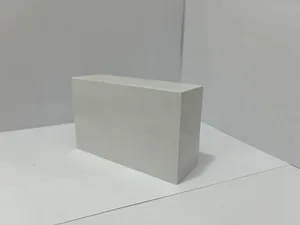
Sheets made of POM-C are available in the colours: black, natural (white), blue, yellow, green and many more.
3000×620 mm 2000×1000 mm 1000×1000 mm 1000×620 mm
POM-C (polyoxymethylene) achieves enormous hardness, strength and surface quality due to its high density of 1.39 – 1.42 g/cm³. In addition to its good sliding and wear properties and a high heat deflection resistance, POM-C is distinguished to a particular degree by its enormously high dimensional accuracy, i.e. dimensional stability.
POM is therefore successfully used as a construction material for plastic turned parts with tight tolerances, such as for example precision parts in precision engineering, and for complex turned and milled parts such as gears and pump housings. In addition, thanks to its low moisture absorption, POM is also suitable for use in chemical apparatus engineering or in the vehicle industry.
All these properties and the simple processing of this plastic, which is very easy to machine, make POM an ideal material. With regard to the properties, a distinction is made between acetal homopolymers (POM-H) and acetal copolymers (POM-C).
Due to the higher degree of crystallinity, POM-H is distinguished by a slightly higher density, hardness and strength. The POM-C material, on the other hand, offers higher impact toughness and higher abrasion resistance. The chemical resistance of the POM acetal copolymer is also higher and the melting point lower.