Rods made from engineering plastic: suitable for which applications?
Rods made from engineering plastic are versatile – whether in mechanical engineering, medical technology or the food industry. Find out more about materials, applications and processing.
Rods made from engineering plastics are a central element in modern manufacturing technology. They serve as versatile semi-finished products that can be tailored to a wide range of applications depending on the material chosen. In industries such as mechanical engineering, medical technology, the chemical and food industries, they are increasingly replacing metals, as in addition to their low weight they also offer excellent chemical, thermal and mechanical properties. Thanks to the wide variety of materials, good machinability and high dimensional accuracy, plastic rods are suitable for developing individual solutions – from prototypes through to series parts.
Thanks to their round geometry, they are easy to process further and are available in numerous diameters and in lengths of up to several metres. This makes them one of the most important starting forms for milling, turning and grinding operations in plastics technology. But what requirements do they actually meet? And where are their main areas of application? This article provides a structured overview of the properties and typical applications of rods made from engineering plastics.
What are rods made from engineering plastics?
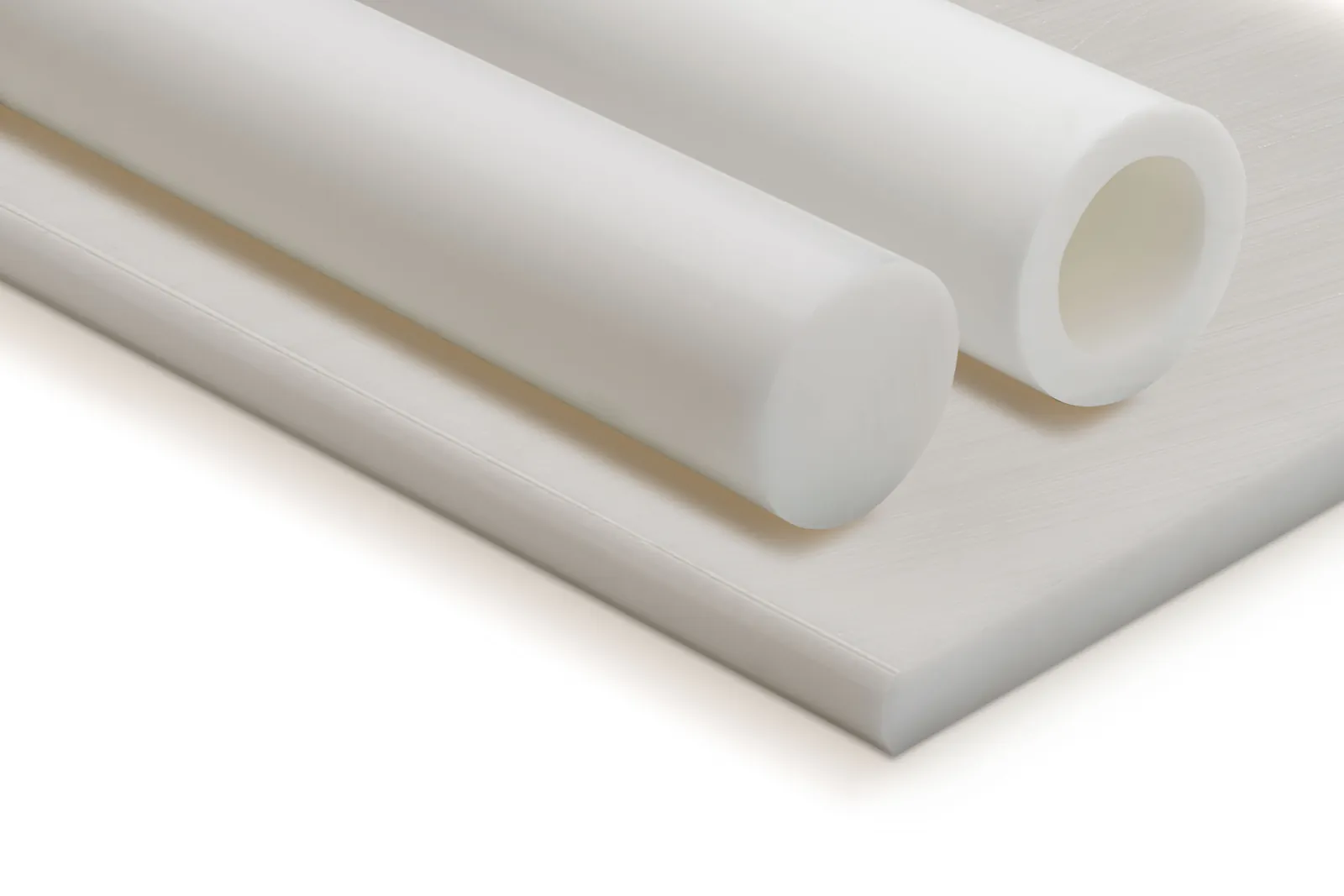
Rods are cylindrical plastic semi-finished products manufactured from various engineering thermoplastics. These include polyoxymethylene (POM), polyamide (PA6), polyethylene (PE-HD), polytetrafluoroethylene (PTFE), polyvinyl chloride (PVC), polyvinylidene fluoride (PVDF) as well as high-performance plastics such as polyetheretherketone (PEEK). These materials are either extruded or compression moulded, depending on the requirements for dimensional accuracy, surface quality and mechanical properties.
Engineering plastic rods are characterised by a combination of high strength, low friction, freedom from corrosion and excellent resistance to chemicals, moisture or temperature. Thanks to their electrical insulating capability, they are also suitable for applications in electrical engineering. Their machining is straightforward, so they are frequently used as stock material for turned parts, milled parts or special components. Depending on the material and manufacturing process, they are available in diameters from a few millimetres to over 300 mm – matched to the specific application.
Advantages of engineering plastic rods
- Low weight with high stability
- Good chemical and thermal resistance
- Easy machinability
- High dimensional stability
- Corrosion-free and electrically insulating
Typical areas of application at a glance
Mechanical engineering
In mechanical and plant engineering, plastic rods are used for the production of plain bearings, guide bushes, gears, rollers or clamping devices. POM or PA6 in particular stand out here thanks to their strength, machinability and good sliding properties.
Food industry
Rods made from food-safe plastics such as PE, POM-C or PVDF are used wherever there is direct product contact. These include transport rollers, scrapers, conveyor technology components or guide elements in the packaging line. Compliance with relevant standards such as EU 10/2011 or FDA is important here.
Medical technology
Here, ultra-pure materials such as PEEK or PTFE are used, for example for surgical instruments, components close to implants or device components. The materials must combine high sterilisation resistance, biocompatibility and excellent mechanical performance.
Chemical industry
Rods made from chemical-resistant plastics such as PTFE, PVDF or PE-HD are ideal for use in pumps, valves, seals or piping systems that come into contact with aggressive media.
Electrical and automation technology
Engineering plastics such as POM, PA or PVC stand out thanks to their electrical insulating properties. They are used for insulating bushes, cable holders, mounting supports or sensor housings.
Material selection: which plastic for which application?
| Plastic | Properties | Suitable for |
|---|---|---|
| POM | Good machinability, high strength, good sliding properties | Mechanical engineering, food technology |
| PA6 | Tough, impact-resistant, noise-damping | Bearing technology, gear technology |
| PE-HD | Chemical-resistant, food-safe | Chemical technology, water technology |
| PTFE | Extremely chemical-resistant, low coefficient of friction | Chemicals, medical technology |
| PEEK | Temperature- & radiation-resistant, biocompatible | Medical technology, aviation |
| PVC | Good electrical insulation, cost-effective | Electrical industry |
Processing and delivery forms
Rods made from engineering plastic are available in a wide range of diameters and lengths, which enables great flexibility in further processing and in use. Typical diameters range from about 5 mm to over 300 mm, and beyond that for special applications. The common standard lengths are 1,000 mm, 2,000 mm or 3,000 mm, although many manufacturers also offer individual cut lengths.
In manufacturing, a distinction is made between extruded and compression moulded rods. Extruded variants are more economical and suitable for less critical applications. Compression moulded rods, by contrast, are characterised by particularly high homogeneity and reduced internal stresses – ideal for precise machining and mechanically heavily loaded components.
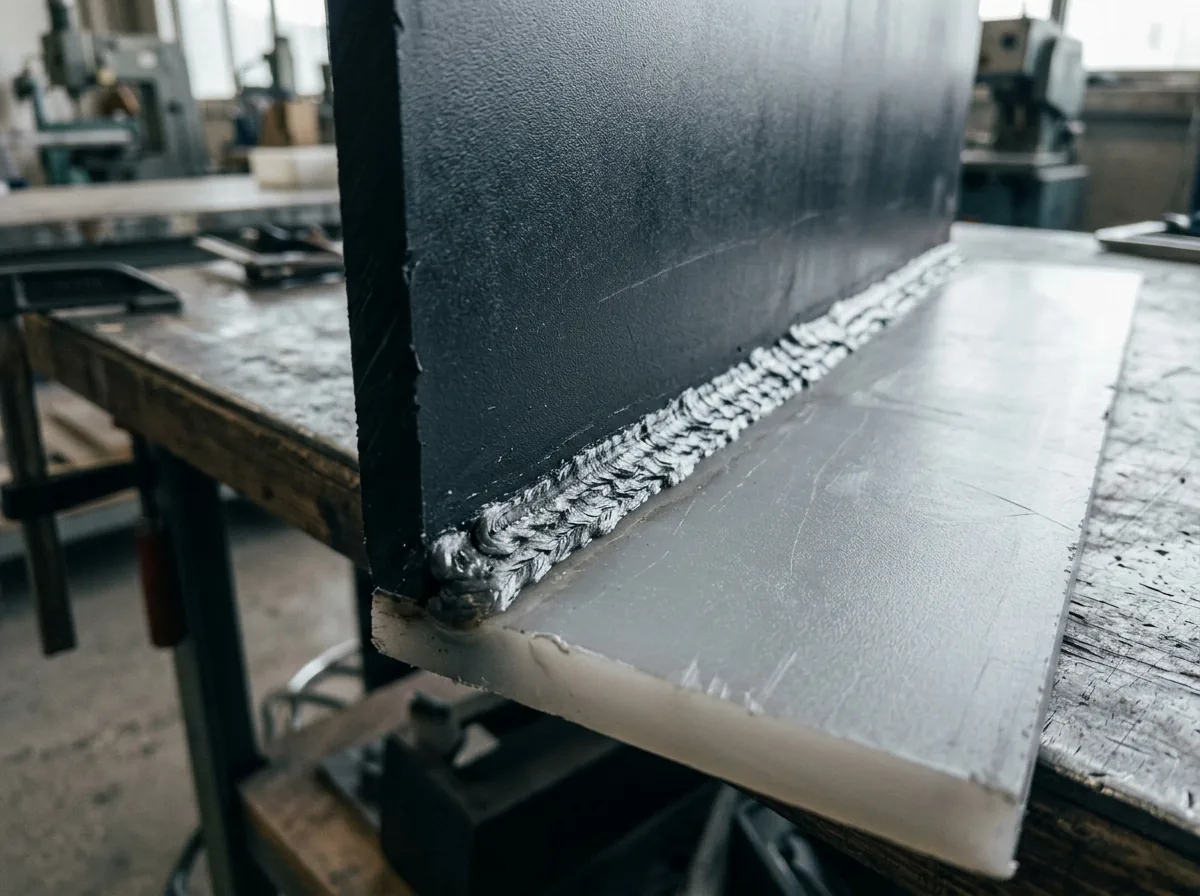
Processing is generally carried out by turning, milling, drilling or sawing. No special cutting technique is necessary – commercially available tools for plastics processing are often sufficient. Welding, bonding or thermal forming are also possible depending on the material. As a result, rods can be integrated efficiently both in prototype production and in series applications.
Many suppliers also offer material certificates, food approvals, RoHS/REACH compliance statements and further documentation, which are particularly required in regulated industries such as medical technology, chemicals or the food industry.
In summary
Rods made from engineering plastic are an indispensable semi-finished product in many industries. Their diverse properties enable use in demanding technical applications in which metals would be too heavy, too susceptible to corrosion or too expensive. The right choice of material determines the longevity and functionality of the end products.
FAQ
Which rods are food-safe? Depending on the version, POM-C, PE-HD, PVDF and PTFE are suitable for contact with food and meet the relevant approvals.
Are plastic rods easy to machine? Yes, POM and PA6 in particular are very easy to machine.
What is the difference between extruded and compression moulded rods? Extruded rods are more cost-effective and suitable for simple applications. Compression moulded variants have higher homogeneity and lower stresses and are better suited to precise machining.
Are antistatic rods also available? Yes, special antistatic or electrically conductive materials are available for use in electronics or ATEX areas.
Can rods also be used outdoors? Yes, if UV-resistant plastics such as black PE-HD or PVDF are used.