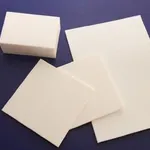
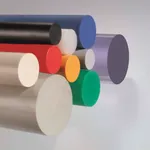
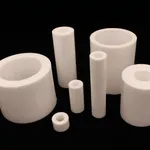
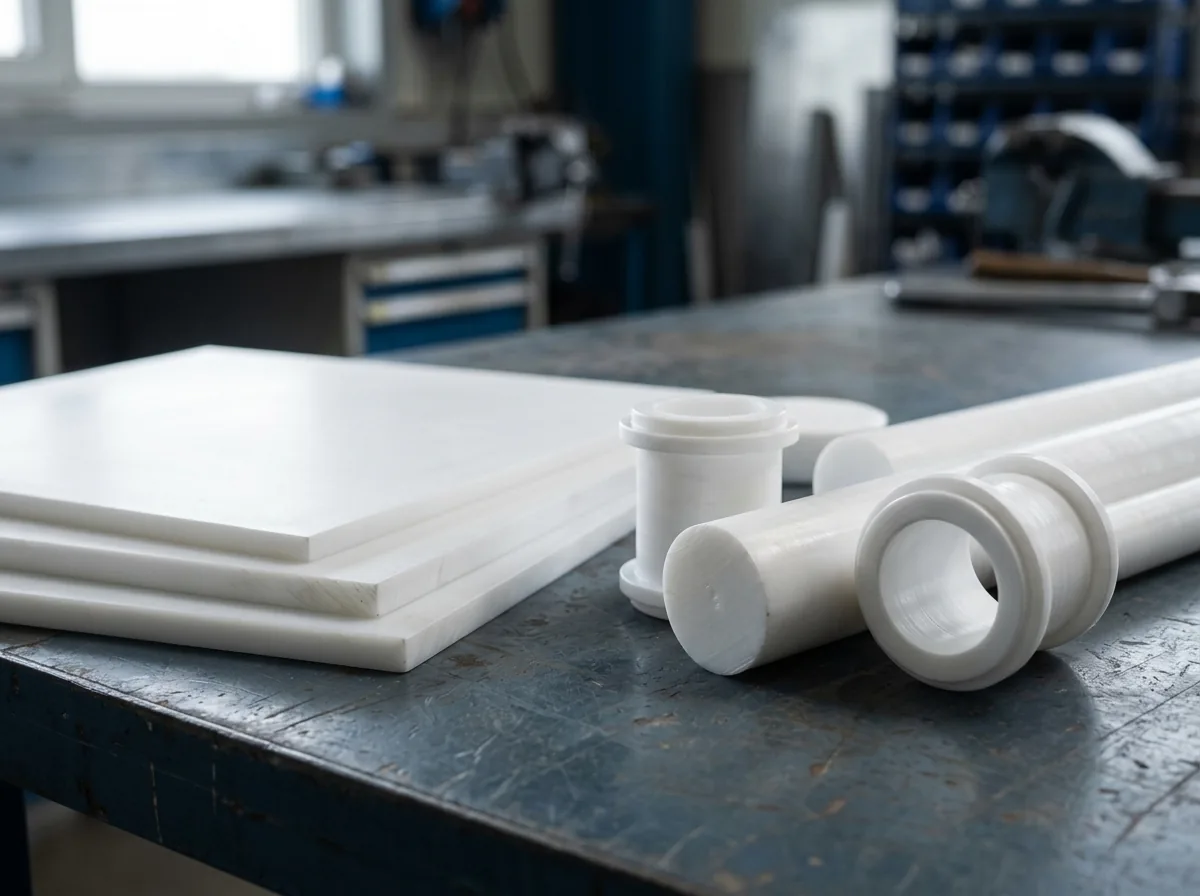
 This image was created with artificial intelligence – marked under Art. 50 of the AI Act, Regulation (EU) 2024/1689. It is a placeholder until the company's photos arrive.
PTFE semi-finished products - top quality at PTFE24
PTFE (polytetrafluoroethylene) cut pieces - exactly as you need them. We saw PTFE semi-finished products to your specification.
PTFE sheets, rods and cut pieces
Sawing, planing, grinding, bending and CO2 laser cutting
PTFE semi-finished products, also known as polytetrafluoroethylene semi-finished products, are pre-fabricated raw materials and workpieces or semi-finished goods. We guarantee precision cuts thanks to a CNC-controlled sawing system for sizing your PTFE cut pieces exactly as you need them: we saw cut pieces precisely to your specification. You order and we implement with the utmost precision. In doing so, we guarantee minimal tolerances for the required cut widths, lengths and thicknesses. We take the production and further processing areas to a new level and in this way ensure that you no longer have to deal with leftover materials in future. Trust in our expertise and many years of experience!
Semi-finished products is the term used for all raw materials or also semi-finished goods or pre-products. The plastic is brought into a desired geometric shape by means of forming and cutting, among other processes. Geometric shapes means shapes such as rods, hollow rods, sheets, panels and films. This is how different shapes are created for further processing in the most diverse industries and in the various fields of application. Semi-finished products are not only made from plastics. Semi-finished products are also made from wood and metal.
In the manufacture of the different semi-finished products from PTFE, what they are needed for is decisive, and moreover in what size and thickness. The geometric shapes can have a length of up to 43000 mm, a width of 4300 mm and a material thickness of up to 100 mm. PTFE is also available as a film with a material thickness of 0.5 mm up to 1.0 mm.
PTFE semi-finished products are brought into the desired geometric shape by the extrusion process. The process is mostly used for thermoplastics. The plastic is heated into a tough mass at high temperatures so that it can then be pressed through an opening of a predetermined shape under strong pressure. The plastic hardens as it cools. The process produces seamless semi-finished products in this way.
In the manufacture of PTFE semi-finished products, the purchase quantity does not matter. Single pieces can be produced as so-called prototypes to your requirements. The sample is created to your requirements. Sometimes a sample part is wanted, or you need a specific spare part that can no longer be bought. Then you have come to the right place. We will gladly manufacture PTFE semi-finished products for you, whether you need just one sample piece or a very high quantity. We produce the required quantity precisely and quickly. So that you can quickly continue working with the required quantity.
43000 mm length
4300 mm width
100 mm material thickness
0.5 - 1.0 mm
Do you need further mechanical machining of your semi-finished products?
Let us do it! So that your cut pieces offer a perfectly smooth surface, we use the most modern planing and grinding techniques. In doing so, we guarantee minimal tolerances for material widths and thicknesses that meet DIN standards.
Planing:
Machining of sheets (maximum sheet width of 510 mm)
Grinding:
Machining of rods with a diameter of up to 80 mm
Your benefits:
Everything from a single source: PTFE semi-finished products, PTFE milled parts, as well as PTFE turned parts
No leftover material - No minimum order quantity
Sheets made of polytetrafluoroethylene (PTFE) from PTFE24
Teflon sheets against chemically aggressive substances Polytetrafluoroethylene (PTFE) is sold under the name Teflon. In the textile industry as well as in the shoe industry, Gore-Tex is also often mentioned in connection with Teflon. This plastic belongs to the thermoplastics. PTFE sheets and rods are often used because of their chemical inertness in those areas where aggressive chemicals are used. PTFE24 offers PTFE sheets and rods in a large selection in top quality in its online shop.
Weight and composition as PDF
PTFE weights - PTFE composition
Teflon© rods EXTRUDED
Because of the unique properties of PTFE (Teflon©), the field of application of this material is extremely extensive.
The raw material for the manufacture of industrial components is the virgin PTFE rod. This material is particularly suitable for the production of drawing parts. The Teflon® rods are manufactured with the highest precision to ensure exact processing. The rods are further processed by CNC turning and sawing into seals, sealing rings, rollers and spacers.
PTFE rods are used as finished parts in the following industries:
- Mechanical engineering
- Food industry
- Pharmaceutical industry
- Medical technology
- Vehicle industry
- Chemical industry
- Electrical engineering
- Semiconductor industry
- Packaging industry
Pressed PTFE rods are available in various lengths and size ranges from a diameter of 100 mm. Special dimensions are also possible.
The properties of polytetrafluoroethylene
Polytetrafluoroethylene is a material with outstanding sliding properties, which are due to a low coefficient of friction. Added to this is its excellent resistance to chemical substances and solvents. Furthermore, it is physiologically harmless and has first-class insulating properties. PTFE ((Teflon©) has a thermal application range from -200°C to +200°C. PFTE begins to melt in a range between +320 and +345°C.
Large selection – high availability – short delivery times
| Diameter | Tolerance | Length (mm) |
|---|---|---|
| 4 | 0 ~ +0.50 | Max. 3000 |
| 5 | 0 ~ +0.50 | Max. 3000 |
| 6 | 0 ~ +0.50 | Max. 3000 |
| 7 | 0 ~ +0.50 | Max. 3000 |
| 8 | 0 ~ +0.50 | Max. 3000 |
| 9 | 0 ~ +0.50 | Max. 3000 |
| 10 | 0 ~ +1.00 | Max. 3000 |
| 12 | 0 ~ +1.00 | Max. 3000 |
| 15 | 0 ~ +1.00 | Max. 3000 |
| 16 | 0 ~ +1.00 | Max. 3000 |
| 18 | 0 ~ +1.00 | Max. 3000 |
| 20 | 0 ~ +1.30 | Max. 3000 |
| 22 | 0 ~ +1.50 | Max. 3000 |
| 25 | 0 ~ +1.50 | Max. 3000 |
| 29 | 0 ~ +1.50 | Max. 3000 |
| 30 | 0 ~ +1.50 | Max. 3000 |
| 32 | 0 ~ +1.50 | Max. 3000 |
| 35 | 0 ~ +1.50 | Max. 3000 |
| 40 | 0 ~ +1.50 | Max. 3000 |
| 45 | 0 ~ +2.50 | Max. 3000 |
| 50 | 0 ~ +4.00 | Max. 3000 |
| 55 | 0 ~ +4.00 | Max. 3000 |
| 60 | 0 ~ +4.00 | Max. 3000 |
| 65 | 0 ~ +4.00 | Max. 3000 |
| 70 | 0 ~ +4.00 | Max. 3000 |
| 75 | 0 ~ +4.00 | Max. 3000 |
| 80 | 0 ~ +4.00 | Max. 3000 |
| 85 | 0 ~ +4.00 | Max. 3000 |
| 90 | 0 ~ +4.00 | Max. 3000 |
| 95 | 0 ~ +4.00 | Max. 3000 |
| 100 | 0 ~ +5.00 | Max. 3000 |
| 110 | 0 ~ +5.00 | Max. 2000 |
| 120 | 0 ~ +5.00 | Max. 2000 |
| 130 | 0 ~ +5.00 | Max. 2000 |
| 140 | 0 ~ +5.00 | Max. 2000 |
| 150 | 0 ~ +6.00 | Max. 1000 |
| 160 | 0 ~ +6.00 | Max. 1000 |
| 170 | 0 ~ +6.00 | Max. 1000 |
| 180 | 0 ~ +6.00 | Max. 1000 |
| 190 | 0 ~ +6.00 | Max. 1000 |
| 200 | 0 ~ +6.00 | Max. 1000 |
PTFE (Teflon©) rods PRESSED
| Diameter | Tolerance | Length |
|---|---|---|
| 100 | 0 ~ +3.00 | max. 300 |
| 110 | 0 ~ +3.00 | max. 300 |
| 120 | 0 ~ +3.00 | max. 300 |
| 125 | 0 ~ +3.00 | max. 300 |
| 130 | 0 ~ +3.00 | max. 300 |
| 140 | 0 ~ +3.00 | max. 300 |
| 150 | 0 ~ +3.00 | max. 300 |
| 160 | 0 ~ +3.00 | max. 300 |
| 170 | 0 ~ +3.00 | max. 300 |
| 180 | 0 ~ +3.00 | max. 300 |
| 190 | 0 ~ +3.00 | max. 300 |
| 200 | 0 ~ +3.00 | max. 300 |
| 210 | 0 ~ +6.00 | max. 300 |
| 250 | 0 ~ +6.00 | max. 300 |
| 280 | 0 ~ +6.00 | max. 300 |
| 300 | 0 ~ +6.00 | max. 300 |
| 320 | 0 ~ +6.00 | max. 300 |
PTFE (Teflon©) filmsT
| Thicknesses | Tolerances | Widths | Tolerances | Lengths |
|---|---|---|---|---|
| 0.05 | 0~+0.02 | 600; 1000; 1200; 1500; 2000 | 0 ~ +20; 0 ~ +30; 0 ~ +40 | |
| 0.10 | 0~+0.03 | 600; 1000; 1200; 1500; 2000 | 0 ~ +20; 0 ~ +30; 0 ~ +40 | |
| 0.15 | 0~+0.03 | 600; 1000; 1200; 1500; 2000 | 0 ~ +20; 0 ~ +30; 0 ~ +40 | |
| 0.20 | 0~+0.03 | 600; 1000; 1200; 1500; 2000 | 0 ~ +20; 0 ~ +30; 0 ~ +40 | Max. 200 |
| 0.25 | 0~+0.05 | 600; 1000; 1200; 1500; 2000 | 0 ~ +20; 0 ~ +30; 0 ~ +40 | Max. 200 |
| 0.30 | 0~+0.03 | 600; 1000; 1200; 1500; 2000 | 0 ~ +20; 0 ~ +30; 0 ~ +40 | Max. 200 |
| 0.40 | 0~+0.04 | 600; 1000; 1200; 1500; 2000 | 0 ~ +20; 0 ~ +30; 0 ~ +40 | Max. 200 |
| 0.50 | 0~+0.07 | 600; 1000; 1200; 1500; 2000 | 0 ~ +20; 0 ~ +30; 0 ~ +40 | Max. 120 |
| 0.60 | 0~+0.07 | 600; 1000; 1200; 1500; 2000 | 0 ~ +20; 0 ~ +30; 0 ~ +40 | Max. 120 |
| 0.80 | 0~+0.07 | 600; 1000; 1200; 1500; 2000 | 0 ~ +20; 0 ~ +30; 0 ~ +40 | Max. 120 |
| 1.00 | 0~+0.20 | 600; 1000; 1200; 1500; 2000 | 0 ~ +20; 0 ~ +30; 0 ~ +40 | Max. 120 |
| 1.50 | 0~+0.20 | 600; 1000; 1200; 1500; 2000 | 0 ~ +20; 0 ~ +30; 0 ~ +40 | Max. 90 |
| 2.00 | 0~+0.20 | 600; 1000; 1200; 1500; 2000 | 0 ~ +20; 0 ~ +30; 0 ~ +40 | Max. 70 |
| 2.50 | 0~+0.20 | 600; 1000; 1200; 1500; 2000 | 0 ~ +20; 0 ~ +30; 0 ~ +40 | Max. 55 |
| 3.00 | 0~+0.30 | 600; 1000; 1200; 1500; 2000 | 0 ~ +20; 0 ~ +30; 0 ~ +40 | Max. 50 |
| 4.00 | 0~+0.40 | 600; 1000; 1200; 1500; 2000 | 0 ~ +20; 0 ~ +30; 0 ~ +40 | Max. 35 |
| 5.00 | 0~+0.50 | 600; 1000; 1200; 1500; 2000 | 0 ~ +20; 0 ~ +30; 0 ~ +40 | Max. 30 |
| 6.00 | 0~+0.60 | 600; 1000; 1200; 1500; 2000 | 0 ~ +20; 0 ~ +30; 0 ~ +40 | Max. 20 |
PTFE semi-finished products are indispensable for many different industries. They are used in the most diverse areas.
What actually is PTFE?
PTFE is the abbreviation of polytetrafluoroethylene. PTFE is a plastic which is very heat-resistant and its melting range does not begin until +320°C to +345°C. Many other plastics do not even reach the high melting range, as they do not possess the special properties of PTFE. Compared to other plastics, the PTFE chains are arranged hexagonally during manufacture, which explains the high melting range. The plastic is composed of fluorine and carbon. It is a white and odourless solid. It belongs to the group of thermoplastics.
Many people know PTFE under the trade name Teflon® or as Gore-Tex. The company DuPont sells coated pans and pots with the plastic polytetrafluoroethylene. Gore-Tex is found in the clothing as well as shoe industry. Here the plastic is applied as a thin protective layer, so that shoes, among other things, are protected against wind and weather, as well as being water-repellent and breathable.
Discovery of PTFE
PTFE was discovered by chance in 1938 thanks to the chemist Dr. Roy J. Plunkett. The chemist was experimenting with the plastic tetrafluoroethylene, also known as TFE for short, in order to develop and produce a refrigerant for refrigerators. In the process, the plastic turned into a white, waxy solid. The solid was further developed and so the plastic polytetrafluoroethylene was discovered.
However, PTFE was not used until some years later. At the beginning, the production costs for the plastic were too expensive. In 1943, the plastic found its use as a protective sheathing for the extremely corrosive plastic uranium hexafluoride.
In 1954, Colette Grègoire, the wife of the French chemist Marc Grègoire, came up with the idea of coating pots and pans with the plastic PTFE, after her husband had coated his fishing line with PTFE. In 1955, the patent for Teflon was granted.
smooth material
heat-resistant
resistant to various chemicals and acids
non-flammable
low coefficient of friction
high density
weather-resistant
light-resistant
Aerospace
Communication
Electronics
Chemical industry
Medical technology
Automotive and mechanical engineering
Food and packaging industry
Construction and architecture
Shaft seal ring
Sealing tape
Lining material for e.g. inner walls or inner pipes
Implants
Coated pots, pans, baking moulds and irons
Fittings
Cable insulation
Valves
Computer mice
What is referred to as semi-finished products?
A semi-finished product is a pre-fabricated raw material in a simple form which, as the word itself says, only results in a finished product in combination with other semi-finished materials. A distinction is still made here between the materials metal, wood and plastic. Semi-finished products made of plastic can be used in more industries than the materials made of metal and wood. The semi-finished products made of metal and wood are industry-specific. In contrast to semi-finished products made of plastic, plastic can be used in significantly more ways and thus expands its places of use. Plastic semi-finished products can be brought into shape and manufactured more quickly and easily, which is why they are used gladly and frequently. And because of their special properties.
What do semi-finished products look like?
The semi-finished products can be manufactured in the form of rods, hollow rods, panels, sheets or films.
What are the dimensions for the semi-finished products?
The semi-finished products can be manufactured with a length of up to 43000 mm, a width of 4300 mm and a material thickness of 100 mm. For films, a thickness range of 0.5 to 1.0 mm is possible.
How are semi-finished products machined?
You can further process the semi-finished products by bringing them into the desired shape through turning, milling, drilling, sawing, planing or grinding.
Conclusion:
Thanks to their versatility, PTFE semi-finished products can be used in many industries. This makes PTFE unique compared to the other semi-finished products made of wood or metal.