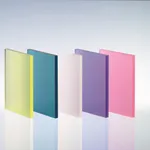
This image was created with artificial intelligence – marked under Art. 50 of the AI Act, Regulation (EU) 2024/1689. It is a placeholder until the company's photos arrive.
Polystyrene (PS)
What is polystyrene? Everything about the properties, processing, advantages and applications of this versatile plastic. Find out more now.
Polystyrene is a thermoplastic material with low density and clearly definable physical properties. It is used above all where dimensional accuracy, low weight and economical processing are the priority.
In technical environments, polystyrene is used as sheet, moulded or packaging material. The material is characterised by good dimensional stability at room temperature and clean machinability by sawing, milling or punching. Mechanical load capacity remains limited compared with high-performance engineering plastics, which predestines polystyrene above all for simple components and functional covers.
Polystyrene is particularly suitable for indoor applications where thermal and mechanical stress is low. For more demanding areas of use with elevated temperature, chemical contact or continuous load, alternative plastics from the field of engineering plastics should be considered, for example from the overview Plastics for industrial use.
Properties of polystyrene
Mechanical properties
Polystyrene has high rigidity and surface hardness combined with low impact strength. The material exhibits brittle fracture behaviour and is therefore suitable above all for components without dynamic load or impact stress.
Thermal properties
The heat deflection temperature of polystyrene lies in the lower range of thermoplastics. Continuous temperatures above about 70 °C lead to deformation. For applications with higher temperature stress, other materials from the field of engineering plastics come into consideration.
Chemical resistance
Polystyrene shows good resistance to water and aqueous salt solutions. Resistance to many organic solvents, oils and greases is limited. Use should therefore remain restricted to chemically neutral environments.
Optical properties
In its unmodified form, polystyrene is transparent and allows a clear view of components behind it. This property is frequently used for covers, viewing windows or protective housings.
Typical areas of use of polystyrene
Polystyrene is used in numerous technical and commercial applications where simple functionality, dimensional accuracy and economical production are the priority. The material is suitable above all for components with low mechanical and thermal stress.
Industry and engineering
In industrial environments, polystyrene is used among other things for covers, housing parts, spacers and simple technical components. Good dimensional stability at room temperature supports use in stationary applications without dynamic load.
Packaging and protective solutions
Polystyrene is frequently used as packaging material for sensitive products. Low density and good formability enable dimension-matched protective solutions for the transport and storage of technical components.
Advertising and display technology
In advertising technology, polystyrene is used for displays, signs and presentation elements. The smooth surface allows clean printing or further processing and ensures a uniform appearance.
Indoor applications
Due to its limited temperature and impact resistance, polystyrene is suitable above all for indoor use. For outdoor applications or under increased load, other plastics from the category Plastics are available.
Processing and machining of polystyrene
Polystyrene can be processed easily and precisely using common plastics processing methods. The material is suitable for machining, forming and thermal processes, provided the temperature-related material limits are observed.
Mechanical machining
Polystyrene can be machined by sawing, milling, drilling and punching. Sharp tools and adapted cutting speeds support clean edges and reduce stresses in the material. Uniform fixing during machining improves dimensional accuracy.
Thermal forming
Polystyrene can be thermally formed by heating. Forming takes place in a controlled manner below the decomposition temperature. This property is frequently used for vacuum forming or simple shape adjustments.
Bonding and joining
Polystyrene can be joined with suitable adhesives. Solvent-based adhesives enable strong bonds but require controlled application. For alternative joining techniques or higher loads, other materials from the field of engineering plastics come into consideration.
Surface treatment
The smooth surface of polystyrene is suitable for printing, coating or painting. Prior cleaning improves adhesion and ensures a uniform result.
Distinction of polystyrene from similar plastics
Polystyrene is frequently compared with other thermoplastic materials that cover similar fields of use. The selection of the suitable material depends on mechanical load, temperature requirement and chemical environment.
Polystyrene vs. polypropylene (PP)
Polypropylene offers higher impact strength and better chemical resistance. Polystyrene, by contrast, scores with higher rigidity and better dimensional accuracy at room temperature. Polypropylene is suitable for moving or loaded components, polystyrene for dimensionally stable covers.
Polystyrene vs. polyethylene (PE)
Polyethylene is significantly tougher and more flexible than polystyrene. Polystyrene shows higher surface hardness and better optical properties. Polystyrene is recommended for rigid components, polyethylene for applications subject to impact or bending stress.
Polystyrene vs. acrylic glass (PMMA)
Acrylic glass offers higher transparency and better weather resistance. Polystyrene represents a more economical alternative for indoor applications where optical clarity is required but lower demands are placed on UV and impact resistance.
An overview of further materials and their properties is provided by the category Plastics, which enables targeted selection according to application requirement.
Forms and variants of polystyrene
Polystyrene is available in different versions that differ in structure, processing and area of use. The selection of the suitable variant depends on mechanical requirements, optical properties and the intended purpose.
Solid polystyrene
Solid polystyrene is used as sheet or moulded part. It offers a smooth surface, high dimensional accuracy and is suitable for covers, housing parts and technical components in indoor areas.
Impact-modified polystyrene (HIPS)
Modification with rubber content gives polystyrene increased impact strength. This variant is preferably used where higher resistance to impact load is required, for example for housings or technical cladding elements.
Expanded polystyrene (EPS)
Expanded polystyrene has a foamed structure with very low density. It is used above all for packaging, insulation materials and protective moulded parts. This variant is less suitable for load-bearing or mechanically stressed components.
Extruded polystyrene (XPS)
Extruded polystyrene has a closed-cell structure and offers higher compressive strength than EPS. It is used predominantly in the construction and insulation sector.
The selection of the suitable polystyrene variant is made on the basis of the specific conditions of use. For further material comparisons, the overview Plastics offers structured orientation.
Selection criteria for polystyrene
The selection of polystyrene as a material is made on the basis of clearly defined technical and economic criteria. What is decisive is the matching of the material properties to the intended area of use.
Mechanical requirements
Polystyrene is suitable for components with low static load. For impact stress or moving components, impact-modified polystyrene is available. For higher loads, testing alternative plastics is recommended.
Temperature range
The use of polystyrene is designed for applications with moderate temperatures. For continuously elevated heat load, materials with higher heat deflection temperature are more suitable.
Chemical environment
In contact with water and neutral media, polystyrene shows stable properties. Use in environments with solvents or aggressive chemicals requires precise testing of material resistance.
Optical requirements
For applications with a visual function or high demands on surface quality, polystyrene offers clear advantages through its smooth and transparent version.
Cost-effectiveness
Polystyrene convinces through a favourable cost-benefit ratio for simple technical requirements. The material choice supports economical series solutions with consistent quality.
A structured classification in comparison with other materials is provided by the overview Plastics with further information on alternative materials.
Cut to size and delivery of polystyrene
As a semi-finished product, polystyrene is well suited for individual cutting to size. Sheets and formats can be precisely adapted to project-specific requirements and thus support efficient further processing in technical environments.
Individual cut to size
Polystyrene is cut to size accurately according to drawing or dimension specification. The uniform material structure produces clean cut edges that enable direct further use. Typical cut shapes are rectangular sheets, simple contours or functional cover elements.
Formats and tolerances
Polystyrene is supplied in standardised sheet formats and cut to size on request. The achievable tolerances are suitable for simple technical applications as well as for components without precision-range fit requirements.
Packaging and shipping
Due to its low weight, polystyrene can be packed and shipped efficiently. Flat securing protects the surface during transport and storage and preserves the optical quality of the material.
Further information on available materials, cut-to-size options and alternatives can be found in the overview Plastics.
Frequently asked questions about polystyrene
Is polystyrene suitable for outdoor use?
Polystyrene is suitable predominantly for indoor applications. UV radiation and weather influences affect the material properties, which means that use outdoors is only of limited benefit.
Is polystyrene suitable for direct food contact?
Polystyrene is used in the packaging sector. Suitability for direct food contact depends on the specific material version and existing approvals. For corresponding applications, a material-specific test is required.
How resilient is polystyrene in technical use?
Polystyrene has high rigidity combined with low impact strength. The material is suitable for dimensionally stable components without dynamic load or impact effect.
Can polystyrene be bonded?
Polystyrene can be joined with suitable adhesives. Solvent-based adhesives enable strong bonds with controlled processing and clean surface preparation.
What alternatives are there to polystyrene?
Depending on mechanical, thermal or chemical requirements, plastics such as polypropylene, polyethylene or acrylic glass come into question. A structured overview is provided by the category Plastics.