Plastics in aerospace
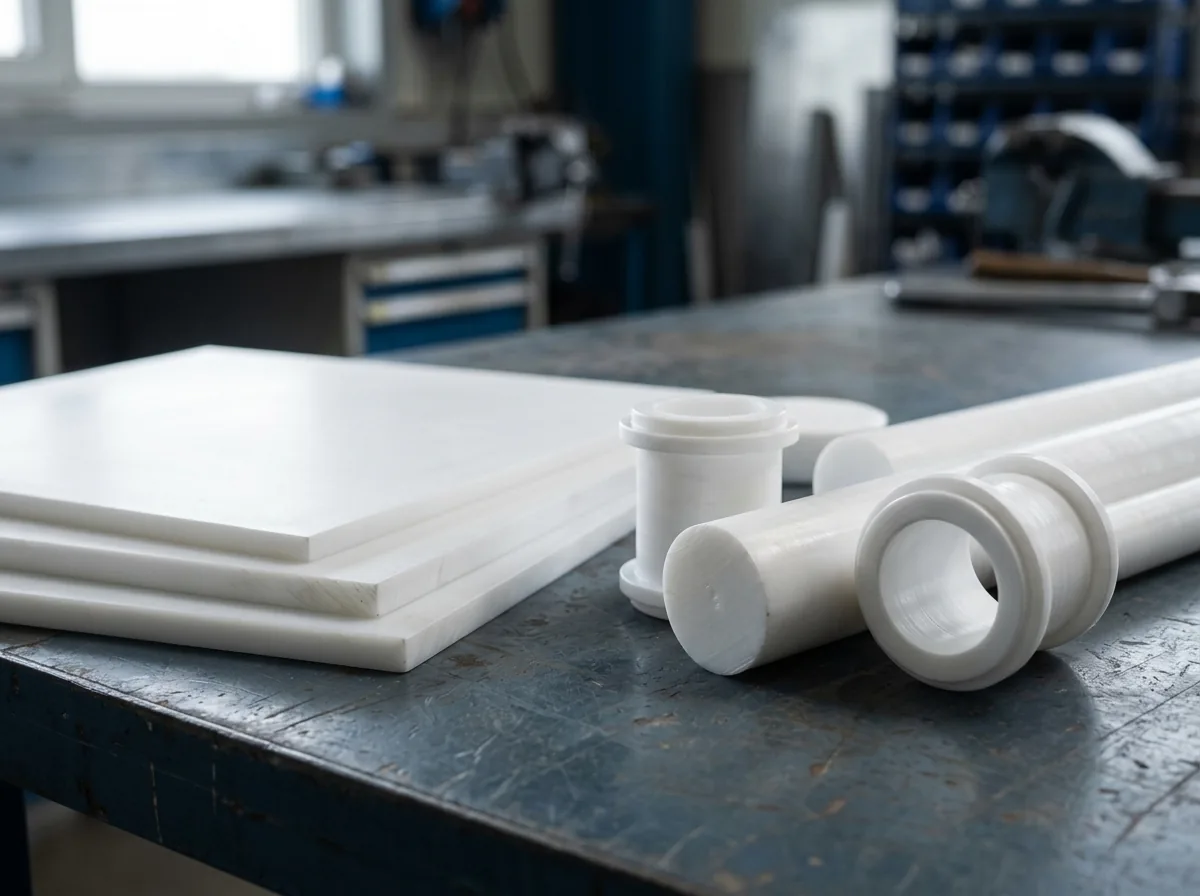
Engineering plastics are indispensable in aerospace – they save weight, offer high temperature and chemical resistance and increasingly replace metal. Find out more about applications and advantages now.
The importance of engineering plastics for aerospace
In the aerospace industry, particularly high demands are placed on the materials used. It is about weight reduction, mechanical load-bearing capacity, temperature resistance and, not least, safety. In this context, engineering plastics offer decisive advantages over metals and other materials.
Due to their low weight, plastics help to reduce fuel consumption and increase the efficiency of aircraft and spacecraft. At the same time, they must withstand the highest loads, for example at extreme temperatures, vibrations and pressure fluctuations. Modern high-performance plastics meet these requirements.
Requirements for materials in aerospace
The aerospace industry demands materials with very specific properties:
- Low weight with high strength
- Temperature and UV resistance
- Resistance to aggressive media (e.g. kerosene, hydraulic oils)
- Flame protection and low smoke development
- Shape retention and dimensional stability
- Approvals in accordance with aviation standards (e.g. FAR 25.853, EN 45545)
Plastics used in aerospace applications
In aerospace, mainly high-performance plastics are used. Particularly relevant are:
PEEK (polyetheretherketone)
PEEK is one of the most frequently used plastics in aviation. It offers an excellent combination of thermal stability, chemical resistance and mechanical strength. Components made of PEEK are found, among other things, in:
- Sealing systems
- Bearing and sliding components
- Fastening elements
PPS (polyphenylene sulphide)
PPS is characterised by high resistance to chemicals and temperatures up to approx. 240 °C. It is used, for example, for:
- Electrical connectors
- Pump housings
- Insulating components
Polyimides (e.g. PI, PEI)
These materials offer exceptional thermal and mechanical properties and are used above all where metallic materials are to be replaced. Applications include:
- Insulating parts in engines
- Bearing bushes
- Structural components in spacecraft
PTFE (polytetrafluoroethylene)
PTFE is used because of its outstanding sliding and insulating properties. In aviation, it is used, for example, for:
- Cable sheathing
- Seals
- Linings
Applications in aircraft and spacecraft construction
The fields of application of engineering plastics in aerospace are broad:
Structural components
Fibre-reinforced plastics (CFRP, GFRP) serve as load-bearing elements in wings, fuselages or claddings. They offer high rigidity at low weight.
Interior fittings
Seats, partitions, overhead luggage compartments and cladding elements are often made of flame-retardant thermoplastics. Here, safety, weight and ease of maintenance are the main priorities.
Electrical systems
Plastics insulate cables and components against electromagnetic interference and provide protection against heat and moisture. Materials such as PEI or PTFE are standard here.
Engine components
Heat-resistant high-performance plastics are used in jet engines, for example as bearings, seals or heat shields.
Space travel
In satellites and spacecraft, plastics are used that must withstand extreme temperature fluctuations in a vacuum. Polyimides and PEEK are particularly in demand here.
Advantages of plastics over metals
Engineering plastics offer numerous advantages over metallic materials. One of the central aspects is the significant weight saving: plastics can reduce the weight of individual components by up to 60 %, which in aerospace has an enormous influence on range, payload and fuel consumption. They are also corrosion-resistant and come into contact with aggressive media such as kerosene or hydraulic fluids without any problems.
The free design freedom – for example through injection moulding or additive manufacturing – allows complex geometries that would be difficult or expensive to realise with metal. Plastics also score points in terms of cost: they not only lower production costs, but also reduce operating costs through less wear and simpler maintenance. Last but not least, many plastics have outstanding electrical insulating properties and are therefore ideal for sensitive electronic systems.
Conclusion
Plastics are indispensable in modern aerospace. They are increasingly replacing metallic components and contribute significantly to efficiency, safety and innovation. With ever more powerful materials, new fields of application are opening up, both in commercial air transport and in space technology.
FAQ
Why are plastics used in aviation?
Above all because of their low weight, their chemical resistance and the possibility of manufacturing complex components cost-effectively.
Are plastics safe in aerospace?
Yes, the plastics used must meet strict standards, particularly in terms of fire behaviour (e.g. flame protection, smoke development).
Which plastics are used in spacecraft?
Above all high-performance plastics such as PEEK, PI and PTFE, which remain stable even under extreme conditions.
How do plastics affect the weight of an aircraft?
They can significantly reduce the overall weight, which leads to lower fuel consumption and greater range.
What role does recycling play for plastics in aviation?
Recycling has so far played a subordinate role, but is becoming increasingly important with regard to sustainability.