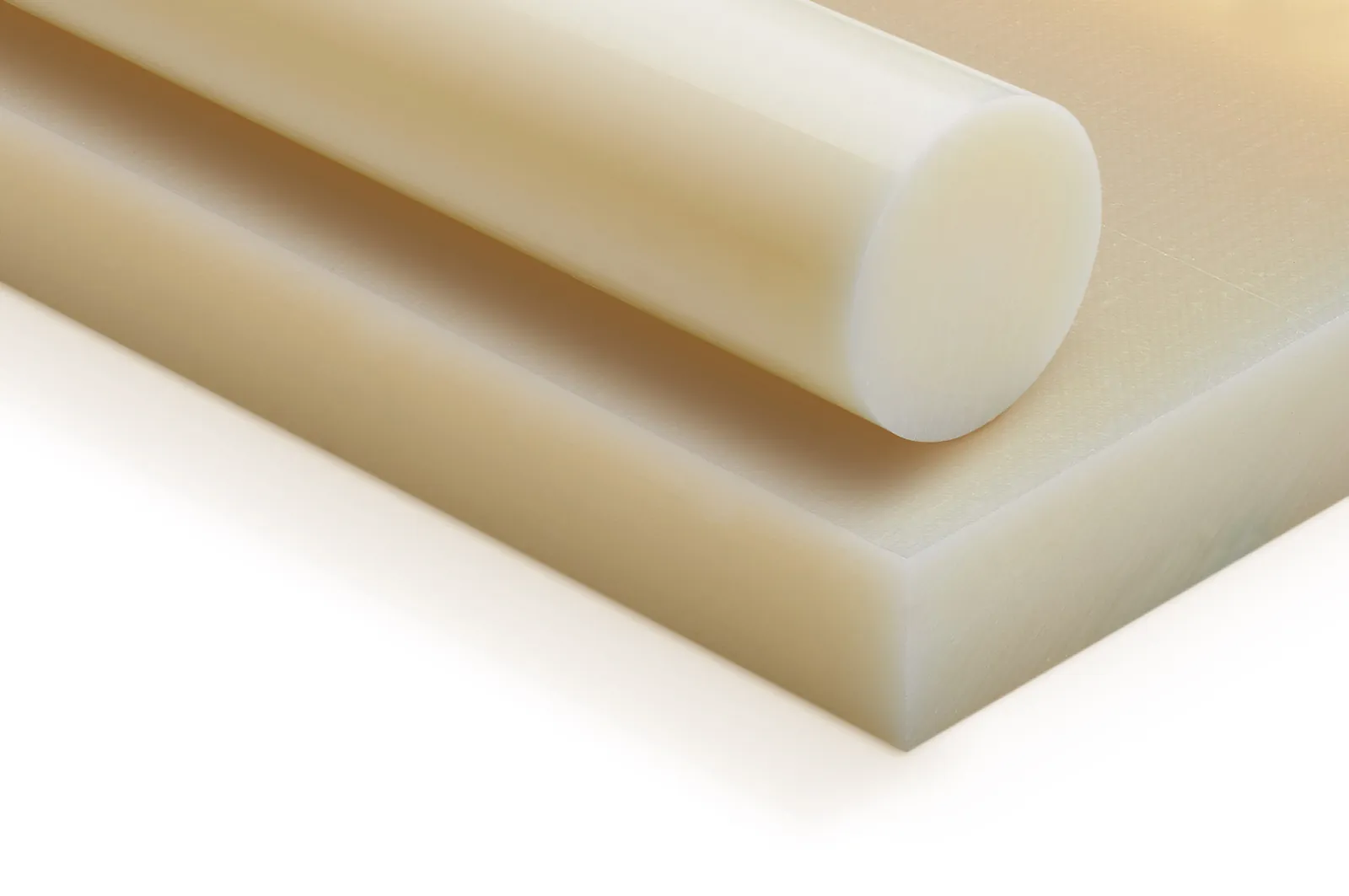
How resistant are plastics to chemicals?
How resistant are plastics to chemicals? Overview of PTFE, PEEK, PVDF, PE-HD & co. with a table on acids, alkalis, solvents & temperature.
The chemical resistance of plastics plays a central role in the selection of suitable materials for industrial and technical applications. Particularly in industries such as chemical process engineering, medical technology, apparatus engineering or food processing, it is essential that the materials used retain their functionality in the long term even under aggressive conditions.
The question is not only whether a plastic is resistant, but to which media, at what concentration, at what temperature and contact time. This article provides a comprehensive classification of this topic – supplemented by a comparison table of the most important engineering plastics.
What does chemical resistance mean for plastics?
Chemical resistance describes the ability of a plastic to remain stable in shape, colour and function despite contact with chemical substances. Typical damage patterns that can occur with insufficient resistance are:
- Cracking due to stress corrosion cracking
- Swelling or deformation
- Brittleness and brittle fractures
- Surface changes, detachment of fillers
Depending on the type of exposure, a plastic may fail after just a short time or remain stable for years. This is why chemical compatibility must always be checked during the design phase.
The most important influencing factors on chemical resistance:
- Type of chemical: acids, alkalis, organic solvents, oils, alcohols, chlorinated compounds
- Concentration: diluted media often have a less aggressive effect, highly concentrated ones can cause serious damage
- Temperature: an increase of just a few degrees can massively accelerate chemical reactions
- Duration of exposure: permanent exposure is more critical than short-term contact
- Movement: static contact (e.g. storage) has a different effect than dynamic contact (e.g. flow)
Typical chemicals and their effect on plastics
In addition to general influencing factors, the type of chemical plays a central role. Some typical media have a particularly aggressive effect on certain plastics, while other materials remain stable even under extreme conditions. For example, concentrated sulphuric acid attacks many standard plastics such as polyamide or polycarbonate, while PTFE and PVDF remain stable here. The situation is similar with organic solvents such as acetone or benzene – they often cause swelling or cracking in PC, ABS or PMMA, while PEEK and PTFE remain resistant. Alkalis such as sodium hydroxide solution are also not fundamentally harmless: while PE and PP show good resistance, PA and PET react sensitively.
These differences underline the need to consider each specific media exposure individually – general statements are rarely sufficient.
Test methods and standards for chemical resistance
Whether a plastic is suitable for a specific chemical cannot be assessed on the basis of tables alone. Recognised test methods are used for the assessment, simulating the behaviour of plastics under defined chemical exposure. An important standard is DIN EN ISO 175, in which test specimens are stored in liquids and then examined for changes in weight, appearance and mechanical properties. The US ASTM D543 is also widely used internationally.
In addition, many manufacturers produce their own media resistance lists, based on long-term tests under practical conditions. These contain differentiated statements on concentration, temperature and exposure time – and are an indispensable basis for decision-making in material selection.
Practical tip:
In safety-relevant applications such as chemical plants, medical technology or food processing,
your own compatibility tests under real conditions
should additionally be carried out.
Particularly chemical-resistant plastics
High-performance engineering plastics are characterised by their outstanding chemical and thermal stability. In many cases they replace metals or glass-based materials, particularly where weight savings or freedom from corrosion are required.
1. PTFE (polytetrafluoroethylene)
- Chemically almost inert: resistant to almost all known chemicals
- Thermally stable up to 260 °C, even under prolonged exposure
- Very low surface energy, hardly wettable
- Applications: seals, linings, laboratory glassware replacement, plain bearings
Further information and available semi-finished products can be found under PTFE sheets
2. PEEK (polyetheretherketone)
- High resistance to aggressive organic media, e.g. ketones, esters, aromatic compounds
- Combines strength, dimensional stability and chemical resistance
- Suitable for repeated sterilisation
- Applications: implant parts, pumps, valves, compressors, hot steam areas
You can see our available formats under PEEK sheets natural and PEEK rods.
3. PVDF (polyvinylidene fluoride)
- Very good resistance to inorganic acids, chlorine, oxidising agents
- Good mechanical properties, even at higher temperatures
- Easier to process than PTFE
- Use: transfer lines, tanks, membranes in water treatment, semiconductor industry
4. PE-HD and PE 1000 (high-density polyethylene)
- Good resistance to diluted acids, alkalis, alcohols
- Only suitable to a limited extent at high temperatures or with organic solvents
- Excellent sliding and abrasion values with PE 1000 (ultra-high molecular weight)
- Applications: conveyor elements, cutting boards, chemical-resistant containers
PE-HD is available, for example, as PE300 sheets black. For maximum abrasion resistance we also offer PE 1000 sheets.
5. PP (polypropylene)
- Very good resistance to many inorganic chemicals
- Relatively cost-effective and easy to weld
- Low density with usable rigidity
- Typical areas of application: apparatus engineering, fittings, wastewater technology
More on available variants can be found under Polypropylene sheets (PP).
Resistance list plastics: table of chemical resistance
The following resistance list shows the chemical resistance of important plastics to commonly used media such as acids, alkalis and solvents. The table serves as an initial guide in material selection and helps to narrow down suitable materials for chemically exposed applications more quickly. The actual resistance also depends on concentration, temperature and duration of exposure.
| Plastic | Acids | Alkalis | Acetone | Hydrochloric acid | Oils/fats |
|---|---|---|---|---|---|
| PE (polyethylene) | very good | very good | limited | very good | very good |
| PP (polypropylene) | very good | very good | limited | very good | very good |
| PVC | good | good | limited | good | good |
| PTFE | excellent | excellent | excellent | excellent | excellent |
| POM | good | limited | critical | limited | good |
| PA6 | limited | limited | critical | limited | good |
| PC | limited | critical | critical | limited | limited |
| PMMA | limited | limited | critical | limited | limited |
| PEEK | very good | very good | good | very good | very good |
Note: The information serves as a guide. For the specific design, the concentration, temperature and duration of exposure of the respective medium should be taken into account.
Requirements in different industries
Different industries have different requirements for the chemical resistance of plastics. While in general mechanical engineering a good resistance to oils, fats and cleaning agents is usually sufficient, the requirements in sensitive industries are significantly higher. In the pharmaceutical and medical technology sector, materials often have to be sterilised and must not release any substances into the medium – PEEK and PVDF are typical materials here. In the semiconductor and chemical industry, freedom from corrosion at high temperatures is decisive, which makes the use of PTFE or PFA necessary.
In the food industry, on the other hand, plastics must not only be resistant to cleaning chemicals such as alkalis and acids, but also comply with regulations such as EU Regulation 10/2011 or the FDA. Apparatus engineering, wastewater technology and electroplating operations, in turn, frequently rely on PP, PE-HD or PVDF, as a favourable ratio of price, resistance and processability is required here.
Interactions with chemical combinations
In practice, chemical media rarely occur in isolation. A medium often consists of a combination of different substances, such as cleaning agents with alcohol and acid content or process liquids with additives. These mixtures can significantly change the behaviour of a plastic.
Example: A plastic that is resistant in contact with ethanol or acetic acid in each case can nevertheless be damaged by the mixture of both media – through the formation of esters or solvent synergies. Chlorine-containing compounds in combination with elevated temperatures also lead to accelerated ageing or stress cracking in many materials.
Therefore, when designing, not only should each individual component be considered, but the interaction should be analysed in the overall context. Particularly in safety-critical applications, a practical test with the actual medium is recommended.
Influence of additives, colourants and recycled content
Not only the base material itself, but also additives and processing influences have an effect on chemical resistance. For example, colourants, fillers or UV stabilisers can change the material structure and thus reduce resistance to certain chemicals. Some pigments, for example, react sensitively to strong acids or solvents – even if the base plastic would be resistant.
Recyclates also sometimes exhibit different properties: due to reduced homogeneity or unknown prior exposure, chemical resistance can be lower compared to virgin material. For applications with high chemical exposure, the use of single-grade virgin material is therefore recommended.
Equally important: The processing process itself – for example thermal damage caused by excessively high extrusion temperatures – can negatively influence long-term resistance. Proper material selection must therefore always also take into account processing quality and material quality.
Further materials in comparison
Other plastics can also be relevant depending on the application environment. However, it is important that their chemical resilience is limited compared to high-performance polymers:
- PA (polyamide): water absorption can reduce chemical resistance, sensitive to acids
- PC (polycarbonate): low resistance to solvents, sensitive to alcohols and bases
- PVC: good chemical resistance combined with high rigidity, but only limited temperature resistance
Extended table: chemical resistance of selected plastics
| Plastic | Acids | Alkalis | Solvents | Oils / fats | Chlorine | Alcohols | Oxidising agents | Temp. resistance |
|---|---|---|---|---|---|---|---|---|
| PTFE | very good | very good | very good | very good | very good | very good | very good | up to approx. 260 °C |
| PEEK | good | very good | good | good | good | good | good | up to approx. 250 °C |
| PVDF | very good | good | satisfactory | good | very good | good | very good | up to approx. 150 °C |
| PE-HD | good | good | poor | satisfactory | sufficient | good | sufficient | up to approx. 90 °C |
| PP | very good | very good | poor | sufficient | good | good | satisfactory | up to approx. 100 °C |
| PA (polyamide) | poor | satisfactory | poor | good | poor | satisfactory | sufficient | up to approx. 120 °C |
| PC (polycarbonate) | poor | poor | poor | poor | poor | poor | poor | up to approx. 120 °C |
| PVC | good | satisfactory | sufficient | sufficient | good | satisfactory | satisfactory | up to approx. 60–80 °C |
What you should look out for when selecting
The right material selection is always based on a clear definition of the framework conditions. The following points should be taken into account in every selection decision:
1. Record the exact media characteristics: Name, concentration, temperature, pH value and dwell time – each of these variables influences the behaviour of the material.
2. Include design requirements: Is it a matter of moulded parts, hoses, sheets or rotationally symmetrical components? What is the mechanical load?
3. Plan in safety factors: Take into account ageing, UV influence, pressure load or possible chemical reactions caused by mixed media.
4. Combine data sheets and tests: Do not rely exclusively on general tables. Practical tests under original conditions are essential, particularly in safety-critical areas.
Matching plastic selection specifically to chemicals
The variety of chemicals and the numerous plastic types available make material selection complex. General statements are often not sufficient. What matters is always the consideration of the individual case: which chemicals come into contact with the material, for how long and at what temperatures? What mechanical, thermal and economic requirements exist?
PTFE is almost universally chemical-resistant, but costly and mechanically soft. PEEK combines chemical resistance with structural strength, is suitable for demanding applications, but is likewise high-priced. PVDF offers a good middle ground between performance and cost-effectiveness. PE-HD and PP are attractive options for less aggressive media or for apparatus engineering.
In addition to comparison tables, be sure to also use manufacturer-specific media resistance lists in order to make well-founded decisions. Only in this way can failures, consequential damage and cost-intensive material changes be avoided.
Frequently asked questions about the chemical resistance of plastics
Which plastic is resistant to acetone?
PTFE and PEEK show very good resistance, PVDF is suitable to a limited extent. Materials such as PC, ABS or PMMA are unsuitable.
Is PE resistant to alkalis?
Yes, both PE-HD and PE 1000 are highly resistant to alkaline solutions such as sodium hydroxide or potassium hydroxide – even at higher concentrations.
How does polyamide react to acids?
Polyamide (PA) is sensitive to strong acids and can be damaged by hydrolysis. In acidic environments, alternatives such as PP or PVDF are preferable.
PEEK or PVDF – which plastic is more resistant?
Both materials offer high chemical resistance. PEEK also scores with heat stability and mechanical strength, while PVDF is cheaper and easier to process.
Which plastics are suitable for chlorine-containing media?
PVDF and PTFE are considered particularly suitable for applications involving chlorine or hypochlorite – even at higher temperatures.
These examples show: Resistance always depends on the individual case. If required, use application-specific media lists or obtain technical advice.