High-performance plastics
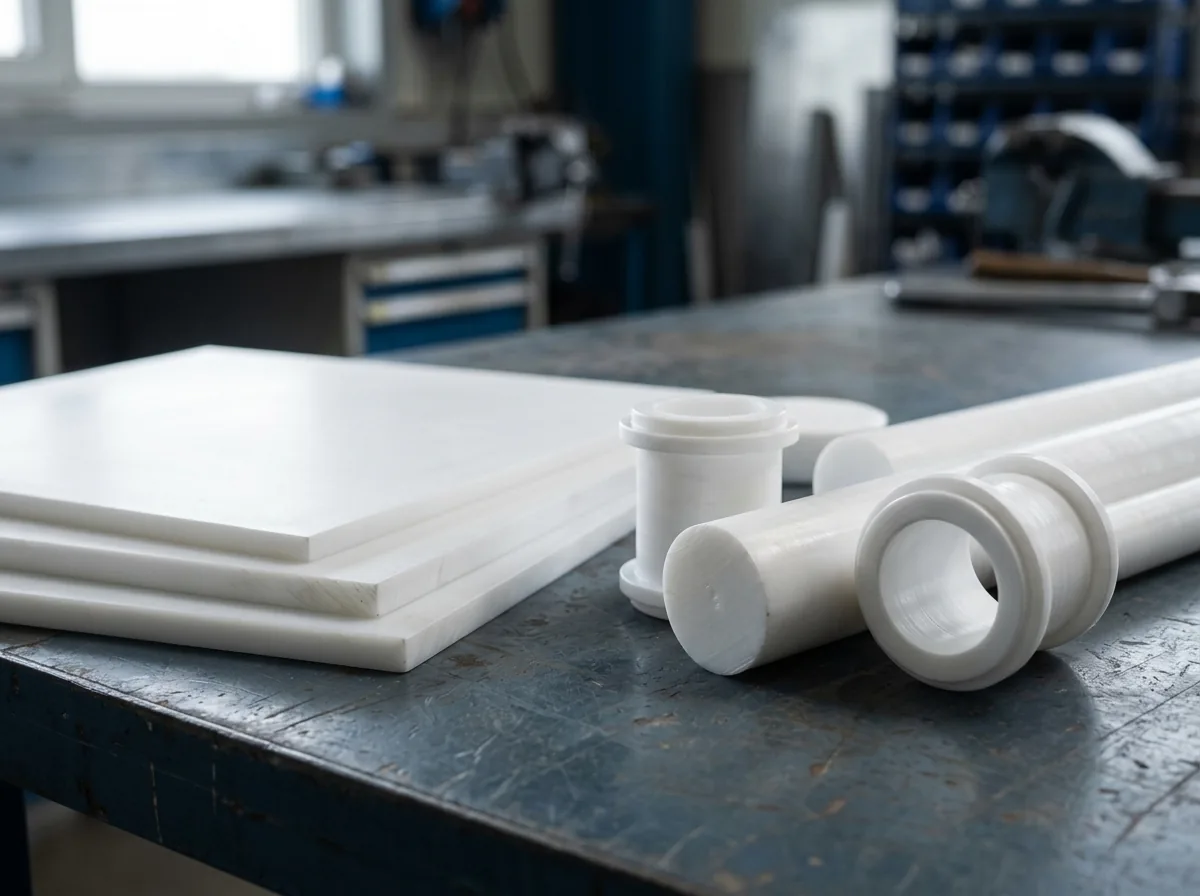
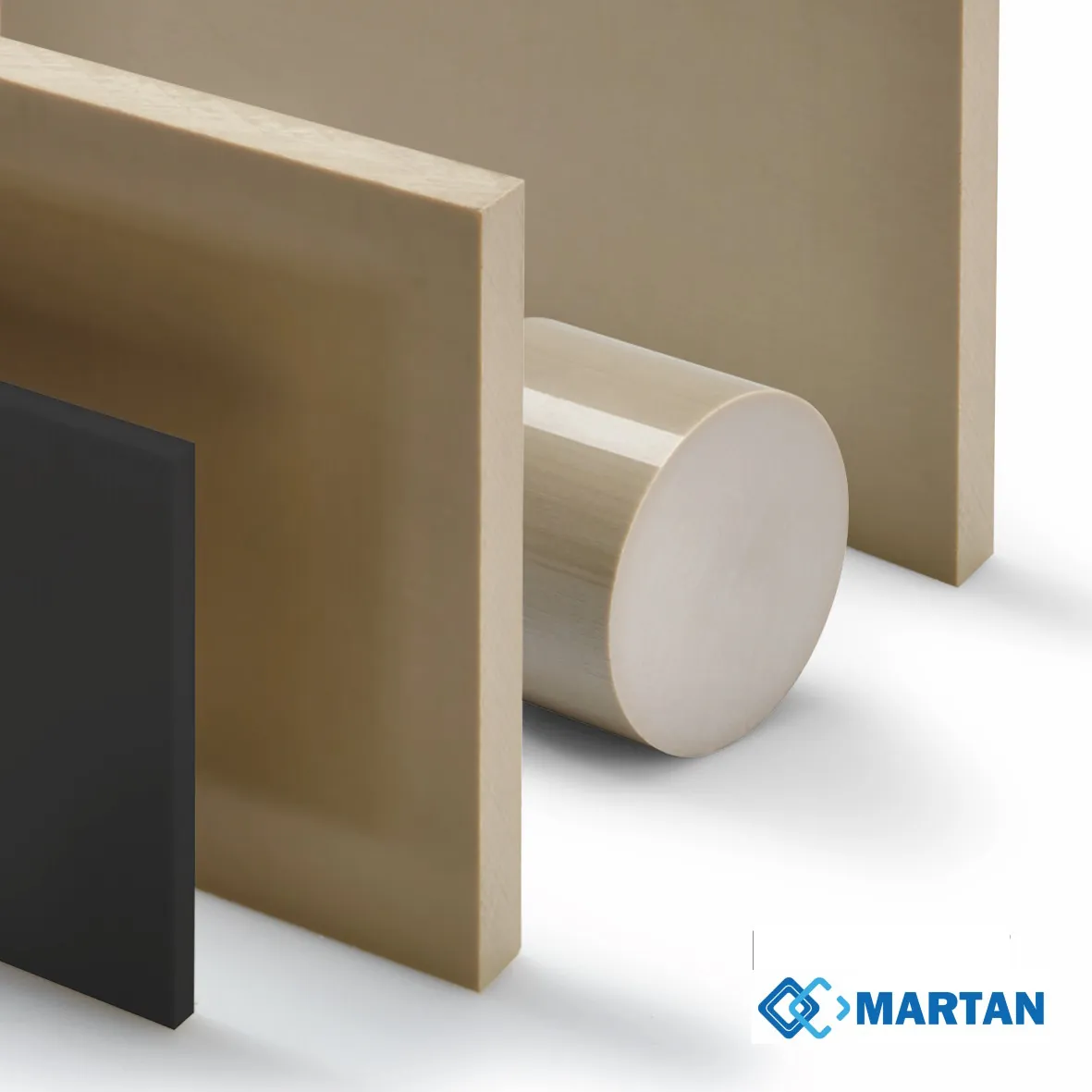
Buy high-performance engineering plastic sheets cut to size cheaply online. PEEK PPS PEI PVDF PES PI POLYIMIDE PPSU PSU PTFE-TEFLON PPO PCTFE PFA ABS
High-performance plastics
There are numerous synonyms for the term high-performance plastics, such as: high-temperature plastics, high-performance polymers, high-performance thermoplastics or also high-tech plastics. The name high-temperature plastics comes from the fact that their continuous service temperature is by definition higher than 150 °C (even if this is not their only characteristic, see above). Polymers are often spoken of instead of plastics, since both terms are identical in engineering use. The term high-performance thermoplastics emphasises that thermosets and elastomers lie outside the classification of plastics into standard, engineering and high-performance plastics and form classes of their own. A comparison of standard plastics, engineering plastics and high-performance plastics is illustrated by the following figure:
The distinction from less capable plastics is, however, variable over time: while nylon and poly(ethylene terephthalate) were still regarded as extraordinarily capable plastics when they were introduced, they are regarded as extraordinarily ordinary nowadays.
The improvement of mechanical properties and temperature resistance has always been an important goal in the research of new plastics. Since the beginning of the 1960s, the development of high-performance plastics has been driven forward by corresponding needs in aerospace as well as in nuclear technology.[3] For example, synthesis routes for PPS, PES and PSU were developed in the 1960s by Philips, ICI and Union Carbide. Market entry took place in each case in the early 1970s. Production of PEEK (ICI), PEK (ICI) and PEI (General Electrics and GE) via polycondensation was developed in the 1970s. PEK was already offered by Raychem in 1972, although produced via an electrophilic synthesis. Since electrophilic syntheses generally have the disadvantage of low selectivity towards linear polymers and use aggressive educts, the product could only hold its own on the market for a short time. For this reason, the predominant part of high-performance plastics is produced today by polycondensation processes.[2] In production processes by polycondensation, a high purity of the starting materials is important. In addition, stereochemistry plays a role in achieving the desired properties. The development of new high-performance plastics is therefore closely linked with the development and economic production of the underlying monomers.
High-performance plastics meet higher demands than standard and engineering plastics, since they exhibit better mechanical properties, higher chemical resistance and/or higher heat resistance. Especially the latter, however, also makes their processing more difficult; often special machines are necessary. Mostly high-performance plastics are specialised in a single property (e.g. heat deflection temperature). Thus they stand in contrast to engineering plastics, which cover a broad functional spectrum. Both the mechanical and the thermal properties of high-performance plastics are attributable to their molecular structure (structure-property relationship).
All high-performance plastics contain aromatic structures. Aromatic structures combine the two most important characteristics for resistance to high temperatures: on the one hand they are oxidation-resistant, since the aromatic C-H bond at 435 kJ·mol-1 is significantly more stable than aliphatic C-H bonds at 350-400 kJ·mol-1. This makes the radical formation occurring during thermal decomposition or fire more difficult. On the other hand, the chain stiffness of aromatic polymers is greater than that of aliphatic polymers, which raises the glass transition temperature Tg and lowers the crystallite melting point Tm in the case of crystalline polymers and the solubility. A polymer of purely aromatic units such as poly(p-phenylene) possesses an extraordinarily high softening point, of about 500 °C (compared with polyethylene of 110 °C) and is still usable at high temperatures. As a result, however, processability is greatly impaired. In order to find a compromise between processability and stability, all commercial high-performance plastics have (likewise temperature-resistant) functional groups X. X can be various flexible groups, for instance an ether group as a diphenyl ether group e.g. in polyether ketones or a sulphur atom as a diphenyl sulphide group e.g. in polyphenylene sulphide (PPS). The incorporation of rather rigid groups is also possible, for instance a sulphur atom as a diphenyl sulphone group in PES or a nitrogen atom as an imide group in polyetherimide (PEI) or polyamide-imide (PAI).
Thermal stability is a central property of high-performance plastics. Starting from the properties of standard plastics, certain mechanical and thermal improvements can already be achieved by the addition of reinforcing materials (e.g. glass and carbon fibres), the addition of stabilisers and by an increase in the degree of polymerisation. Service temperatures of up to 130 °C are achieved by replacing aliphatic with aromatic units. A similar temperature resistance of up to 150 °C is achieved by thermosets (which do not belong to the high-performance plastics, see above). An even higher service temperature can be achieved by completely dispensing with aliphatic elements and closely linking aromatics by functional groups such as ether, sulphone or imide groups. As a result, service temperatures of 200 °C in the case of polyethersulphone (PES) up to 260 °C for polyetherimide (PEI) or polyamide-imide (PAI) can be achieved. The increase in temperature stability through the incorporation of aromatics is connected with the fact that the temperature stability of a polymer is determined by its resistance to thermal degradation and its oxidation resistance. Thermal degradation occurs primarily through statistical chain scission; depolymerisation and elimination of low-molecular-weight compounds play only a subordinate role. The thermal-oxidative degradation of a polymer begins at lower temperatures than purely thermal degradation. Both types of degradation proceed via a radical mechanism. Aromatics offer good protection against both types of degradation, since free radicals are delocalised and thus stabilised by the Π-electron system of the aromatics and since the aromatic bond energy is particularly high (see above). Thermal stability thus increases very strongly. In practice, the highest temperature resistances (about 260 °C) are achieved with fluoropolymers, in which the hydrogen atoms of the hydrocarbons have been replaced by fluorine atoms. PTFE has the largest market share here with 65–70 %. However, fluorine-containing polymers are not suitable as construction materials because of poor mechanical properties (low strength and stiffness, strong creep under load). They are therefore not always counted among the high-performance plastics.
Just like all polymers, high-performance plastics can also be divided into amorphous and semi-crystalline (see figure above). This helps to classify some general properties. Crystalline polymers (especially those reinforced with fillers) can still be used above their glass temperature. This is because semi-crystalline polymers, in addition to the glass temperature Tg, also have a crystallite melting temperature Tm, which is usually significantly higher. For example, PEEK has a Tg of 143 °C, but can still be used up to 250 °C (continuous service temperature (CST) = 250 °C). A further advantage of semi-crystalline polymers is their high resistance to chemically aggressive substances: for instance, PEEK has a high resistance to aqueous acids, alkalis and organic solvents.
High-performance plastics are relatively quite expensive: the price can be between 15 (PA 6.6) and 125 US dollars per kilogram (PEEK). The average value is somewhat less than 15 US dollars/kg. High-performance plastics are thus about 3 to 20 times as expensive as engineering plastics. No significant price decline is to be expected here in the future either, since it is to be assumed that the investment costs for production facilities, the elaborate development as well as the high distribution costs will remain constant. Their production volume at 749,000 t/year (as of 2014) is very low, their market share is thus about 1 %. Among the high-performance polymers, fluoropolymers possess 45 % market share (main representative: TEFLON-PTFE), sulphur-containing, aromatic polymers 20 % market share (PPS), aromatic polyaryl ethers and polyketones 10 % market share (PEEK), liquid crystal polymers (LCP) with 6 %. In the electrical and electronics industry, 41 % of high-performance plastics are used and in the automotive industry 24 %, making these the largest consumers. All remaining industries (including the chemical industry) have a share of 23 %.
High-performance plastics include:
- Polyaryls, in which aromatic rings are linked via oxygen or sulphur atoms or CO or SO2 groups. These include polyphenylene sulphides, polyethersulphones and polyether ketones
- Aromatic polyesters (polyarylates) and polyamides (polyaramides) such as polymphenylene isophthalamide (PMI)
- Heterocyclic polymers such as polyimides, polybenzimidazoles and polyetherimide
Polyimides are heterocyclic polymers that are stable up to 550 °C. Polyimides are very good chemically resistant and are suitable as workpieces in mechanical engineering (valves, bearings) and in electrical engineering for coil formers and as cable insulation and substrate for printed circuit boards. Another class, the polyetherimides, has a lower softening point (approx. 360 °C) and can be processed with standard processes of the plastics industry (injection moulding). Polybenzimidazoles (PBI) can be used for protective suits, for fire-resistant fabrics in aircraft. Aromatic polyamides based on polymphenylene isophthalamide (PMI) are suitable for spinning from solution. This fibre possesses a very high tear strength and good temperature stability. Only at approx. 400 °C does the fibre deform and char. Polyaramid fibres are used as protective clothing against heat or as interior lining in aircraft.
- Liquid crystal polymers (LCP Liquid Crystalline Polymers).
- Fluoropolymers such as polytetrafluoroethylene (PTFE, called Teflon) or perfluoroalkoxyalkane (PFA) with a temperature resistance up to 260 °C. However, fluoropolymers are only counted among the high-performance plastics in some cases.
- Polyphenylenes.
PEEK, PPS, PEI, PVDF, PES, PI POLYIMID, PPSU, PSU, PTFE-TEFLON, PPO, PCTFE, PFA, ABS
Sheet thickness up to 140 mm, solid rods 600 – 1000 mm long.
Diameter 3-400 mm. Other dimensions
on request: info@martan.de
Source: www.kunststoff-deutschland.com