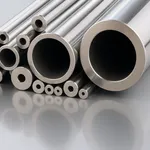
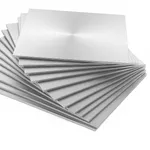
This image was created with artificial intelligence – marked under Art. 50 of the AI Act, Regulation (EU) 2024/1689. It is a placeholder until the company's photos arrive.
Hard-anodised aluminium sheets
Hard-anodised aluminium sheets: maximum surface hardness, high wear protection and improved corrosion resistance.
What does hard anodising mean for aluminium?
Hard-anodised aluminium sheets are produced by a special electrochemical process known as hard anodisation. This forms a particularly dense and hard oxide layer on the surface of the aluminium. In contrast to decorative anodising, which primarily serves optical purposes, hard anodising focuses on technical functionality: wear resistance, corrosion protection and electrical insulation.
The hard anodised layer is formed by anodic oxidation in a cool electrolyte under increased voltage. As a result, the oxide layers grow not only on the surface but also into the metal structure, which guarantees a particularly strong bond.
Process and layer thicknesses
Another key factor is the composition of the electrolyte: the sulphuric acid content and possible additives such as oxalic acid or organic additives significantly influence the hardness, colour and pore structure of the layer. Hard anodising takes place in sulphuric acid electrolytes at temperatures of around 0°C to +5°C. The low temperatures control the growth of the oxide layer, resulting in high density and therefore extreme hardness. The process parameters are crucial here: current densities between 1.0 and 3.0 A/dm², voltages up to 100 V and precise temperature control determine the layer quality.
Depending on the alloy and application, the layer thicknesses are typically between 25 and 70 µm, and up to 100 µm in special cases. Around one third of the layer forms inwards, two thirds grow outwards. This must always be taken into account for the dimensional and fit accuracy of components.
After the anodising process, the layer can optionally be sealed to close the pores and further increase corrosion resistance. This involves treating the material in hot water or steam. In industrial practice, this is usually done at temperatures between 95 and 100°C, which hydrates the aluminium oxide structure and stabilises it permanently.
Properties and advantages
Compared with untreated aluminium, hard-anodised aluminium sheets have a significantly longer service life – often many times over. Tests show that wear resistance can be up to 10 times higher, which demonstrates the practical benefit, particularly in continuous industrial applications. Hard-anodised aluminium sheets are characterised by a combination of properties that make them particularly attractive for industrial use:
- High surface hardness: up to 500 HV (Vickers) depending on the alloy
- Excellent wear protection thanks to the ceramic structure of the oxide layer
- Very good corrosion resistance, even in aggressive environments
- Electrical insulation – ideal for electronic and optical components
- Low layer thickness combined with high protective effect
- Temperature resistance up to approx. 400°C
In addition, the layers do not flake off, as they form a strong bond with the base material. This distinguishes them from coatings such as paint or powder coating.
Quality testing and measuring methods
Precise test methods are used to ensure the quality of hard anodised layers. The layer thickness is often determined by eddy current measurement or micrograph analysis. The Vickers method is used for hardness testing, providing reliable information about wear resistance. In addition, adhesion and corrosion tests (e.g. salt spray testing) are carried out to confirm the protective effect under real operating conditions.
Practical examples from industrial applications
In mechanical engineering, hard anodising is used specifically to make highly stressed components more durable. For example, guide plates and clamping systems in CNC machining centres are hard-anodised to minimise sliding friction and ensure precise movements.
Aluminium housings in measurement and control technology are also frequently hard-anodised in order to combine electrical insulation and corrosion protection. In the food industry, hard-anodised components are used because of their hygienic and chemically stable surface, for example in filling and packaging systems.
Another area of application is optical systems, where light reflections must be reduced. The matt, dark surface of hard-anodised sheets prevents stray light and increases the accuracy of sensor or laser measuring systems.
Hard-anodised surfaces in optics and electronics
In optics and electronics manufacturing, hard-anodised aluminium sheets are valued for their high dimensional stability and low reflection. The matt, grey to black layer absorbs light and prevents stray light reflections. This makes hard anodising particularly suitable for optical assemblies, laser housings or mounts in precision engineering.
In addition, the electrical insulating effect of the oxide layer ensures that no unwanted currents flow. In electronic assemblies, this can be crucial for functional reliability.
Comparison with standard anodising
| Feature | Standard anodising | Hard anodising |
|---|---|---|
| Layer thickness | 5–20 µm | 25–70 µm |
| Hardness | approx. 200 HV | up to 500 HV |
| Temperature range | up to 150°C | up to 400°C |
| Colour | light, decorative | dark grey to black |
| Main purpose | Appearance, corrosion protection | Wear protection, technical application |
Influence of the alloy
Not all aluminium alloys are equally suitable for hard anodisation. High-purity or low-alloy materials such as EN AW-5005 or EN AW-6082 produce particularly good results. Heavily alloyed aluminium types (e.g. with a high silicon content), on the other hand, can form inhomogeneous layers.
In industrial practice, alloys such as EN AW-7075 (AlZnMgCu1.5) are often chosen for highly stressed components. These alloys already offer high strength in their base state, which is optimally complemented by a hard anodised layer.
The choice of alloy should therefore be made at the design stage if hard anodising is planned.
Combination with other surface treatments
Hard anodising can be combined with other processes to extend functionality. PTFE impregnations are particularly common, further reducing friction and creating self-lubricating properties. Sliding coatings or chemical post-treatments can also be used specifically to increase corrosion protection and chemical resistance of aluminium. In practice, this produces hybrid surfaces that are specially adapted to the respective area of application.
Limits and challenges of the hard anodising process
Despite its advantages, the process also has technical limits. At edges and holes, differences in layer thickness can occur, which must be compensated for by optimised current control or masking. Colour variations between different alloys or batch sizes are also possible. In addition, process time increases with growing layer thickness, making a precise trade-off between protective effect and cost-effectiveness necessary.
Sustainability and durability
Alongside longevity, the energy consumption of the anodising process also plays a role. Modern hard anodising processes use optimised electrolytes and energy recovery systems to reduce electricity consumption. Furthermore, the aluminium base materials are fully recyclable and can be returned to the material cycle after their period of use without any loss of quality. Hard-anodised aluminium sheets are particularly sustainable thanks to their longevity and low maintenance requirements. The oxide layer contains no environmentally hazardous substances, is chemically stable and enables a long service life of components without the need for replacement.
In addition, the base material remains recyclable, which makes aluminium an ecologically valuable material overall. In combination with the long service life, this results in a particularly favourable ecological footprint.
Hard-anodised aluminium sheets as a technical premium solution
Hard-anodised aluminium sheets combine the lightness of aluminium with the hardness of a ceramic surface. They offer optimal protection against wear, corrosion and electrical influences and are therefore indispensable in many industrial sectors. Whether mechanical engineering, electronics or optics – hard-anodised surfaces ensure a long service life, stability and precision.
They also impress with their lifecycle cost-effectiveness: the higher production effort pays for itself through significantly lower wear, reduced maintenance intervals and longer service lives. For designers, the process opens up new possibilities in combining lightweight construction and load-bearing capacity.
With regard to sustainability too, hard-anodised sheets represent a long-lasting, resource-saving solution – robust, chemically resistant and fully recyclable. This makes them one of the preferred materials when high technical requirements are to be combined with environmental awareness and precision.
Opt for long-lasting surfaces: get advice on the right hard-anodised aluminium sheet or configure your cut directly online!
Frequently asked questions about hard-anodised aluminium sheets
How does hard anodising differ from normal anodising? With hard anodising, the focus is on technical properties such as hardness and wear protection. Standard anodising serves more decorative and corrosion-protection purposes.
Can hard-anodised sheets be reworked? Mechanical reworking (e.g. CNC milling or drilling) destroys the protective layer locally. Machining should therefore be completed before anodising.
Are hard-anodised aluminium sheets electrically conductive? No, the oxide layer acts as an electrical insulator.
What colour are hard-anodised surfaces? Depending on the alloy and process conditions, the colour varies between light grey and deep black.
How can hard-anodised surfaces be cleaned? With mild cleaning agents without alkaline components. Aggressive chemicals can attack the layer.