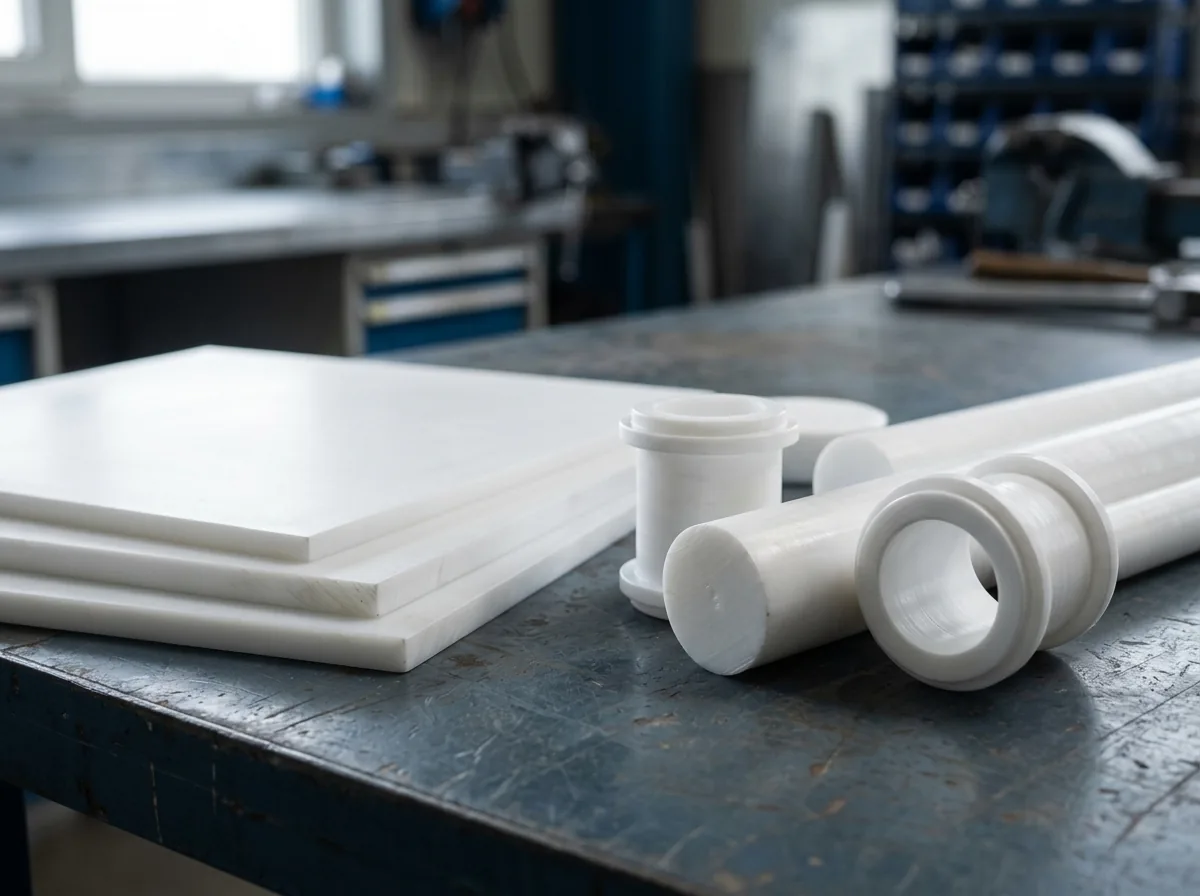
 This image was created with artificial intelligence – marked under Art. 50 of the AI Act, Regulation (EU) 2024/1689. It is a placeholder until the company's photos arrive.
Seals for static vs dynamic applications
Flat gaskets made of rubber in NBR, EPDM, FKM & silicone. Find out all about applications, selection criteria and custom-made parts.
Seals ensure functionality in technical systems by reliably separating media, keeping pressure conditions stable and protecting sensitive components from external influences. In industrial applications, they act as an invisible but critical element between design and operational safety. Errors in selection or dimensioning quickly lead to leaks, increased wear or complete system failures. Against this background, the distinction between static and dynamic applications forms the basis of every sound sealing decision. It determines which materials, geometries and installation conditions are required and how a seal behaves in real operation.
What are static and dynamic seals
Static seals are used in connections without relative movement. Two components rest permanently on each other in a fixed position, the seal is compressed once in a defined manner and then remains in this state. The sealing effect is created by the applied surface pressure, which reliably holds back the medium. Typical applications are found in flange connections, housings or bolted constructions, where stability and even pressure distribution are the main priorities.
Dynamic seals, by contrast, work in systems with movement. This movement can be linear, for example with pistons in hydraulic cylinders, or rotating, for example with shafts. In such applications, the seal must continuously compensate for friction, pressure fluctuations and mechanical loads. In addition to the actual sealing, the ability to minimise wear and maintain function over many cycles comes into focus. As a result, the requirements for material, surface finish and installation situation increase significantly.
Quick decision: if → then
If movement is present, choose a dynamic seal with a low coefficient of friction and high wear resistance.
If components are permanently firmly connected, choose a static seal with sufficient surface pressure.
If rotating shafts are to be sealed, use shaft seals or PTFE solutions.
If linear movement is present, use piston or rod seals with suitable guidance.
If high temperatures or aggressive media occur, prioritise FKM or PTFE.
If low maintenance and long service lives are required, optimise surfaces, lubrication and groove geometry.
Key differences in use
| Criterion | Static seal | Dynamic seal |
|---|---|---|
| Movement | none | linear or rotating |
| Load | pressure, temperature | additionally friction and wear |
| Service life | usually high | depends on movement and lubrication |
| Design | simple | more complex construction required |
| Coefficient of friction | irrelevant | critical for function and wear |
| Maintenance | rarely required | regular inspection advisable |
| Costs | low | higher due to material and dimensioning |
The decisive difference lies in the movement. As soon as relative movement occurs, the requirements for material, geometry and installation space increase significantly.
Requirements for material and design
Static applications allow a broad choice of material. Relevant parameters are media resistance, compression and temperature behaviour. Typical application ranges are up to around 200 bar and -30 °C to +120 °C, depending on the material.
Typical materials:
- NBR for oils and standard applications
- EPDM for water and weathering
- FKM for high temperatures up to around 200 °C and aggressive media
Dynamic applications require additional characteristics. In addition to pressure and temperature, friction and speed have an effect. Important technical variables are sliding speed, surface pressure and PV value.
Typical guide values:
- linear speed 0.1 to 1 m/s
- rotating systems significantly above this
- PV values depending on the material and lubrication
Typical requirements:
- high abrasion resistance
- low friction
- stable shape under movement
- defined lubrication conditions
Typical materials:
- PTFE for low friction and high sliding capability
- FKM for temperature and chemicals
- special elastomer compounds for wear resistance
Comparison of typical seal types
| Application | Seal type | Area of use |
|---|---|---|
| static | flat gasket | flanges, housings |
| static | O ring | universally applicable |
| dynamic | shaft seal | rotating shafts |
| dynamic | piston seal | hydraulic systems |
| dynamic | wiper | protection against dirt |
O ring static vs dynamic
In static use, the O ring acts via surface pressure and seals reliably without relative movement.
In dynamic use, additional requirements arise for groove geometry, lubrication and material. Friction and wear determine the service life here.
Typical differences:
- static: simple groove, long service life
- dynamic: adapted groove, lubrication required, higher wear
| Application | Seal type | Area of use |
|---|---|---|
| static | flat gasket | flanges, housings |
| static | O-ring | universally applicable |
| dynamic | shaft seal | rotating shafts |
| dynamic | piston seal | hydraulic systems |
| dynamic | wiper | protection against dirt |
An O ring can be used both statically and dynamically. In dynamic applications, the requirements for installation space, lubrication and material increase significantly.
Practical examples from industry
In hydraulic cylinders, dynamic piston seals are used which permanently compensate for movement, pressure of over 100 bar and changing temperatures. Here, the combination of material, lubrication and guidance determines the service life.
In pump systems, shaft seals are used which seal rotating movements. Friction and temperature development directly influence the service life.
In flange connections in plant engineering, static flat gaskets are sufficient. The focus is on even surface pressure and media resistance.
Economic consideration
Static seals cause low costs and achieve long service lives when correctly dimensioned.
Dynamic seals influence maintenance intervals, downtime costs and spare parts requirements significantly more. Precise dimensioning reduces failures and lowers total costs over the operating life.
In hydraulic cylinders, dynamic piston seals are used which permanently compensate for movement, pressure of over 100 bar and changing temperatures. Here, the combination of material and lubrication determines the service life.
In pump systems, shaft seals are frequently used which seal rotating movements. Friction and temperature development play a central role here.
In classic flange connections in plant engineering, static flat gaskets are sufficient, since no movement occurs and the focus is on even surface pressure.
Selection aid for practice
The selection of a suitable seal follows a clear technical logic derived from the type of application. In stationary connections, the focus is on sufficient sealing pressure and resistance to the medium. The design remains manageable as long as pressure and temperature lie within defined limits.
With movement, the focus shifts. Friction, wear and thermal load determine function and service life. Pressure level, type of movement, speed, temperature range and chemical influences interact. Installation space, surface quality and lubrication complement these factors and ensure stable function in operation.
Installation and design notes
The function of a seal depends heavily on the correct dimensioning of the installation space. Groove geometry, installation clearance and surface quality are decisive.
For dynamic applications, typical guide values apply:
- surface roughness of the mating surface in the range Ra 0.2 to 0.8
- clean lubrication to reduce friction
- precise guidance to prevent tilting
Even small deviations lead to increased wear or premature failure.
Decision logic
Classification is carried out by considering the movement in the system. Movement between components leads to a dynamic application with a focus on friction behaviour, wear resistance and temperature stability. A fixed connection leads to a static application with a focus on sealing pressure and media resistance.
The dimensioning is then carried out on this basis. Material, design, tolerances and installation space are adapted to real loads. A clean coordination of these factors ensures stable function and reduces failure risks.
Classification is carried out by fundamentally considering the movement in the system. If a component moves relative to the seal, a dynamic application arises with correspondingly high requirements for friction behaviour, wear resistance and temperature stability. If, by contrast, the connection remains permanently in a fixed position, it is a static application in which sealing pressure and media resistance are the main priorities.
On this basis, the further dimensioning can be refined. Material, design and installation space are specifically adapted to the actual loads, so that the seal fulfils its function reliably in the long term.
Frequently asked questions
What is the most important difference between static and dynamic seals?
The essential difference lies in the movement. Static seals work between firmly connected components without relative movement. Dynamic seals seal systems with linear or rotating movement and must additionally master friction, wear and thermal load.
Can an O ring be used both statically and dynamically?
Yes, an O ring is suitable for both types of use. In the static area, use is comparatively straightforward. In the dynamic area, the requirements for material, groove geometry, lubrication and surface quality increase significantly.
Which seals are suitable for rotating shafts?
For rotating shafts, shaft seals or PTFE-based sealing systems are usually used. The choice depends on speed, temperature, medium and lubrication conditions.
Which materials are frequently used for static seals?
Typical materials are NBR for oil-based standard applications, EPDM for water and weathering, and FKM for high temperatures and chemically demanding media.
Which requirements apply to dynamic seals?
Dynamic seals require low friction, high abrasion resistance, stable shape under movement and suitable lubrication conditions. In addition, speed, pressure, temperature and surface roughness play a major role.
When is a static seal sufficient?
A static seal is sufficient when two components are permanently connected in a fixed position and no relative movement occurs. Typical examples are flanges, housings or cover connections.
Why do dynamic seals fail more often than static ones?
Dynamic seals are under higher load. Movement generates friction, heat and wear. Errors in material selection, lubrication, guidance or surface quality therefore have an effect much more quickly.
Which typical errors lead to problems with seals?
Common causes are unsuitable materials, missing lubrication, incorrect groove geometries, insufficiently considered wear and unsuitable surfaces of the mating surfaces.
What role does surface roughness play in dynamic applications?
Surface roughness directly influences friction, lubricating film and wear. Surfaces that are too rough or unsuitable shorten the service life of the seal and increase the risk of failure.
How is the suitable seal selected for an application?
The selection is made via an overall technical assessment of the application. Movement, pressure, temperature, medium, speed, installation space, tolerances and lubrication must be considered together so that the seal functions reliably in operation in the long term.
Our rubber sheets
For industry and trade, we offer a wide variety of rubber sheets.
SBR rubber sheet
Our high-quality SBR rubber sheet (styrene-butadiene rubber) is the solution for numerous industrial and commercial applications. This rubber sheet is manufactured from first-class styrene-butadiene rubber and is characterised by its outstanding physical properties.
EPDM rubber sheet
Discover the versatility and reliability of our EPDM rubber sheet, which is manufactured from ethylene-propylene-diene monomer (EPDM). This high-quality elastomer solution has been specially developed to meet the most demanding industrial and commercial applications.
NBR rubber sheet
The NBR rubber sheet is a high-quality industrial product that has been specially developed for applications where excellent resistance to oils, greases and various chemicals is required.
Viton rubber sheet
The Viton rubber sheet is a high-quality technical product that is used for a wide range of industrial applications. Manufactured from fluoro rubber (FKM), it offers outstanding properties that make it the ideal choice for extreme conditions.
FKM rubber sheet
The FKM rubber sheet is a high-quality technical product that is ideal for use in demanding industrial applications. Made from fluoro rubber (FKM), it is distinguished by a wide range of outstanding properties that make it the optimum choice for extreme operating conditions.
Silicone rubber sheet
The silicone rubber sheet is a first-class technical product that has been specially developed for applications that place high demands on temperature resistance and flexibility.
PUR rubber sheet
The PUR rubber sheet, manufactured from high-quality polyurethane, is a technically advanced product that has been developed for applications that place the highest demands on abrasion resistance and mechanical load capacity.
Neoprene rubber sheet
The neoprene rubber sheet, manufactured from high-quality chloroprene rubber (CR), is a versatile technical product that is ideal for a wide range of industrial and commercial applications.