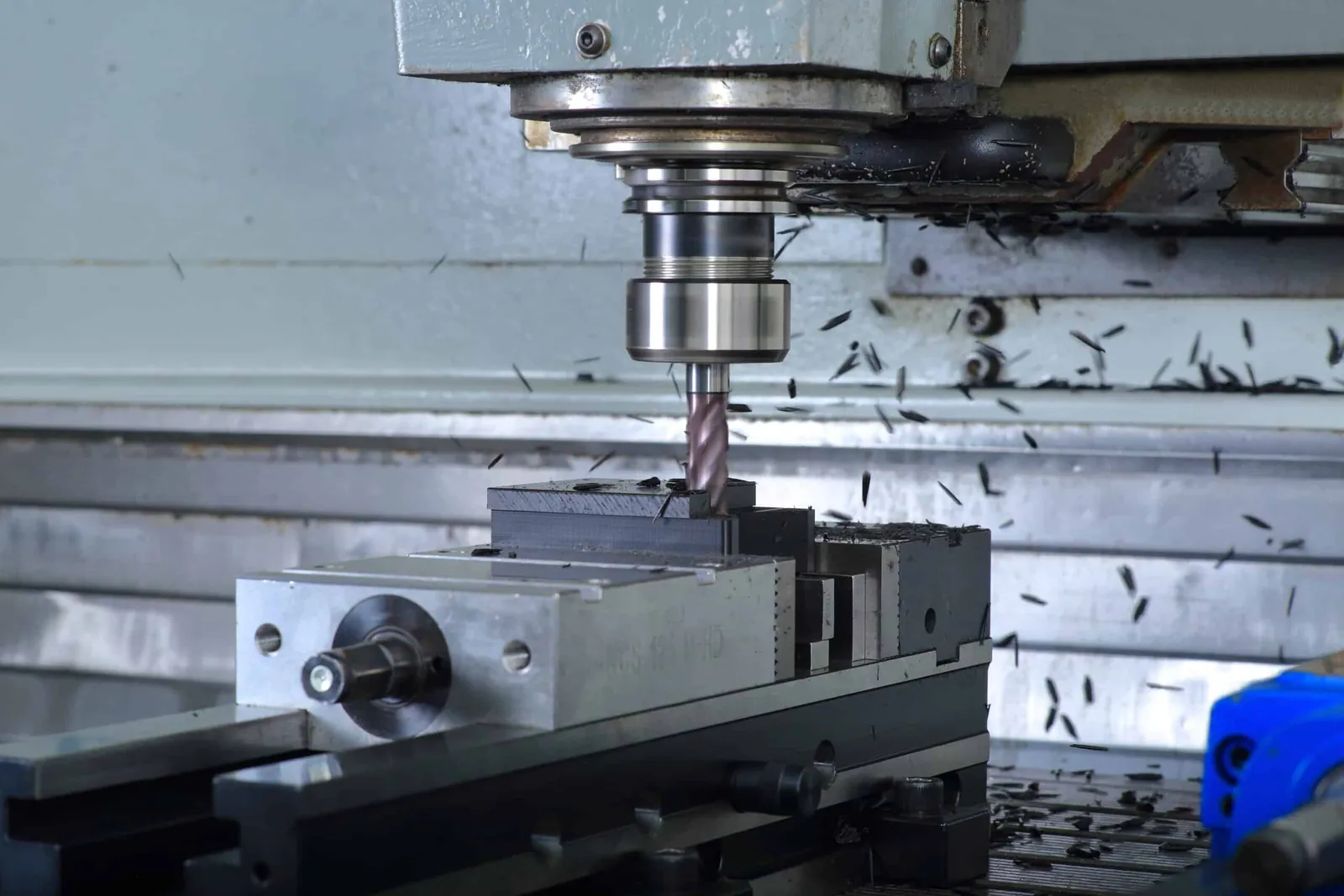
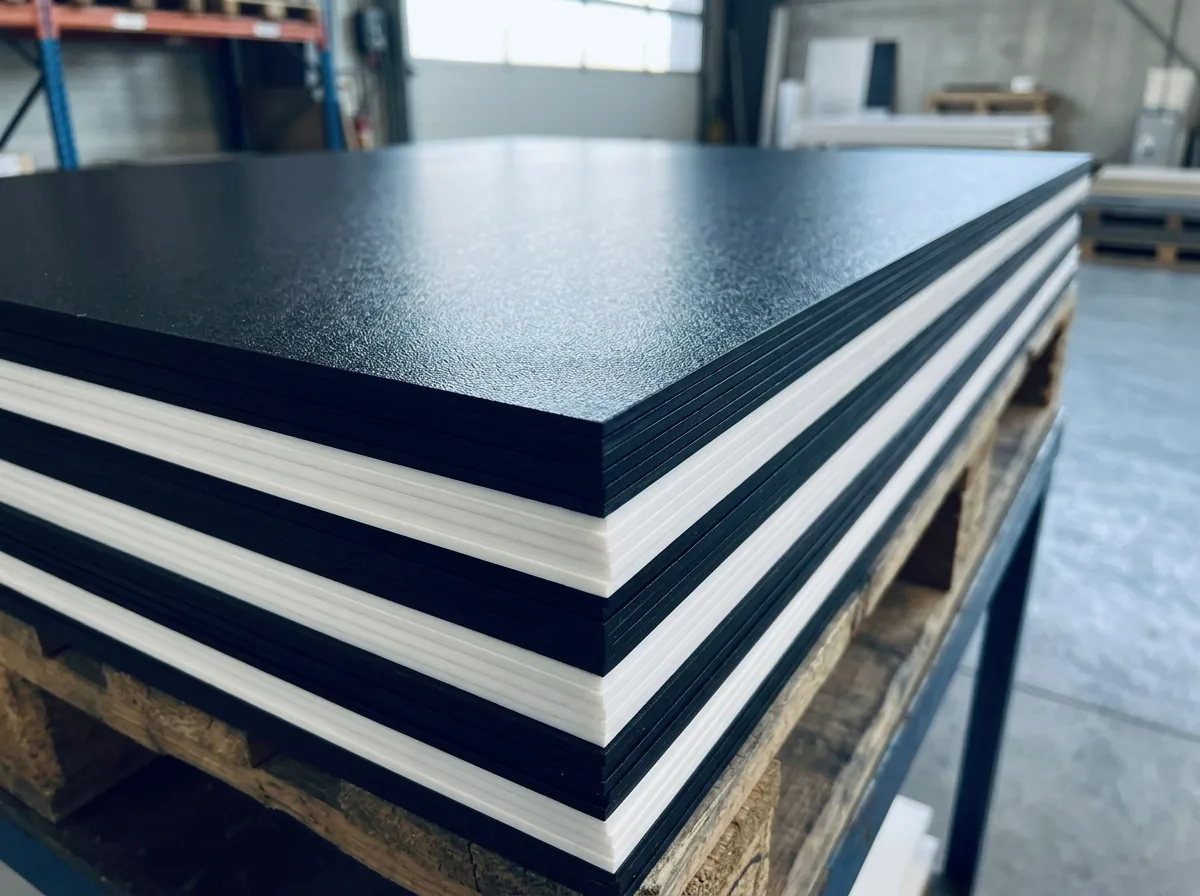
 This image was created with artificial intelligence – marked under Art. 50 of the AI Act, Regulation (EU) 2024/1689. It is a placeholder until the company's photos arrive.
CO2 laser cutting
CO2 laser cutting to drawing from PMMA, ABS, PP, POM-C etc.
BW Kunststoffe e.K. cuts with a CO2 laser
Maximum precision and non-contact cutting make CO₂ laser systems an optimal tool for plastic machining. In contrast to machining with sawing or milling machines, workpieces do not have to be clamped. This makes it possible to cut even filigree details, and breakage and waste are minimised. The material is vaporised, so no chips are produced, which in turn keeps cleaning effort low. Plastics are plastic organic materials that can be extruded to form sheets or cast to create more complex shapes. Plastics are available in a wide variety, from standard plastics such as acrylic (PMMA) and ABS, through to engineering plastics such as polycarbonate (PC) and acetal (POM). Standard plastics are inexpensive and cover a broad range of applications, while engineering plastics are developed to meet specific performance requirements such as high strength or a high operating temperature. Almost all plastics can be processed with laser cutting, laser engraving and laser marking.
The power of the CO₂ laser beam can be limited so that it removes material to a certain depth (engraves). The laser engraving process can be used to apply patterns and designs to the surface of the plastic.
Certain plastics change colour or shade when exposed to the laser beam of a fibre laser. If the appearance of the surface changes without material being removed, the machining process is referred to as laser marking. Laser marking can be used to convey information such as a serial number or a manufacturer's logo.
The machining processes described above — laser cutting, laser engraving and laser marking — can be combined with one another without having to move or re-secure the plastic material.
What advantages does CO2 laser cutting offer in plastic machining? Laser cutting of extremely fine contours with virtually no radius No clamping or fixing of the workpieces required Less breakage and waste, as laser cutting is non-contact Burr-free cut edges – no post-processing No chip waste – therefore no cleaning of the machine surroundings required No tool wear – consistently high cutting quality. Very high cost-effectiveness
Achieving the best possible results with laser cutting
The following plastics can be processed as follows.
- ABS plastics
- Acetals
POM-C
- Acrylic (PMMA)
Cast acrylic Extruded acrylic Mirrored acrylic Plexiglas®
- Laminate plastic materials
- Fluoropolymers
ECTFE FEP PCTFE PTFE
Teflon®
- Nylon (PA 6)
- PEEK
- PEI
- Polycarbonate
Lexan® Makrolon®
- Polyester (PS)
Dura-Lar® film Ertalyte® Metallised PET Mylar® film PET film PET-G
- Polyethylene (PE)
HDPE (PE300) LDPE LLPE MDPE (PE500) UHMW (PE1000)
- Vulcanised fibre
- Natural wood sheets, plywood, multiplex
- MDF sheets
- Felt
- Non-woven
- Cellular rubber, foam rubber
Laser marking gives your products an unmistakable personal touch. The technology can produce both deep engraving and raised fine lettering. Marking objects using an intense laser beam is the perfect solution for labelling and individualising. In contrast to laser printing, in which pigments are applied to the material with a weak laser beam, laser marking alters the material being processed itself. Depending on the material, the marking is very durable. Water and sweat cannot harm it. The lettering can be applied quickly and designed to your requirements. All common fonts, but also entirely individual designs, are possible. Thanks to the versatility and flexibility of the process, marking objects with the laser is a very widespread technique in industry. The labelling of metals and plastics is particularly in demand. The reason for this is the advantages of the technology. The marking produced with the laser enables the precise execution of lettering and shapes, integration into production lines and permanent legibility of the marking. The process is suitable for a wide range of materials and is highly cost-effective, as only low operating and maintenance costs are incurred. From plastic to steel, almost anything is possible. Tamper-proofing and high flexibility complement the positive aspects of laser marking. In addition, the method's short set-up times are advantageous. Depending on the material, marking is carried out by removal or by heat treatment. With removal, a colour contrast is created by removing the top layer of a workpiece, for example on painted or anodised components. With heat treatment, on the other hand, the surface layer of the material is heated selectively by the laser and discoloured accordingly. As the light technology can achieve several steps in a single operation, processing with the laser offers an attractive price-performance ratio. The company BW Kunstoffe from Heilbronn helps you to carry out first-class marking of your products. Orders placed can be implemented quickly. The results of the efficient method have so far left all customers extremely satisfied. With plastics, the marking is applied by foaming and colour changes. In foaming, gas bubbles are created by the melting of the surface, which increases the volume and achieves the desired contrast. The marking is raised on the product. Colour changes are brought about by a change in the molecules of the plastic, caused by the laser. While the surface of the material remains virtually undamaged, a change in colour occurs. Laser marking of plastic is possible quickly and in an automated way. This allows products such as signs, housing parts and plugs to be individually labelled. The plastics that can be marked include polyamide, polycarbonate and ABS. The company BW Kunstoffe in Heilbronn will be happy to advise you on the possibility of laser-beam marking of other materials.