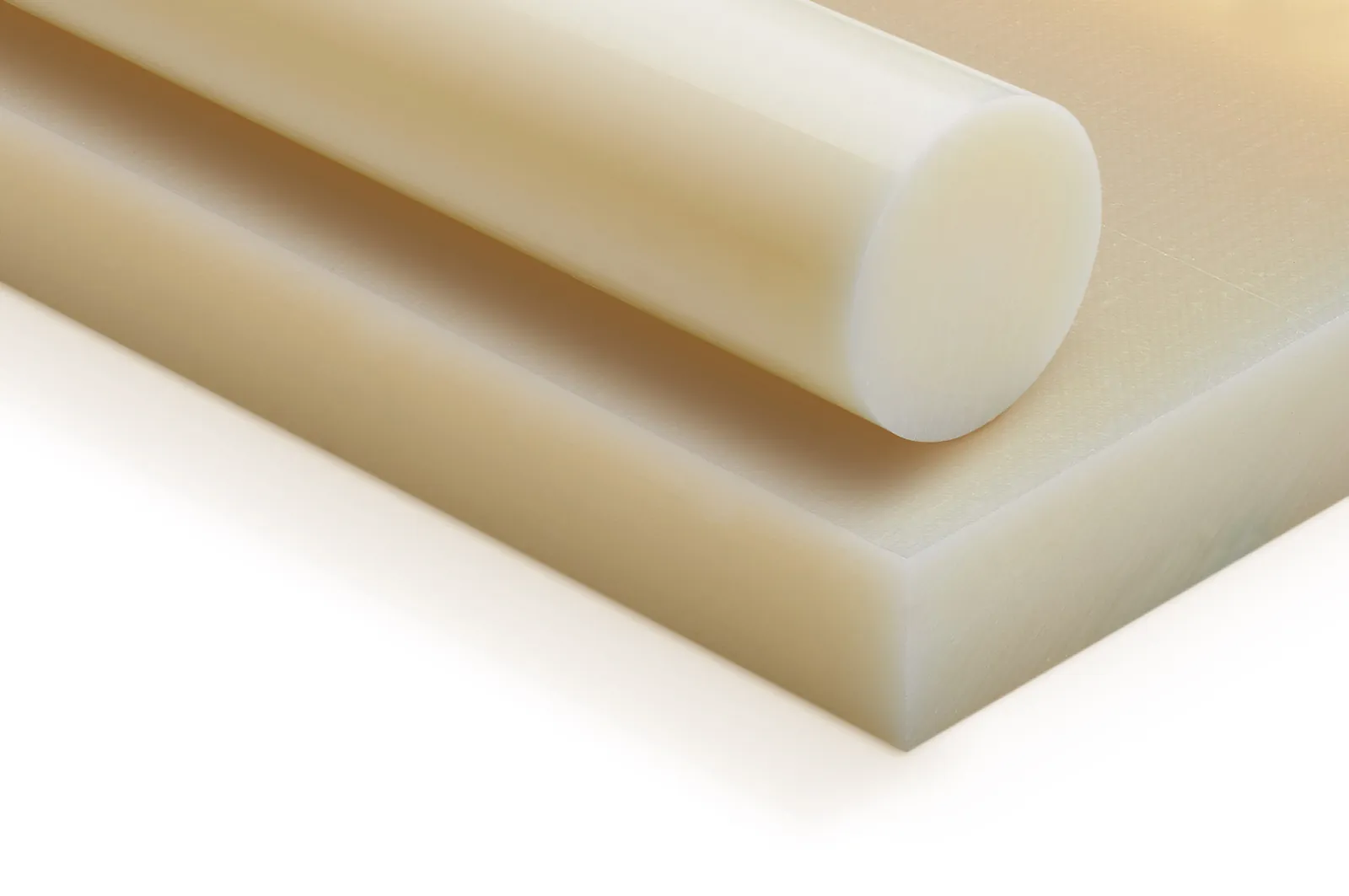
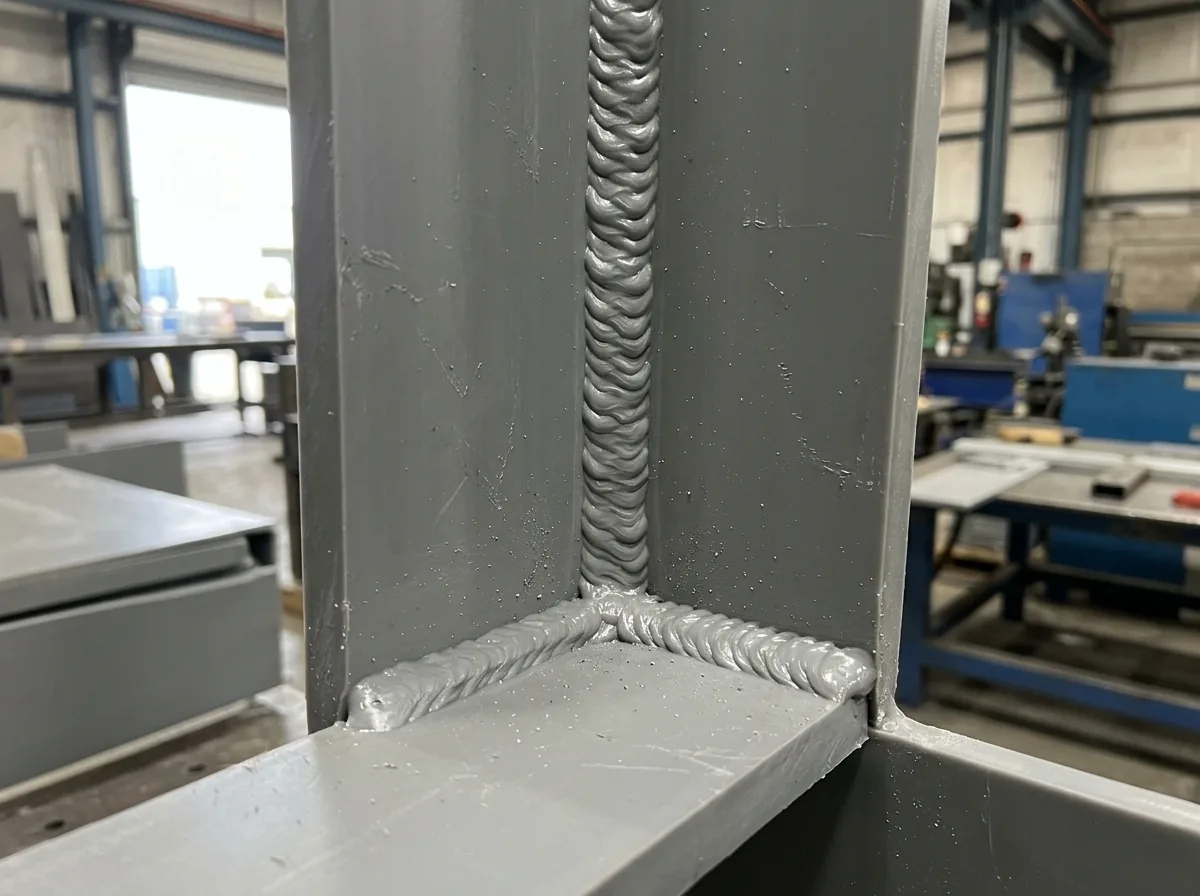
 This image was created with artificial intelligence – marked under Art. 50 of the AI Act, Regulation (EU) 2024/1689. It is a placeholder until the company's photos arrive.
Fire protection for plastics
How plastics react to fire, which fire protection test methods are important and which standards apply. Explained for industry & construction.
Fire protection for plastics describes the targeted selection, testing and design of polymers so that components exhibit controlled flame spread, defined self-extinguishing, reduced dripping behaviour, limited heat release and manageable smoke development in the event of a fire. In the industrial environment, the focus is on flame-retardant plastics, flame-resistant plastics, self-extinguishing materials and standardised classifications.
In technical terms, flame-retardant means reduced flammability and limited afterflame time under defined test conditions. Self-extinguishing describes active extinction after removal of the ignition source. Flame-resistant refers to a modification of the material by means of additives. These terms are often used synonymously in the market, but are defined depending on the standard.
Fundamentals of the fire reaction of plastics
The fire behaviour of a plastic follows a thermal decomposition process. The input of heat produces combustible pyrolysis gases, which ignite. Flame protection intervenes in three mechanisms: gas-phase inhibition by radical scavengers, condensed-phase action through charring or protective layer formation, and endothermic cooling through fillers. The aim is to interrupt the chain reaction and reduce the heat release rate.
Important parameters alongside the flame class are the Limiting Oxygen Index, the heat release rate, the smoke density and electrical characteristics in the E/E sector.
Requirements in fire protection for plastics
A reliable material selection begins with clear specifications. These include the required fire protection class, actual wall thickness, continuous service temperature, mechanical load, electrical stress, ambient conditions and project-specific standard requirements. In addition, smoke development, emissions and toxicological assessment are becoming increasingly important.
Fire behaviour of various plastics in comparison
| Plastic | Flammable | Flame-retardant available |
|---|---|---|
| PE | ✓ | partially |
| PP | ✓ | partially |
| PA | ✓ | yes |
| POM | ✓ | limited |
| PC | good | yes |
| PPS | very good | yes |
| PEEK | very good | yes |
| PEI | very good | yes |
Many competitors rank precisely because of such overviews.
Which plastics are considered flame-retardant?
Flame-retardant plastics are characterised by the fact that they are difficult to ignite and, in the event of a fire, often extinguish themselves as soon as the ignition source is removed. Their fire behaviour is tested and classified among others according to the standard UL 94. For many technical applications, either high-performance plastics that are inherently flame-retardant or flame-resistant modified materials are used.
Plastics with particularly good fire protection properties include among others:
| Plastic | Typical fire behaviour | Common areas of application |
|---|---|---|
| PEEK | Very high flame resistance, often UL 94 V-0 | Aerospace, medical technology, mechanical engineering |
| PPS | Very flame-retardant, often UL 94 V-0 | Electrical engineering, automotive industry |
| PEI | Inherently flame-resistant | Electronics, aviation |
| PSU / PPSU | Good fire protection properties | Medical technology, food technology |
| PVDF | Good flame resistance and high chemical resistance | Chemical plants, pipeline construction |
| PC (polycarbonate) | Flame-retardant depending on type | Protective glazing, electrical enclosures |
| PA6 / PA66 FR | Flame-retardant due to flame protection additives | Connectors, control cabinets, electrical components |
Many standard plastics such as PE, PP, POM or ABS, by contrast, are normally flammable in their basic version. For applications with increased fire protection requirements, however, flame-resistant versions are often available that can meet the requirements of various standards and fire classes.
Which plastic is suitable always depends on the respective operating conditions. In addition to fire behaviour, factors such as temperature resistance, mechanical load capacity, electrical properties and legal or industry-specific requirements also play an important role. The material selection should therefore always be matched to the requirements of the respective application.
UL classes at a glance
- UL 94 HB: Horizontal test with a defined maximum burning rate.
- UL 94 V-0: Vertical test with a maximum afterflame time of 10 seconds per flame application and no burning drips.
- UL 94 V-1: Vertical test with a maximum afterflame time of 30 seconds per flame application and no burning drips.
- UL 94 V-2: Vertical test with a maximum afterflame time of 30 seconds per flame application, burning drips permitted.
- UL 94 5VA / 5VB: Test with increased flame output, relevant for enclosures with increased fire load.
Every classification is dependent on wall thickness and applies exclusively to the tested compound with a clear type designation.
UL 94 test methodology
In the vertical test, a standardised specimen geometry is flamed twice for ten seconds each. Afterflame time, afterglow time and dripping behaviour are assessed. The horizontal test determines the linear burning rate. This standardised methodology enables international comparability.
Glow wire and further tests
In the electrical engineering sector, the glow wire test in accordance with IEC 60695 is also relevant. Here, a heated wire at a defined temperature is applied to the material. Ignition and afterflame behaviour are assessed. This test supplements the classic UL classification in control cabinet and device construction.
RTI and CTI
The Relative Temperature Index describes the long-term thermal continuous load capacity of a material. The Comparative Tracking Index assesses the tracking behaviour under electrical voltage. For connectors, terminals and switching systems, these values are safety-relevant.
Flame protection according to UL 94 explained
The UL 94 standard is one of the world's most important test methods for assessing the fire behaviour of plastics. It was developed by Underwriters Laboratories (UL) and serves to assess the flammability of plastics under defined test conditions. The classification helps manufacturers and designers to select the suitable material for applications with increased fire protection requirements.
The test examines how quickly a plastic continues to burn after removal of an ignition source, whether burning drips occur and whether the material extinguishes itself. Depending on the behaviour, the material is assigned to a corresponding fire class.
The most important UL 94 classifications are:
- HB (Horizontal Burning): Basic classification for plastics with a horizontal burning test. These materials burn comparatively easily and meet the lowest requirements of the UL 94 standard.
- V-2: The material extinguishes itself within a specified time, but can form burning drips.
- V-1: Self-extinguishing with a shorter afterflame time than V-2. Burning drips must not ignite the test material underneath.
- V-0: One of the most frequently required classifications in mechanical engineering and electrical engineering. The material extinguishes itself within a few seconds and must not form burning drips.
- 5VB and 5VA: Particularly demanding fire classes for applications with high safety requirements. These materials withstand a more intensive flame exposure than the V classifications.
However, a high UL 94 classification does not automatically mean that a plastic is completely fireproof or non-flammable. The standard assesses exclusively the fire behaviour under standardised test conditions. For the selection of a suitable material, factors such as service temperature, component geometry, wall thickness and applicable standards should therefore also be taken into account.
European fire classes
In construction, classification is carried out via Euroclasses in accordance with DIN EN 13501. Here, flammability, smoke development and burning drips are assessed in combination. In rail, building or vehicle applications, additional project-specific test systems apply. A complete fire protection assessment takes international and European standards into account in parallel.
Typical materials for flame-retardant plastics
In the industrial environment, engineering thermoplastics with FR compounding dominate. Polycarbonate and PC-ABS are often used for enclosures and achieve V-0 at a suitable wall thickness. PBT, often glass-fibre reinforced, is standard for connectors and switching devices and combines heat deflection resistance with stable flame classification. Polyamides such as PA6 or PA66 are suitable for mechanically loaded functional components and are available as flame-resistant versions.
For higher temperature requirements, PPS, PEI, PSU, PPSU or PEEK are used. These high-performance plastics offer high thermal stability, low creep tendency and stable electrical properties. In special applications, LCP or high-temperature-resistant aromatic polymers are also used.
Comparison of typical materials
| Material | Typical UL class | Continuous service temperature | Typical application |
|---|---|---|---|
| PC / PC-ABS | HB to V-0 | 80–120 °C | Enclosures |
| PBT GF | V-0 | 120–150 °C | Connectors |
| PA66 FR | V-0 | 120–160 °C | Mechanical components |
| PPS | V-0 to 5VA | 180–220 °C | Power electronics |
| PEEK | V-0 | >250 °C | High-temperature engineering |
Additives in fire protection for plastics
Flame-retardant plastics are created by targeted addition of additives. Halogen-containing systems act in the gas phase by binding radicals. Halogen-free systems are often based on phosphorus chemistry or metal hydroxides and support charring or act as endothermic coolants. Synergists such as antimony trioxide or modern organophosphorus compounds increase efficiency. Intumescent systems form an insulating foam layer and reduce heat transfer. The addition of additives influences impact strength, flow behaviour, surface quality and tool wear.
Design influence
The actual fire behaviour depends heavily on the component geometry. Thin wall areas, rib structures, heat accumulation, air flow and installation position significantly influence the fire reaction. Fire protection-compliant design takes into account minimum wall thicknesses, distance from ignition sources and thermal decoupling.
Typical errors
- UL class specified without wall thickness
- Material type used without a suitable UL file
- Colour or formulation change without re-assessment
- Failure to take RTI or CTI into account
- Design approved without consideration of fire protection
Smoke and emission behaviour
In safety-relevant applications, smoke density and emission assessment are gaining in importance. Halogen-free and low-smoke compounds are preferably used in public construction, in vehicles or in the rail sector. In addition to the flame class, the entire safety profile therefore counts.
Which class for which application
| Application | Typical target class |
|---|---|
| Control cabinet | UL 94 V-0 |
| Connectors | V-0 + CTI requirement |
| Power electronics | 5VA |
| Building installation | Euroclass in accordance with project specification |
Flame-retardant plastics as semi-finished products and cut pieces
Flame-retardant plastics are available as sheets, rods or individual cut pieces. For industrial projects, the selection is made on the basis of fire protection class, temperature profile and mechanical load. Documented classifications and material-appropriate advice ensure standard-compliant implementation.
Systematic selection process
A structured process begins with the definition of the target class including wall thickness. This is followed by the selection of the suitable polymer base, taking into account temperature, mechanics and electrical requirements. The additive system is then matched in order to meet the flame class, smoke behaviour and emission profile. Test reports, UL files and technical data are documented. Finally, the component design is optimised in a fire protection-compliant manner.
Summary and technical classification
Fire protection for plastics is not purely a material issue, but the result of an understanding of standards, material selection, additive technology and design. Flame-retardant plastics reliably meet defined test requirements such as UL 94, glow wire or European fire classes only if wall thickness, geometry and operating conditions are already taken into account in the development phase.
A reliable solution is created by the combination of a suitable polymer base, a matched flame protection system and documented classification including UL file, RTI and CTI values. Equally important is the consideration of smoke development, emission behaviour and thermal continuous load, particularly in safety-critical applications in electrical engineering, mechanical engineering or e-mobility.
Anyone who thinks about fire protection systematically reduces approval risks, avoids costly requalification and creates long-term product safety. What is decisive is a clear specification, traceable documentation and coordination between design, purchasing and quality assurance. This is how a technically sound and standard-compliant overall solution for industrial applications is created.
FAQ
What does V-0 mean specifically? A maximum afterflame time of 10 seconds per flame application without burning drips.
What distinguishes halogen-free from halogen-containing? Halogen-containing systems act efficiently in the gas phase, halogen-free solutions support charring or act as coolants.
Why is wall thickness decisive? The flame classification applies exclusively to the tested material thickness.
What role do RTI and CTI play? RTI describes the thermal continuous load capacity, CTI assesses the electrical tracking behaviour.