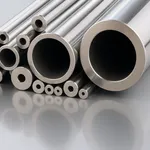
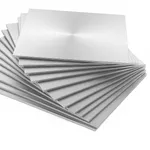
This image was created with artificial intelligence – marked under Art. 50 of the AI Act, Regulation (EU) 2024/1689. It is a placeholder until the company's photos arrive.
Aluminium sheets under continuous load
How do aluminium sheets behave under continuous load? Tips on strength, fatigue and safe operating conditions.
Aluminium sheets are used in numerous structures that are exposed to constant or cyclic loads over many years. For the design of such applications, fatigue, corrosion and long-term material behaviour play a central role. Decision-makers need clear assessments of the suitable alloy, surface treatment of aluminium and sheet thickness in order to plan service life reliably.
Material fundamentals and mechanical load capacity
Aluminium sheets consist, depending on the alloy, of differently structured microstructures that decisively determine behaviour under sustained load. Dislocation density, grain size, precipitation hardening and possible residual stresses interact and influence mechanical stability. Particularly in the case of extruded or rolled sheets, the production route plays a central role. While naturally hard alloys show a more uniform microstructure, hardenable alloys can exhibit locally increased stresses. These differences influence plastic deformability and determine how well the sheet withstands vibration or fluctuating loads.
Under load cycles, it is not only the maximum stress that is decisive, but also its distribution over time. Creep processes and relaxation can become noticeable in long-term operation, particularly at elevated temperatures. Another aspect is the anisotropic behaviour of many semi-finished products: depending on the rolling or extrusion direction, fatigue strength, crack propagation rate and notch sensitivity vary. Designs must take this into account so that stable load-bearing behaviour is guaranteed over the entire service life. and mechanical load capacity Aluminium possesses high specific strength, good formability and a favourable ratio of weight to stiffness. Under sustained mechanical stress, it is above all the microstructure of the chosen alloy that determines how stable a sheet remains in the long term. High-strength alloys are more sensitive to stress peaks, while medium- to low-strength alloys are often more robust under cyclic loading.
Fatigue under cyclic loading
The fatigue of aluminium often begins invisibly. Microstructural changes occur long before the first visible crack. Every load reversal leads to minimal progress in the damage process. If the stress amplitude is not reduced over a longer period, these effects accumulate.
Areas with stress peaks are particularly critical: edges, milled recesses, drilled holes or abruptly changing cross-sections. Even minor machining marks can become the starting point of a fatigue crack under millions of load cycles. Fine edge finishing is therefore just as important as the correct cut-to-size process. The operating environment also plays a role: vibration and impact loads accelerate the damage. In vehicle construction, machine cladding and moving plant, this acts cumulatively over many years.
If the sheet is additionally exposed to corrosive media, the fatigue process is significantly intensified. Corrosion can create microscopic depressions that act as notches and considerably accelerate crack initiation. Fatigue arises when the sheet is repeatedly exposed to alternating forces. The consequence can be a creeping loss of strength. Service life depends on the stress amplitude, the geometry and the manufacturing process. Welds, notches or unfavourable edge finishing on aluminium sheets accelerate crack formation. Smooth edges and clean post-processing are therefore essential.
S-N curves and fatigue strength
S-N curves form the basis for calculating the service life of an aluminium sheet under cyclic stress. They represent the relationship between the stress level and the number of possible load cycles. Aluminium behaves differently from many steels: it shows no true horizontal fatigue strength limit. This means that even low stresses can lead to damage at a sufficiently high number of load cycles.
For the interpretation of an S-N curve, it is not only the maximum stress that is decisive, but also the stress amplitude and the course of the load. Real structures rarely exhibit ideal load situations. Assembly conditions, temperature changes, surface quality and possible residual stresses additionally influence vibration behaviour. For aluminium, therefore, a conservative design is always chosen in order to ensure service life even under changing operating conditions.
Cracks frequently occur at points where notch stresses arise. These can be caused by drilled holes, edges, recesses or manufacturing influences. Optimised edge finishing as well as a suitable cut-to-size process contribute substantially to increasing the fatigue strength of a sheet. Sheet thickness also plays an important role, as it influences the stress level and the sensitivity to vibration.
Since aluminium does not possess a pronounced fatigue strength limit, structural design always includes the expectation that long-term damage mechanisms may occur. The aim is therefore to reduce stresses as far as possible and to structurally defuse critical areas in order to significantly increase the number of load cycles that can be safely withstood.
Influence of the alloy on long-term behaviour
The choice of alloy determines how the aluminium sheet reacts in the long term to load, moisture, temperature and mechanical influences. Aluminium-magnesium alloys (e.g. EN AW-5083) are regarded as particularly resistant to corrosion and possess balanced strength. They are frequently used in shipbuilding, mechanical engineering and in permanently damp outdoor areas.
Hardenable alloys such as EN AW-6061 or EN AW-7075 offer high strengths, but react more sensitively to notches and require precise post-processing. The precipitates responsible for strength can be locally weakened under corrosive conditions. For dynamic applications with high load cycles, controlled manufacturing processes are decisive in order to minimise residual stresses.
Thermal loads also influence long-term stability. Some alloys lose strength more quickly under permanent temperature changes or higher sustained temperatures. The ambient temperature and the expected temperature cycles must therefore be taken into account at an early stage.
Comparison of typical alloys under sustained load
| Alloy | Fatigue strength | Corrosion resistance | Temperature resistance | Typical applications |
|---|---|---|---|---|
| EN AW‑5083 | medium | very high | good | maritime applications, outdoor structures, mechanical engineering |
| EN AW‑5754 | medium | high | good | vehicle construction, façades, outdoor applications |
| EN AW‑6061 | high | medium | medium | machine components, welded structures, dynamic components |
| EN AW‑7075 | very high | low | medium | highly loaded structural components, aviation, motorsport |
| EN AW‑1050/1200 | low | high | good | cladding, low static loads |
Corrosion influences in outdoor applications in outdoor applications
Aluminium forms a natural oxide layer that protects against corrosion. Under severe weathering, moisture or saline environments, however, this layer can be damaged. Contact corrosion arises when aluminium is in contact with less noble or more noble metals. Suitable separation of the materials as well as regular inspection considerably extend service life.
Surface treatment for improved protection
- Anodising of aluminium to create a densified and resistant oxide layer
- Powder coating of aluminium for additional UV, abrasion and weather protection
- Wet painting as a flexible option for special colour or protection requirements
- Anodic oxidation for increased hardness and better wear resistance
- Combination of anodising and coating for aggressive environments
- Passivation to reduce contact corrosion in mixed metallic environments
- Regular care and cleaning to avoid deposits and local corrosion sites
Importance of sheet thickness for sustained load
Sheet thickness is one of the central factors for the long-term durability of an aluminium structure. A greater thickness significantly increases stiffness and reduces the stress cycles that occur during operation. This has a directly positive effect on fatigue strength, since lower stress amplitudes lead to a longer service life. Thinner sheets, by contrast, react more sensitively to vibration and are more susceptible to local instabilities, buckling or plastic deformation.
Another aspect is the ratio between thickness and mechanical load distribution: the thicker the sheet, the better it can absorb load peaks without critical areas being overstressed. In dynamic environments, for example in vehicle or mechanical engineering, thickness therefore plays an essential role in avoiding premature crack formation. In addition, thickness influences behaviour under temperature changes, since solid sheets react more sluggishly thermally and therefore exhibit lower stress gradients.
Manufacturing influences on fatigue and corrosion behaviour
Manufacturing has a considerable influence on the long-term behaviour of aluminium sheets. Every cut-to-size process leaves a specific surface and structural quality that can contribute either to improving or worsening fatigue strength. Processes such as waterjet cutting create no thermal influence and preserve the microstructure of the material, which increases fatigue strength. Laser cutting, by contrast, leads to heat-affected zones in which the material can become locally embrittled or altered in its microstructure. If this zone is not removed by post-processing, the risk of crack initiation increases considerably.
Mechanical machining processes such as CNC milling or drilling can also create micro-notches depending on tool condition and cutting parameters. These notches act as starting points for fatigue cracks and thereby influence service life. High-quality edge finishing with fine surface quality is therefore indispensable for dynamically stressed structures. In addition, clean deburring and the avoidance of surface marks contribute substantially to reducing susceptibility to corrosion. Surfaces that are made particularly smooth by manufacturing form fewer points of attack for moisture, abrasion or chemical influences. Thus both the cut-to-size process and the post-processing directly influence fatigue and corrosion behaviour.
Typical applications under long-term stress
- Machine cladding and dynamically stressed plant components
- Vehicle construction, particularly under permanent vibration and oscillation loads
- Façade and roof structures outdoors with changing temperatures
- Offshore structures with heavy salt and moisture exposure
- Transport containers, frame and support systems with a high load cycle rate
- Mobile work platforms and stages that are cyclically loaded over many years
- Structures in the renewable energy sector such as solar module frames or wind power components
Final section
A long service life of aluminium sheets under sustained load requires an interplay of the right material choice, precise manufacturing and consistent consideration of the environmental conditions. Depending on the application, different load profiles develop that combine both mechanical stresses and corrosive influences. If these factors are taken into account already in the planning phase, risks of premature crack formation or material fatigue can be significantly reduced.
The interplay of alloy, surface condition and sheet thickness is particularly decisive. A suitable alloy forms the basis for mechanical stability and corrosion resistance in aluminium sheets, while a high-quality surface reduces the risk of local damage. In addition, sufficient thickness ensures lower stresses during operation and protects against undesirable deformation or vibration resonance.
Ultimately, it becomes clear: aluminium sheets are excellently suited to sustained loads if the critical parameters are carefully coordinated with one another. With systematic planning, regular inspection and needs-based surface treatment, robust, long-lasting and reliable structures can be achieved.
Now choose the right aluminium sheet for your application: get personal advice or configure your suitable aluminium sheet directly online.
FAQ – Frequently asked questions
How does fatigue arise in aluminium? Fatigue arises through repeated vibrations and load cycles that can lead to microcracks and ultimately to failure.
Which alloys are particularly corrosion-resistant? Aluminium-magnesium alloys offer good corrosion resistance, particularly in outdoor areas.
How can corrosion be prevented? Anodising, coating and the avoidance of contact corrosion can significantly increase service life.
Which thickness is suitable for sustained load? For cyclic loads, thicker sheets with higher stiffness are usually better suited.
How does manufacturing affect service life? Precise cuts and smooth edges improve fatigue strength and reduce susceptibility to cracking.