Structural components in the defence sector – material comparison PEEK, PTFE, PEI & PA6
Comparison of the most important plastics for military structural components: PEEK, PTFE, PEI and PA6 at a glance. Properties, areas of application and manufacturing requirements for highly stressed components.
Structural components in a military environment must withstand high mechanical loads, strong temperature fluctuations, vibrations and aggressive media. Modern plastics enable significant weight savings compared with metal while offering robust, corrosion-free and precisely machinable solutions.
Selecting the right material is crucial for performance and reliability, especially for plastics in the defence industry.
Requirements for military structural components
Military components must achieve consistently high strengths without losing their dimensional accuracy. Key criteria are mechanical stability, vibration resistance, low moisture absorption, temperature resistance and high media resistance.
Further fundamentals for assessment can be found in the guide to mechanical load capacity and to temperature resistance.
Material comparison: PEEK, PTFE, PEI and PA6
PEEK – high-performance material for high-strength structural components
PEEK is one of the most powerful engineering plastics. It offers high stiffness, excellent thermal stability and very good chemical resistance. Typical applications lie in structurally loaded components, fastening elements or precise housing components. More information on properties and areas of application can be found under PEEK.
PTFE – suitable for sliding surfaces, but structurally limited
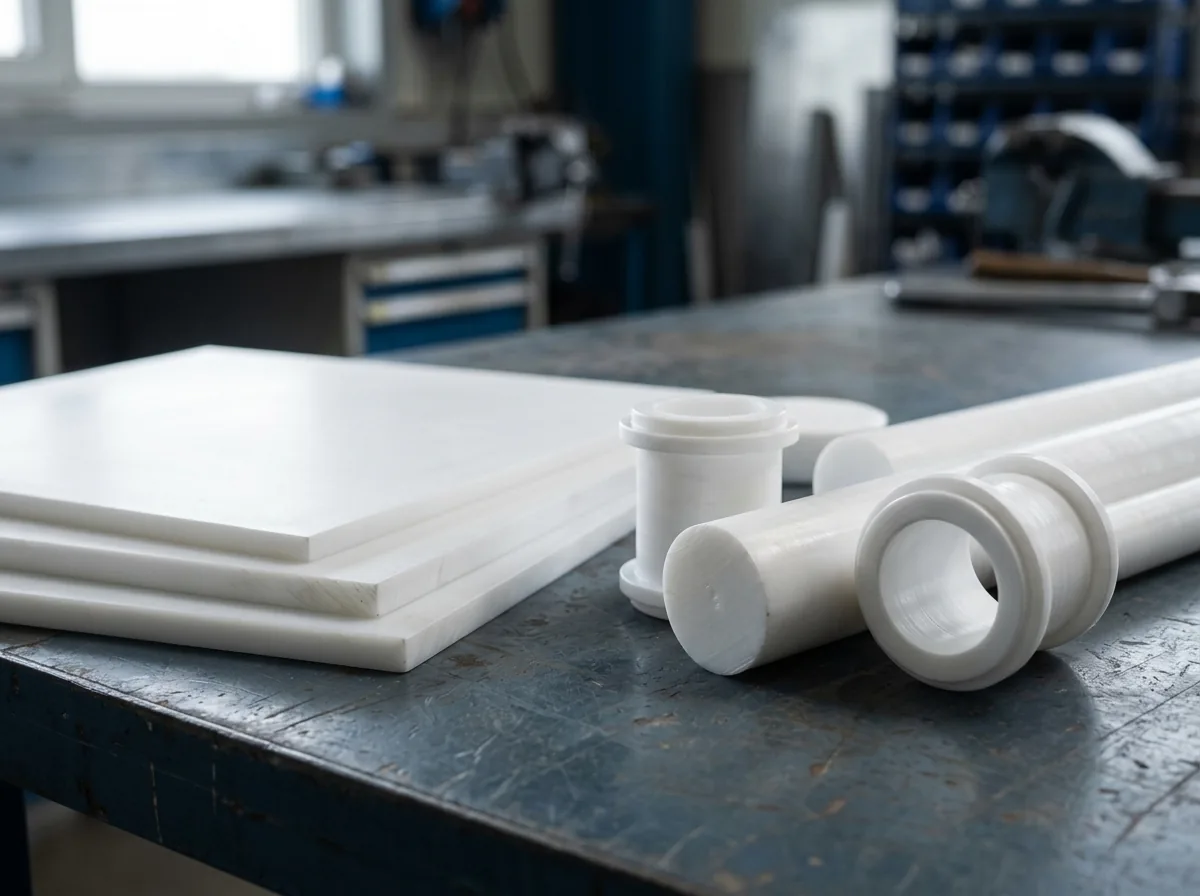
PTFE has excellent sliding properties and extremely high chemical resistance. However, it is less suitable for load-bearing structural components due to its low stiffness and limited mechanical load capacity. It is preferably used for bearing surfaces, seals or low-friction components. Details on this material can be found under PTFE.
PEI – temperature-stable material for demanding components
PEI offers high heat deflection resistance, good stiffness and reliable mechanical performance. It is particularly suitable for components that are permanently exposed to high temperatures or require high structural strength. PEI is used in housings, mounts and military electronics modules.
PA6 – robust and proven engineering plastic
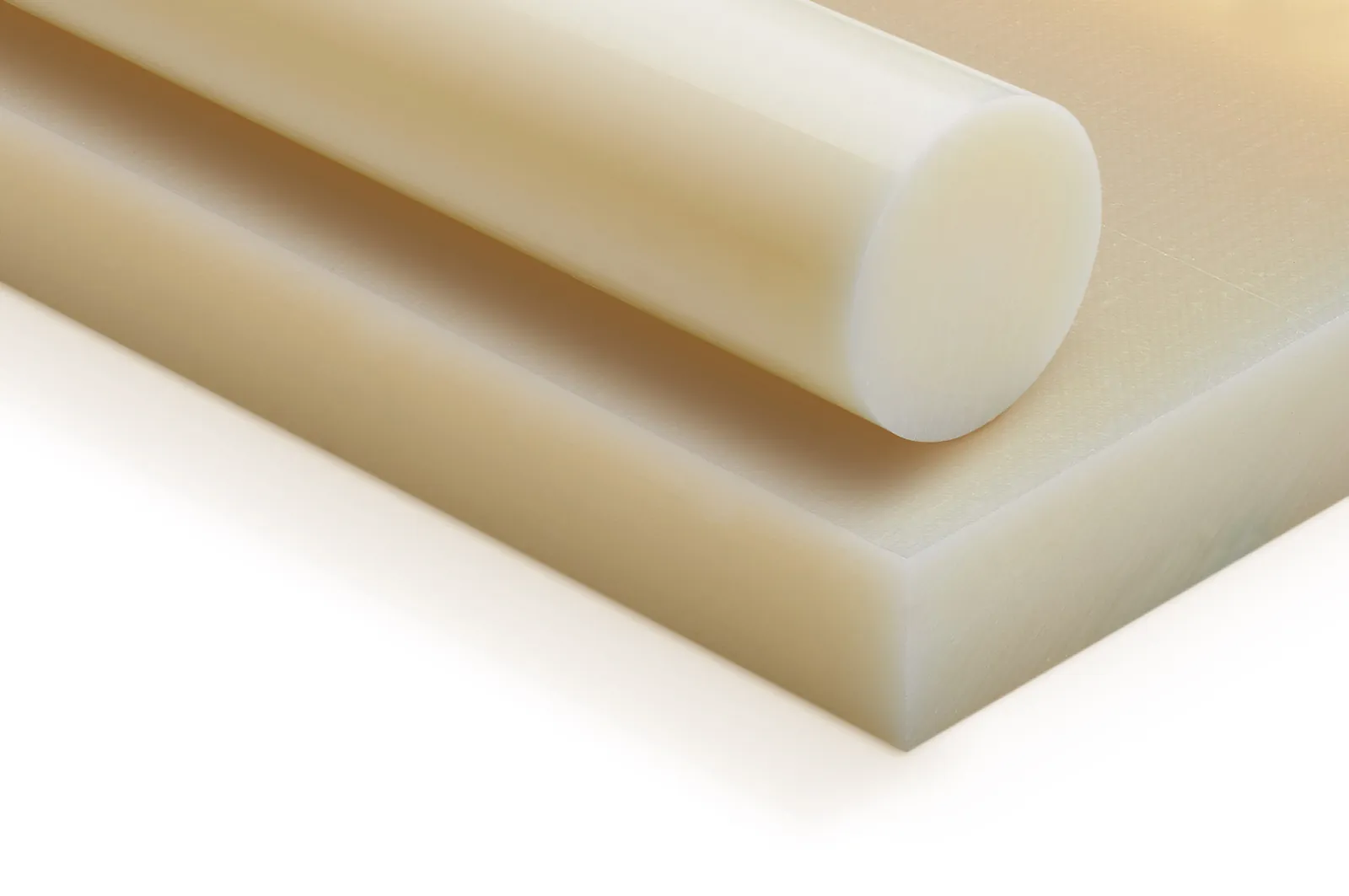
PA6 is characterised by good toughness, high wear resistance and reliable mechanical properties. It is suitable for functional components, housings, fastening elements and structurally medium-loaded components. Further information can be found under PA6.
Comparison table of the materials
| Property | PEEK | PTFE | PEI | PA6 |
|---|---|---|---|---|
| Mechanical strength | very high | low | high | medium |
| Stiffness | high | very low | high | medium |
| Temperature resistance | very high | very high | high | medium |
| Chemical resistance | very high | extremely high | high | good |
| Moisture absorption | very low | very low | low | increased |
| Use as a structural component | excellently suited | hardly suited | very well suited | well suited |
The table illustrates the functional differences between the four materials and their suitability for structural applications in the defence sector.
Material selection by area of application
For UAV structural elements, tactical devices or weapons technology modules, precise material selection is crucial. PEEK is suitable for highly loaded components, while PEI offers an ideal solution for permanently high temperatures. PA6 covers robust standard components. PTFE, by contrast, is used primarily for sliding and friction applications. Supplementary fundamentals can be found in the guide to high-performance plastics.
Manufacturing military structural components from plastic
Precise CNC processes are frequently used for structural components. In milling, the focus is on tight tolerances, controlled heat input and reproducible dimensional accuracy. More on the manufacturing process can be found under milled parts and in the technical guide to CNC machining.
Conclusion: Which material for which military area of application?
For high-strength structural components in the defence sector, PEEK is primarily recommended. At high temperatures and for demanding housing or functional components, PEI delivers excellent performance. PA6 is a versatile engineering material for mechanically robust standard components. PTFE is only suitable to a limited extent for load-bearing structures and is used primarily for sliding and sealing elements.
FAQ
Which plastic is best suited for military structural components? PEEK offers the highest strength and temperature stability and is therefore particularly suitable for highly loaded structural components.
Can PTFE be used as a structural material? Only to a limited extent. Because of its low stiffness, PTFE is primarily suitable for sliding and sealing elements.
When is PEI the right choice? For high temperatures and complex functional components that require high stiffness.
What is PA6 used for in the military? For housings, fastening elements, functional mechanical components and medium-loaded structural parts.
How are structural components made from plastic manufactured? Predominantly by CNC milling to ensure precise dimensional accuracy and tight tolerances.