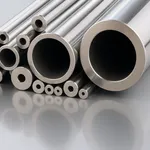
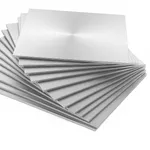
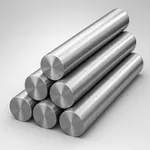
This image was created with artificial intelligence – marked under Art. 50 of the AI Act, Regulation (EU) 2024/1689. It is a placeholder until the company's photos arrive.
Aluminium semi-finished products – shapes, properties and applications
Everything about aluminium semi-finished products: production, alloys, advantages and applications in industry and trade. Now cut to size online!
Aluminium semi-finished products form the backbone of modern manufacturing processes. They are the interface between raw material and end product – technically mature, versatile and economically efficient. Hardly any other material combines so many positive properties: low weight, high stability, excellent corrosion resistance and outstanding machinability. Whether in mechanical engineering, vehicle engineering, electrical engineering, medical technology or construction – aluminium semi-finished products are in demand wherever precision and performance are decisive.
In contrast to raw aluminium or cast forms, semi-finished products are produced specifically to facilitate industrial further processing as standardised preliminary products. They are available in different alloys, dimensions and tempers and offer designers maximum flexibility in planning and implementation. Their use saves time, costs and material, since the semi-finished products already have optimum structural properties and tight dimensional tolerances. This makes them the basis for the precise manufacture of components, housings, structural parts and mechanical components that must later withstand high loads.
What are aluminium semi-finished products?
Aluminium semi-finished products are industrially prefabricated material forms that have a defined geometry and material structure. They are created by controlled forming processes such as casting, rolling, extrusion or drawing and form the basis for all further processing steps. These intermediate products are neither raw material nor finished components, but represent the optimum starting point for machining and shaping further processing.
The term "semi-finished product" stands for a material that is at a technically perfect intermediate stage: homogeneous in structure, free of air inclusions and with exactly defined tolerances. These properties ensure consistently high quality in manufacturing – regardless of whether the material is later milled, drilled, bent, welded or coated. The standardisation of dimensions and alloys allows production processes to be unified and automated.
A further advantage lies in material efficiency: semi-finished products enable targeted machining with minimal waste. At the same time, they offer an excellent balance of weight and strength, which makes them indispensable particularly in lightweight construction. The combination of technical precision, reproducible quality and sustainability makes aluminium semi-finished products one of the most important materials of our time.
Production and processing
The production of aluminium semi-finished products begins with the extraction of the metal from bauxite or through the recycling of secondary aluminium. After the melting process, the aluminium is alloyed and cast into shape – usually into rolling ingots, billets or blocks. These serve as the starting material for various forming processes:
- Rolling: production of sheets, aluminium plates and strips through multi-stage rolling operations in which thickness and structure are precisely controlled.
- Extrusion: use for profiles, tubes and rods with complex cross-sections. The material is pressed through a die and thereby given its shape.
- Drawing: use for wires and fine rods. The material is passed through drawing dies of decreasing diameter and cold-worked.
In addition, heat treatments such as solution annealing, quenching and ageing ensure targeted strength settings. Mechanical processing steps such as sawing, milling, grinding or straightening ensure dimensional accuracy and surface quality. This precision makes aluminium semi-finished products ideal for online cut-to-size and CNC machining.
Forms and types of aluminium semi-finished products
Plates and sheets
Aluminium plates and sheets are among the most frequently used forms of semi-finished product. They are produced in different thicknesses and dimensions, starting from thin sheets of a few tenths of a millimetre up to solid cast aluminium plates several centimetres thick. Their range of applications extends from simple covers and housings to highly precise structural components.
Thanks to their high dimensional accuracy, they are ideal for CNC cut-to-size. Special surface finishes such as anodising of aluminium plates, powder coating or mechanical grinding provide additional protective and design effects. Anodised sheets are frequently used in façade construction or in the food industry, while face-milled cast plates are used above all in toolmaking.
Rods and square bars
Rods and square bars serve as the basis for precise turned, milled and drilled parts. Their uniform structural structure and exact dimensional accuracy ensure excellent machinability. In series production they are often used for connecting elements, mounts, adapters, shafts or threaded parts.
Aluminium bars are indispensable particularly in prototype manufacturing and in mechanical engineering, because they can be machined quickly and economically. Depending on the alloy, they offer high strength, good surface quality and reliable dimensional stability – even after mechanical processing.
Profiles and tubes
Extruded profiles and tubes made of aluminium are the most flexible form of semi-finished product. They can take on almost any desired geometry – from a simple angle or T-profile to highly complex special profiles with integrated functional surfaces. This versatility makes them a key component in lightweight construction. Aluminium profiles are used in machine frames, transport racks, measuring fixtures, housings or also in architecture.
Tubes, on the other hand, are preferably used when weight saving and pressure resistance are required equally, for example in vehicle and plant engineering, in hydraulic systems or in medical technology. Modern extrusion processes enable tolerances in the hundredth-of-a-millimetre range and a smooth, oxidation-free surface – a decisive factor for subsequent assembly processes.
Strips and rolled products
Aluminium strips are particularly thin semi-finished products with outstanding formability and thermal conductivity. They are created by multi-stage rolling processes and are frequently supplied in rolls. Typical fields of application are heat exchangers, cooling and air-conditioning units, packaging and decorative applications. In electrical engineering, aluminium strips are also used for conductive components, for example in transformers or battery contacts.
The combination of low weight, high formability and stability enables demanding applications in series production and design. Through surface treatments of aluminium such as painting or laminating, functional properties such as reflectance or chemical resistance can also be specifically adjusted.
Typical alloys and materials
Aluminium semi-finished products are offered in numerous alloys that differ in their mechanical, thermal and chemical properties. The most important include:
- AlMg (e.g. EN AW-5754): very good corrosion resistance, medium strength, readily weldable – preferred in shipbuilding, apparatus engineering and food technology.
- AlMgSi (e.g. EN AW-6060, EN AW-6082): versatile, balanced combination of strength, machinability and dimensional stability – standard in mechanical engineering and vehicle engineering.
- AlZnMgCu (e.g. EN AW-7075): extremely high strength at low weight – preferred in aerospace and motorsport.
- AlMn (e.g. EN AW-3003): very readily formable, corrosion-resistant – suitable for containers, heat exchangers and chemical plants.
- AlCuMg (e.g. EN AW-2024): high strength, good machinability, but limited corrosion resistance – used in aviation and toolmaking.
Each alloy family offers a characteristic property profile. The selection depends on the requirements for strength, weight, corrosion protection and processing.
Table: Important aluminium alloys at a glance
| Alloy | Main alloying elements | Strength | Corrosion resistance | Machinability | Typical applications |
|---|---|---|---|---|---|
| EN AW-3003 | Manganese | Medium | Very good | Good | Heat exchangers, containers, construction |
| EN AW-5083 | Magnesium, manganese, chromium | High | Very good | Medium | Shipbuilding, chemical plants, vehicles |
| EN AW-5754 | Magnesium | Medium | Very good | Very good | Food technology, apparatus engineering |
| EN AW-6060 | Magnesium, silicon | Medium | Good | Very good | Architecture, profiles, furniture |
| EN AW-6082 | Magnesium, silicon | High | Good | Good | Mechanical engineering, vehicle engineering |
| EN AW-7075 | Zinc, magnesium, copper | Very high | Medium | Medium | Aviation, motorsport, toolmaking |
| EN AW-2024 | Copper, magnesium | High | Limited | Good | Aircraft construction, structural parts |
Table: Semi-finished product forms and manufacturing processes
| Semi-finished product form | Typical manufacturing process | Properties | Common applications |
|---|---|---|---|
| Plate | Rolling, milling, grinding | High dimensional accuracy, flat surface | Mechanical engineering, machine tables, housings |
| Sheet | Rolling, anodising, coating | Thin, light, readily formable | Claddings, roofs, covers |
| Rod | Extrusion, drawing | Good machinability, homogeneous structure | Turned parts, bushes, bolts |
| Square bar | Extrusion, sawing | Stable, precise edges | Fixtures, mounts, constructions |
| Profile | Extrusion | Individually formable, light, stable | Frames, rails, architectural profiles |
| Tube | Extrusion, drawing | Low weight, pressure-resistant | Vehicle engineering, plant engineering, medical technology |
| Strip | Rolling | Thin, flexible, good thermal conductivity | Packaging, cooling technology, electrical engineering |
Properties and advantages
Aluminium semi-finished products score with a combination of technical and economic advantages:
- Low dead weight: only around one third of the weight of steel at comparable strength.
- Outstanding corrosion resistance: the natural oxide layer provides lasting protection against environmental influences.
- High thermal and electrical conductivity: ideal for electronics, heat sinks and energy applications.
- Easy processing: milling, turning, sawing or drilling are possible precisely and efficiently.
- Dimensional stability and accuracy: aluminium remains reliable even under temperature fluctuations.
- Recyclability: almost 100 % reusable with minimal energy input.
These properties make aluminium semi-finished products an indispensable part of sustainable production processes.
Typical applications in industry and trade
Aluminium semi-finished products are found in almost every technical application. Some of the most important fields of use are:
- Mechanical engineering: base plates, claddings, fixtures, clamping systems, frames.
- Vehicle engineering: body structures, chassis, mounts, tanks, interior fittings.
- Electrical engineering: heat sinks, housings, busbars, contact plates.
- Aerospace: structural components, supports, reinforcements, connecting elements.
- Construction: façades, roofs, window frames, parapets, substructures.
- Medical and food technology: device housings, hygienic work surfaces, transport containers.
Thanks to the ease of processing, semi-finished products can be used both in small series and in highly automated production lines.
Practical example from industry
A clear example of the use of aluminium semi-finished products can be found in modern mechanical engineering. In the manufacture of CNC machining centres, large-format plates made of EN AW-5083 or EN AW-6082 are used as machine frames. These plates offer high rigidity at low weight and can be precisely milled. At the same time, extruded profiles are used for the guides and housings, while rods serve as shafts or adapters. The combination of different semi-finished product forms produces highly precise, low-vibration constructions that meet the requirements for dimensional accuracy, energy efficiency and service life.
A further example is provided by vehicle engineering: here aluminium tubes and profiles are used to stiffen body structures and save weight. This reduces fuel consumption and improves crash behaviour. Particularly in e-mobility, semi-finished products made of aluminium play a key role, since they contribute to increasing range and at the same time support heat dissipation in battery modules.
Practical example from food and medical technology
Aluminium semi-finished products also play a central role in food and medical technology. In food processing, anodised aluminium plates and sheets are used, for example, for hygienic work surfaces, filling systems or transport containers. The smooth, easy-to-clean surface prevents the accumulation of residues and enables rapid disinfection. In addition, aluminium plates are resistant to cleaning and disinfecting agents, which makes them ideal for continuous use.
In medical technology, precisely machined aluminium profiles and housings are used in laboratory devices, sterilisation equipment and medical technology components. The high thermal conductivity of aluminium ensures efficient temperature control, for example in analytical devices or imaging systems. At the same time, the dimensional accuracy of the semi-finished products ensures reliable assembly of complex assemblies – a decisive factor for patient safety and functional stability.
Standards and quality requirements
Strict European and international standards apply to aluminium semi-finished products, defining all aspects of material properties, dimensional tolerances and test methods. These standards ensure that every semi-finished product has a consistently high quality regardless of the manufacturer. The most important sets of rules include EN 485 for sheets and plates, EN 573 for chemical composition, EN 755 for extruded profiles and EN 10204 for the certification and documentation of material tests. They define not only the physical characteristic values but also test methods and limit values for tensile strength, elongation and flatness.
Qualified manufacturers work with precise production and control processes that ensure the traceability of every batch. In this way, buyers, designers and processors can ensure that the delivered semi-finished products correspond exactly to the required specifications. Documented material tests, certified quality management systems and regular audits are standard today. As a result, aluminium is used as a material in a particularly reliable, plannable and standards-compliant way – a decisive factor for safety-critical applications in mechanical, vehicle or aircraft engineering.
Decision aid: choosing the right semi-finished product
Choosing the right semi-finished product is an interplay of technical requirements, economic considerations and practical processing. It is decisive to match the material properties exactly to the later application. While strength and rigidity are the main focus in statically highly loaded constructions, surface quality and corrosion resistance are decisive in decorative or hygienic applications. Machinability also plays a major role: some alloys can be milled and welded extremely well, others offer advantages in forming or heat dissipation.
Environmental factors should also be taken into account – such as temperature, humidity or chemical influences. In maritime or chemical environments, the use of AlMg alloys is recommended, while in mechanical engineering AlMgSi types are often preferred because of their high dimensional stability. Added to this is the economic component: availability, delivery times and price level can be decisive for a project.
The aluminium plate cut-to-size via the online configurator enables a precise selection and millimetre-exact configuration, whereby material waste is reduced and production times are shortened. In this way, the right choice of semi-finished product creates a decisive competitive advantage in quality, efficiency and sustainability.
Sustainability and recycling
The ecological advantage of aluminium lies in its durability and reusability. Recycling of aluminium requires only around five percent of the energy needed for primary production. Secondary aluminium drastically reduces CO₂ emissions and conserves natural resources. Many manufacturers now rely on closed material cycles in which waste and returns are fed completely back into the production process.
In addition, corrosion-resistant surfaces and low maintenance requirements extend the service life of the products – a decisive contribution to sustainability in mechanical and plant engineering.
Decision aid: choosing the right semi-finished product
The choice of the right semi-finished product depends on several parameters:
- Mechanical requirements: strength, rigidity, impact toughness.
- Processing methods: machining, forming, weldability.
- Environmental conditions: temperature, corrosion load, chemical influences.
- Surface requirements: decorative, anodisable, coatable.
- Economic efficiency: price, availability, delivery time.
Anyone who orders aluminium semi-finished products from aluplattenzuschnitt.de benefits from precise online cut-to-size, tested material quality and fast delivery from a quantity of 1. Dimensionally accurate manufacturing, transparent price calculation and clean edge processing ensure professional results.
Future prospects of aluminium semi-finished products
The importance of aluminium semi-finished products will continue to increase in the coming years. Driven by megatrends such as lightweight construction, electromobility and energy efficiency, more and more industries are relying on aluminium as a key material. The combination of strength, availability and recyclability makes semi-finished products a central element of sustainable production strategies.
With advancing digitalisation, manufacturing processes will also be optimised: data-based quality control, AI-supported production planning and automated cut-to-size systems increase precision and resource efficiency. At the same time, new surface and hybrid technologies are emerging that make aluminium even more versatile – for example through combination with fibre composites or 3D-printed structures.
Thus the semi-finished product of the future will not only be lighter and more powerful, but also produced more intelligently and more sustainably.
In conclusion
Aluminium semi-finished products are not just a material, but a central building block of industrial value creation. They combine engineering skill with economic efficiency and sustainability. Whether as a solid cast plate in mechanical engineering, a delicate profile in architecture or a hygienic surface in food production – they create solutions wherever precision, stability and efficiency are required.
Their significance goes far beyond classic material use: they are carriers of modern production philosophies, enabling lightweight construction, energy saving and the digitalisation of manufacturing. Thanks to standardised alloys, precise standards and continuous further development, aluminium semi-finished products offer a high degree of planning security and technical reliability.
With increasing automation and sustainable production, semi-finished products will in future be manufactured even more precisely, more resource-efficiently and more intelligently. Anyone who engages with the possibilities of aluminium today is investing in the future of manufacturing, design and the environment. This makes aluminium semi-finished products far more than an intermediate product – they are a symbol of technical evolution and responsible industrial production.
FAQ – Aluminium semi-finished products
What are aluminium semi-finished products? Aluminium semi-finished products are industrially manufactured intermediate products that serve as starting material for further processing into components.
What forms of semi-finished products are there? The most important include plates, sheets, profiles, bars, tubes and strips – each with specific advantages for different applications.
How are aluminium semi-finished products manufactured? By casting, rolling, extrusion or drawing. Heat treatments and mechanical processing follow to adjust properties.
Which standards apply to aluminium semi-finished products? Relevant standards are EN 485, EN 573, EN 755 and EN 10204, which define composition, dimensions and quality.
Why is aluminium so popular? Because of its lightness, strength, corrosion resistance and almost unlimited recyclability.
Where can you buy aluminium semi-finished products? From specialised suppliers such as aluplattenzuschnitt.de, semi-finished products can be configured and cut to size online to the nearest millimetre.