Elastomers & rubber
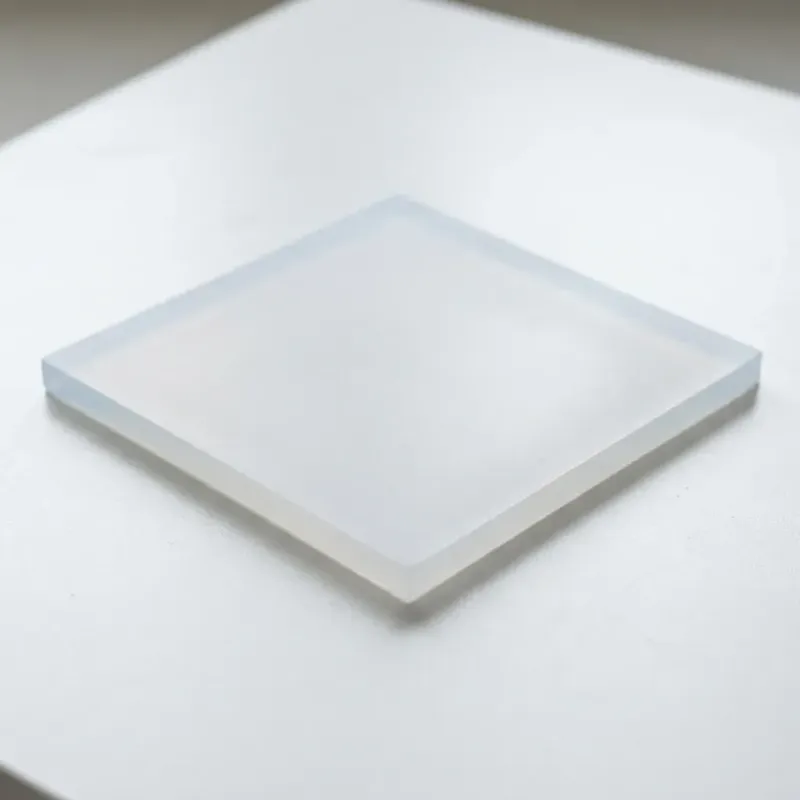
Silikon sheet – cut to size
Custom-cut silicone sheets are suitable for seals, supports, insulation and technical applications with high or strongly fluctuating temperatures. Our…
Configure your cut
Description
Custom-cut silicone sheets are suitable for seals, supports, insulation and technical applications with high or strongly fluctuating temperatures. Our silicone sheets have a hardness of 60 ±5 Shore A, are temperature-resistant from -60 °C to +230 °C and are suitable for applications with high hygiene requirements. Width and length can be cut individually to the required size.
Custom-cut silicone sheets
Silicone sheets are frequently used as sealing material, protective support, insulation or elastic intermediate layer. With an accurately dimensioned cut, you reduce material waste and avoid additional processing steps in your own operation.
The silicone sheets can be configured individually in width and length. This makes them suitable both for one-off pieces and for recurring requirements in industry and trade.
Typical areas of use are:
- flat gaskets and sealing strips
- mechanical and plant engineering
- food processing
- packaging technology
- laboratory and medical technology
- electrical insulation
- protective and support mats
- thermally stressed components
How temperature-resistant are silicone sheets?
Silicone sheets are particularly suitable for applications with high and low temperatures. The material offered is designed for a temperature range of -60 °C to +230 °C.
Even at low temperatures, silicone remains comparatively flexible. At elevated temperatures, the material is characterised by good resistance to heat ageing.
Typical applications include seals on machines, thermally stressed supports, components in packaging systems or applications in food technology.
Are silicone sheets food-safe?
According to the product specification, the silicone grade offered is intended for applications with food contact in accordance with BfR XV, EC 1935/2004 and FDA 21 CFR §177.2600.
This makes the material particularly suitable for seals, supports and technical components in areas with increased hygiene requirements.
For specific applications, the respective legal and operational requirements should be compared in advance with the available material certificates.
What thickness should a silicone sheet have?
The suitable sheet thickness depends on the load and function of the component.
| Thickness | Typical use |
|---|---|
| 1–2 mm | thin seals, intermediate layers |
| 3 mm | flat gaskets, covers, technical supports |
| 4–6 mm | seals, protective supports, elastic intermediate layers |
| 8–10 mm | greater damping and mechanical decoupling |
| from 12 mm | robust supports and applications with higher material requirements |
A silicone sheet with 3 mm thickness, for example, is suitable for numerous general sealing and support applications. For higher mechanical loads or greater compensation requirements, thicker silicone sheets are often used.
Silicone sheet or silicone mat?
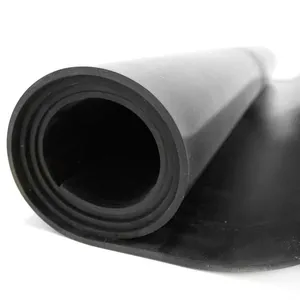
The terms silicone sheet and silicone mat are sometimes used for similar products. Thin or particularly flexible cut pieces are often referred to as a silicone mat, while technical semi-finished products tend to be called silicone sheets.
What matters is not the names, but the material quality, Shore hardness, thickness and temperature range.
A custom-cut silicone mat can therefore also be produced by means of an individually configured silicone sheet cut.
Silicone or EPDM: which material is more suitable?
Silicone and EPDM both have good weather and ageing resistance. However, there are clear differences in the service conditions.
| Property | Silicone | EPDM |
|---|---|---|
| Temperature resistance | very high | high |
| Cold flexibility | very high | high |
| UV resistance | very good | very good |
| Ozone resistance | very good | very good |
| Food applications | very well suited depending on quality | depending on quality |
| Hot water/steam | good to very good | very good |
| Oil resistance | limited | limited |
| Cost | higher | usually more favourable |
Silicone sheets are particularly worthwhile where high temperatures, strong temperature fluctuations or special hygiene requirements exist.
EPDM, by contrast, is often the more economical solution for general sealing and outdoor applications.
Machining silicone sheets
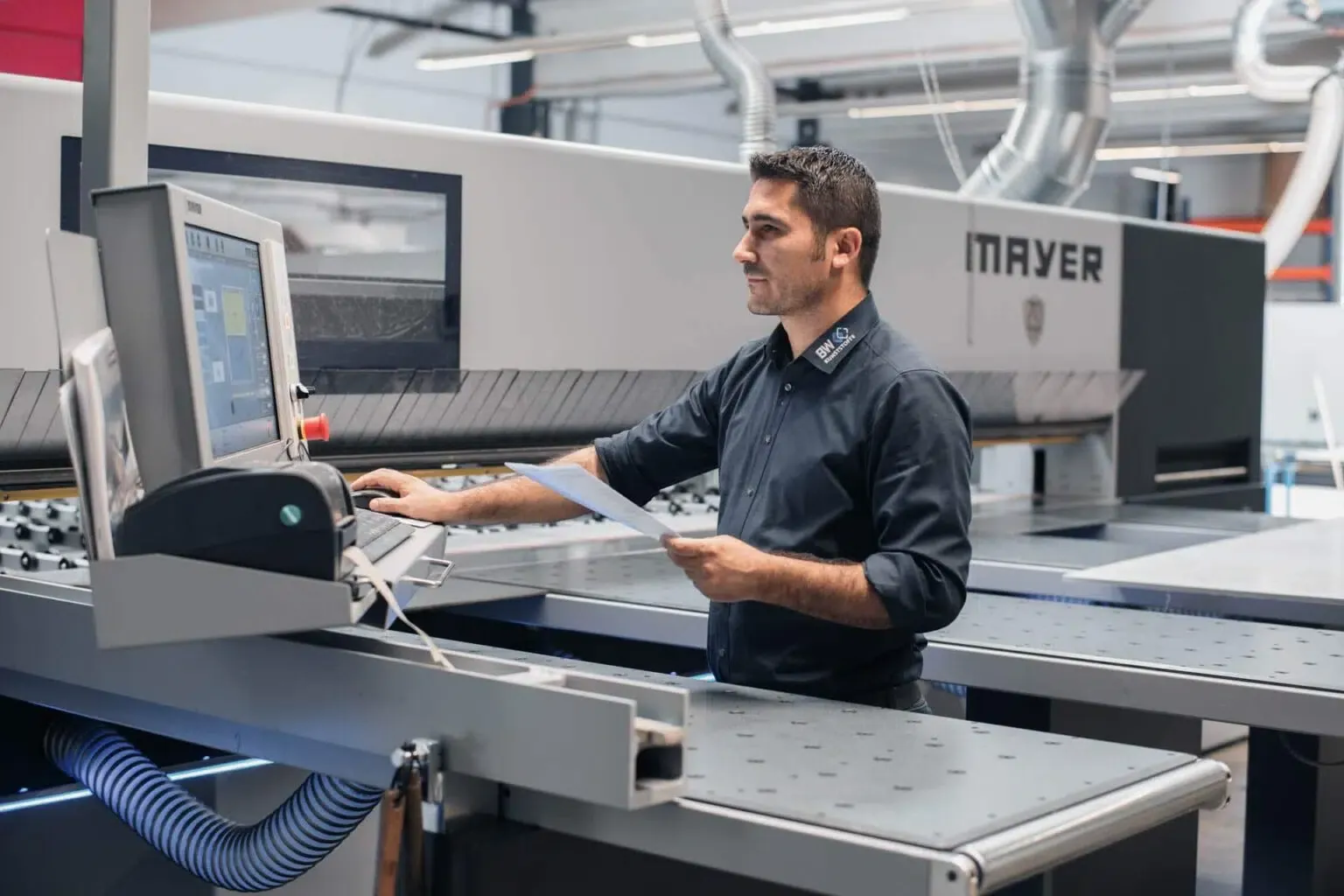
Silicone sheets can be machined in different ways depending on thickness, size and desired contour. Straight cuts can be made on thinner materials, for example, using suitable cutting tools.
For precise component geometries, industrial cutting or punching processes may be worthwhile depending on the requirement.
With a directly ordered custom-cut silicone sheet, subsequent adjustment of length and width is often eliminated entirely.
Properties
Silicone has several properties that distinguish the material from many other elastomers.
High temperature resistance: silicone is suitable for applications in which other rubber materials reach their thermal limits.
Cold flexibility: the material remains elastic even at low temperatures.
UV and weather resistance: silicone has very good resistance to UV radiation, ozone and weather influences.
Electrical insulation: the material can be used for various electrically insulating applications.
Elasticity: silicone can absorb deformation and then largely return to its original shape.
Ageing resistance: the material properties remain comparatively stable even under prolonged stress.
Applications
Mechanical and plant engineering
Silicone sheets are used as seals, intermediate layers, supports or thermal insulation. Applications with fluctuating or high temperatures are particularly relevant.
Food industry
Thanks to the material quality intended for food contact, silicone sheets are suitable for numerous applications on processing and packaging machines.
Laboratory and medical technology
Silicone is used wherever elasticity, temperature resistance and hygienic properties must be combined.
Electrical engineering
Due to its electrically insulating properties, silicone can be used as a protective and insulating material.
Vehicle and device technology
Silicone sheets are suitable for temperature-stressed seals, covers and elastic intermediate layers.
Frequently asked questions about silicone sheets
What Shore hardness do the silicone sheets have?
According to the product specification, the silicone sheets offered have a hardness of 60 ±5 Shore A. This medium hardness offers a balanced ratio between elasticity and dimensional stability.
Up to what temperature can silicone sheets be used?
According to the product specification, the silicone grade offered is intended for temperatures from -60 °C to +230 °C.
Can silicone sheets be cut individually?
Yes. Width and length can be configured individually within the available dimensions.
Are silicone sheets UV-resistant?
Silicone has very good resistance to UV radiation, ozone and weather influences and is therefore also suitable for numerous outdoor applications.
Are silicone sheets suitable for food contact?
According to the product specification, the grade offered is intended for such applications in accordance with BfR XV, EC 1935/2004 and FDA 21 CFR §177.2600.
If you need further information or advice, we will be happy to assist you.
Technical data
| Property | Value |
|---|---|
| Material | Silicone |
| Hardness | 60 ±5 Shore A |
| Temperature range | -60 °C to +230 °C |
| Colour | Natural / translucent |
| maximum width | 1,200 mm |
| maximum length | 10,000 mm |
| Design | sheet cut to size |
| Food contact | BfR XV, EC 1935/2004, FDA 21 CFR §177.2600 |
The combination of high temperature resistance, elasticity and ageing resistance makes silicone a versatile elastomer for technically demanding applications.