Elastomers & rubber
NBR sheet – cut to size
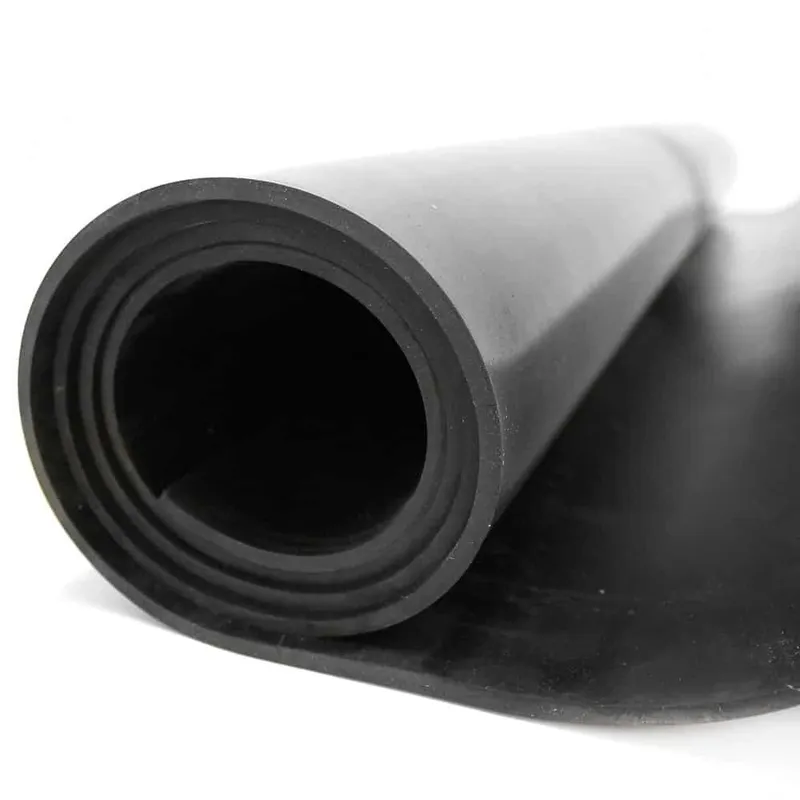
What are NBR rubber sheets? NBR rubber sheets (nitrile rubber) are engineering elastomer sheets distinguished by their excellent oil and fuel resistance. This…
Configure your cut
Description
NBR rubber sheets (nitrile rubber) are engineering elastomer sheets distinguished by their excellent oil and fuel resistance. This material is frequently used in industrial applications where high resistance to greases, oils and chemicals is required.
NBR rubber sheets are versatile and available in various hardness grades and variants to meet specific requirements. Their resistance and flexibility make them a preferred choice for sealing and gasketing applications.
NBR rubber sheets cut to size
A major advantage of NBR rubber sheets is the ability to cut them to individual dimensions. Tailor-made cut pieces make it easier to adapt to specific applications and minimise material waste.
Examples of tailor-made cut pieces:
- Gaskets: High-precision shapes for machines, pipelines and engines.
- Protective linings: Elastic and oil-resistant linings for industrial surfaces.
- Floor mats: Resistant to oils and chemicals, ideal for workshops.
With tailor-made cut pieces, projects can be implemented efficiently and specific requirements met.
Processing of NBR rubber sheets
NBR rubber sheets are easy to machine and offer numerous options for adaptation. The common processing methods include:
- Cutting: With knives, scissors or suitable machines.
- Punching: Precise shapes and gaskets can be created.
- Bonding: Use of special adhesives for oil-resistant joints.
- Vulcanising: To improve durability and flexibility.
- Laminating: Combination with other materials for specific requirements.
These processing options allow NBR rubber sheets to be adapted individually to meet the requirements of various industries.
Properties
NBR rubber sheets offer numerous advantages that make them particularly suited to industrial applications:
- Excellent oil and fuel resistance: Ideal for applications in contact with lubricants and chemicals.
- High elasticity: Ensures flexibility and shock absorption.
- Cost-effectiveness: A cost-efficient solution for numerous uses.
- Temperature resistance: Suitable for a wide temperature range.
- Good abrasion resistance: Durable, even under intensive use.
- Easy machinability: Easy to cut, punch and bond.
Applications
NBR rubber sheets are used in a wide variety of applications and industries, including:
- Mechanical engineering: Gaskets, hoses and protective linings.
- Automotive industry: Seals, oil pan gaskets and fuel lines.
- Chemical industry: Chemical-resistant pads and sealing material.
- Food industry: Oil-resistant components (in food-safe variants).
- Workshops and production: Floor mats and protective materials for oil-exposed working environments.
The versatility and resistance of NBR rubber sheets make them a preferred choice for environments where lubricants and chemicals are in use.
FAQ on NBR rubber sheets
Are NBR rubber sheets weather-resistant?
NBR is less resistant to ozone and UV radiation, which is why it is mainly recommended for indoor applications.
In which thicknesses are NBR rubber sheets available?
Standard thicknesses range from 1 mm to 50 mm; custom-made versions are available on request.
What advantages do NBR rubber sheets offer compared with other elastomers?
NBR stands out for its exceptional oil and fuel resistance, which distinguishes it from materials such as EPDM or SBR.
Can NBR rubber sheets be recycled?
Yes, NBR is recyclable, which makes it an environmentally friendly option.
How are NBR rubber sheets processed?
NBR rubber sheets can be individually adapted by cutting, punching, bonding and vulcanising.
Technical data
The main technical characteristics of NBR rubber sheets are:
- Hardness: 40 to 80 Shore A (depending on variant)
- Temperature resistance: -30 °C to +100 °C (short-term up to +120 °C)
- Density: approx. 1.4 g/cm³
- Tensile strength: Up to 10 MPa
- Elongation at break: 250 % to 400 %
- Resistance:
- Excellent against oils, greases and fuels
- Good against diluted acids and alkalis
- Abrasion resistance: High
- Standard formats: Available in thicknesses from 1 mm to 50 mm and widths up to 2000 mm