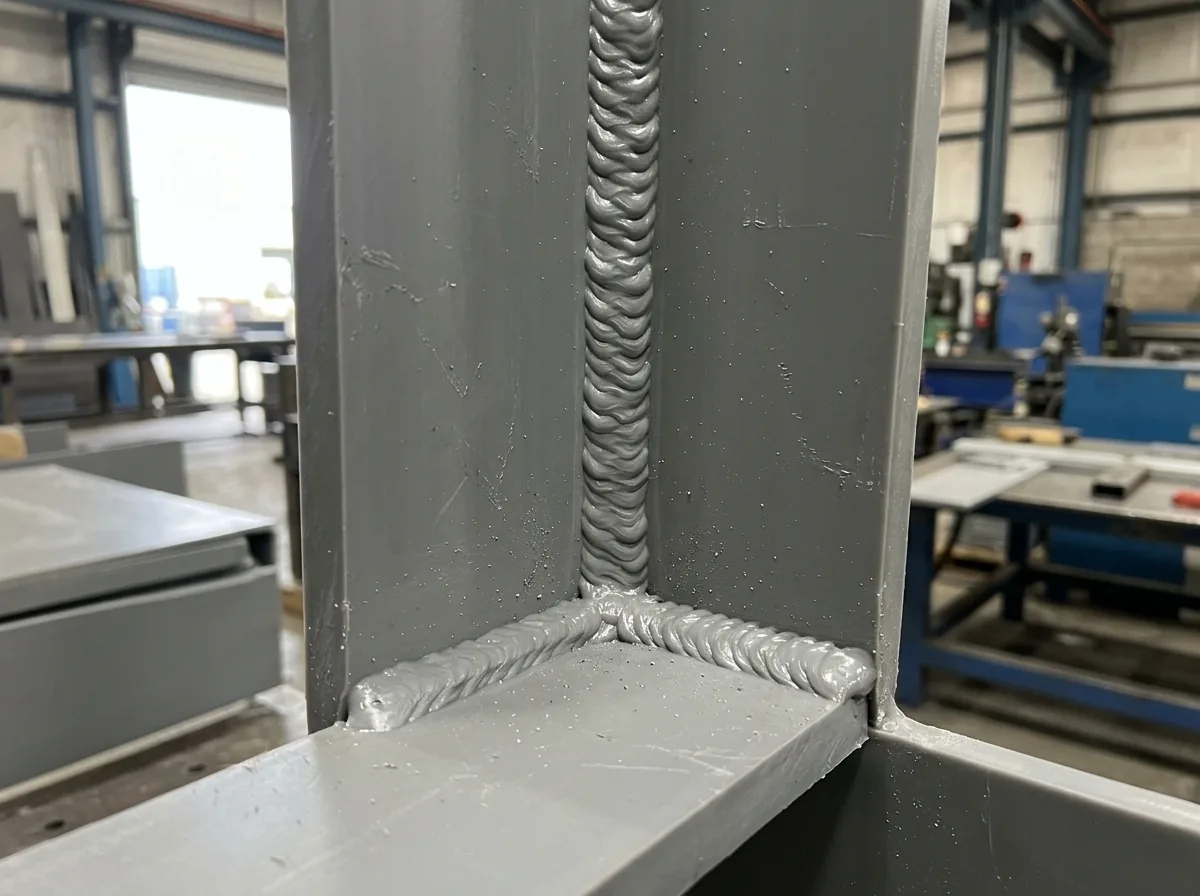
 This image was created with artificial intelligence – marked under Art. 50 of the AI Act, Regulation (EU) 2024/1689. It is a placeholder until the company's photos arrive.
How engineering plastics prove their worth in water technology
Why plastics are indispensable in water technology. Discover materials, advantages and application examples.
Engineering plastics are an important alternative to metallic materials in water technology. They are corrosion-free, often resistant to chemicals and, depending on the plastic, absorb very little water. This makes them suitable for components that come into permanent contact with drinking water, wastewater, process water or humid environments.
Which plastics are suitable for water technology depends heavily on the respective application, however. In addition to water resistance, temperature, mechanical load, contact with chemicals and, where applicable, requirements for contact with drinking water must be taken into account.
Martan Plastics supports you in selecting suitable plastic materials as well as in the manufacture of custom components for water technology applications.
Why are plastics used in water technology?
Components in water technology are often permanently exposed to moisture, water, cleaning agents, salt solutions or other chemical media. At the same time, valves, guides, sealing components, tanks or pump components must reliably perform their function over long periods.
Depending on the material, engineering plastics offer various advantages for this:
- no corrosion as with unprotected metallic materials
- low to very low water absorption
- good resistance to numerous chemical media
- low weight
- good options for mechanical machining
- varying strength and wear properties
- semi-finished products and finished parts suitable for many applications
Additional requirements apply to applications in drinking water supply. Further information on this can be found under Plastics in contact with drinking water as well as on our industry page for drinking water and wastewater technology.
How water-resistant are engineering plastics?
The water resistance of a plastic describes not only whether the material is attacked by direct contact with water. For technical components, it is particularly relevant how much moisture the material absorbs and whether this changes dimensions or mechanical properties.
Plastics such as PE, PP, PVDF and POM have low or very low water absorption and are therefore of interest for many applications involving regular contact with water.
When assessing this, however, you should always take the full operating conditions into account:
- permanent or temporary immersion
- temperature of the water
- contact with water vapour
- salt content and other dissolved substances
- acids, alkalis or cleaning chemicals
- mechanical load on the component
- required dimensional accuracy
- indoor or outdoor use
A plastic can be very resistant to pure water but behave differently at higher temperatures or with additional chemicals. The material selection should therefore always be based on the specific application.
Which plastics are suitable for water technology?
Depending on the area of use, different engineering plastics may be considered.
| Plastic | Properties for water technology applications | Typical applications |
|---|---|---|
| PE – Polyethylene | very low water absorption, good resistance to numerous chemical media, impact-resistant | tanks, linings, guides, pipe components |
| PP – Polypropylene | low water absorption, good chemical resistance, higher temperature resistance than many PE applications | tanks, apparatus engineering, wastewater technology, chemically exposed components |
| PVDF – Polyvinylidene fluoride | high chemical and thermal resistance | industrial water treatment, chemically demanding systems, high-purity applications |
| POM – Polyoxymethylene | low water absorption, high rigidity and good dimensional accuracy | valve components, guides, bearings and precision parts |
| PVC | good chemical resistance and economical processing | pipes, valves and piping systems |
Which material is suitable cannot be decided on the basis of water resistance alone. For precise moving components, for example, different properties may be required than for a large-area tank or a lining.
PE in water technology
Polyethylene is one of the particularly interesting plastics for applications involving moisture and water. PE has very low water absorption. As a result, its dimensions and properties are only slightly affected by water or high humidity.
In addition, polyethylene has good resistance to numerous acids, alkalis and salt solutions. Depending on the PE type, the material is suitable for, among other things, tanks, linings, covers, guides and structural components.
For applications with high temperatures or particularly high requirements for dimensional accuracy, however, alternative materials should be considered.
More on the various grades can be found on our page on polyethylene (PE).
Pay attention to chemical resistance with water and wastewater
In water technology, a component often does not come into contact with pure water alone. Wastewater, process water or cleaning media can contain acids, alkalis, salts and other chemical constituents.
Therefore, in addition to water resistance, the chemical resistance of plastics must also be taken into account.
The following details are particularly important for a reliable material selection:
- type of medium
- concentration of chemicals contained
- temperature
- duration of contact
- mechanical load
- possible temperature changes
A general statement such as "water-resistant" is therefore not sufficient for technically stressed components.
Typical applications of plastics in water technology
Engineering plastics are used in numerous areas of water technology. These include both components for water conveyance and mechanically stressed components within systems.
Typical applications are:
- pipe and connection components
- valves and fittings
- pump components
- guides and sliding elements
- bearings and bushes
- tanks and vessels
- linings
- filter and treatment systems
- components for process water systems
- components in wastewater technology
If you need custom-manufactured components, Martan Plastics can select suitable plastic semi-finished products and process them into application-specific finished parts through plastic machining.
Plastic or metal in water technology?
A key advantage of plastics is their freedom from corrosion. While metallic materials must be protected against corrosion depending on water quality, environment and material, thermoplastic plastics do not rust.
Add to this the lower weight and the wide selection of different property profiles.
However, this does not mean metal can be replaced across the board. Under high mechanical loads, high temperatures or special structural requirements, a metallic material can still make sense.
The material decision should therefore be made on the basis of the actual requirements of the component.
Which plastic is suitable for your application?
To select a plastic for water technology, the actual operating conditions should first be defined.
Particularly important are:
- Does the component come into contact with water permanently or occasionally?
- Is it drinking water, wastewater or process water?
- What temperatures occur?
- Are acids, alkalis, salts or cleaning agents present?
- What mechanical forces act on the component?
- Are tight tolerances required?
- Is the component used indoors or outdoors?
- Are certain approvals or material certificates required?
On this basis, for example, PE, PP, PVDF, POM or other engineering plastics can be compared with one another in a targeted way.
For components of water supply and wastewater treatment, you will find additional information on our page on plastics for drinking water and wastewater technology.
Frequently asked questions about plastics in water technology
Which plastic is particularly water-resistant?
PE, PP, PVDF and POM absorb only low or very low amounts of water and are therefore suitable for numerous applications involving moisture or direct contact with water. Which material is technically suitable also depends on temperature, mechanical load and the substances contained in the water.
Do plastics absorb water?
That depends on the respective plastic. Some engineering plastics absorb only very small amounts of moisture, while other materials can react more strongly to moisture. For dimensionally critical components, water absorption should therefore be included in the material selection.
Is PE suitable for permanent contact with water?
PE has very low water absorption and is often used for applications involving water or high humidity. However, the specific PE grade, temperature, mechanical stress and possible additional chemicals must be taken into account.
Which plastic is suitable for wastewater?
For applications in wastewater technology, PE and PP may be considered, among others. For chemically particularly demanding media, PVDF can also be of interest. The selection should be based on the composition of the wastewater, the temperature and the mechanical load.
Which plastics may come into contact with drinking water?
For contact with drinking water, the general suitability of a plastic type is not sufficient. The specific material grade and the product manufactured from it must meet the relevant hygiene and regulatory requirements. Further information can be found in our article Plastics in contact with drinking water.
Engineering plastics for water technology components
For applications in water technology, Martan Plastics offers various engineering plastics as semi-finished products, cut pieces and custom-machined finished parts.
Which material solution is suitable depends on the type of water, temperature, contact with chemicals, mechanical load and the required approvals. On the basis of your drawing or technical requirements, suitable materials can be compared with one another in a targeted way.
Request an engineering plastic solution for your application