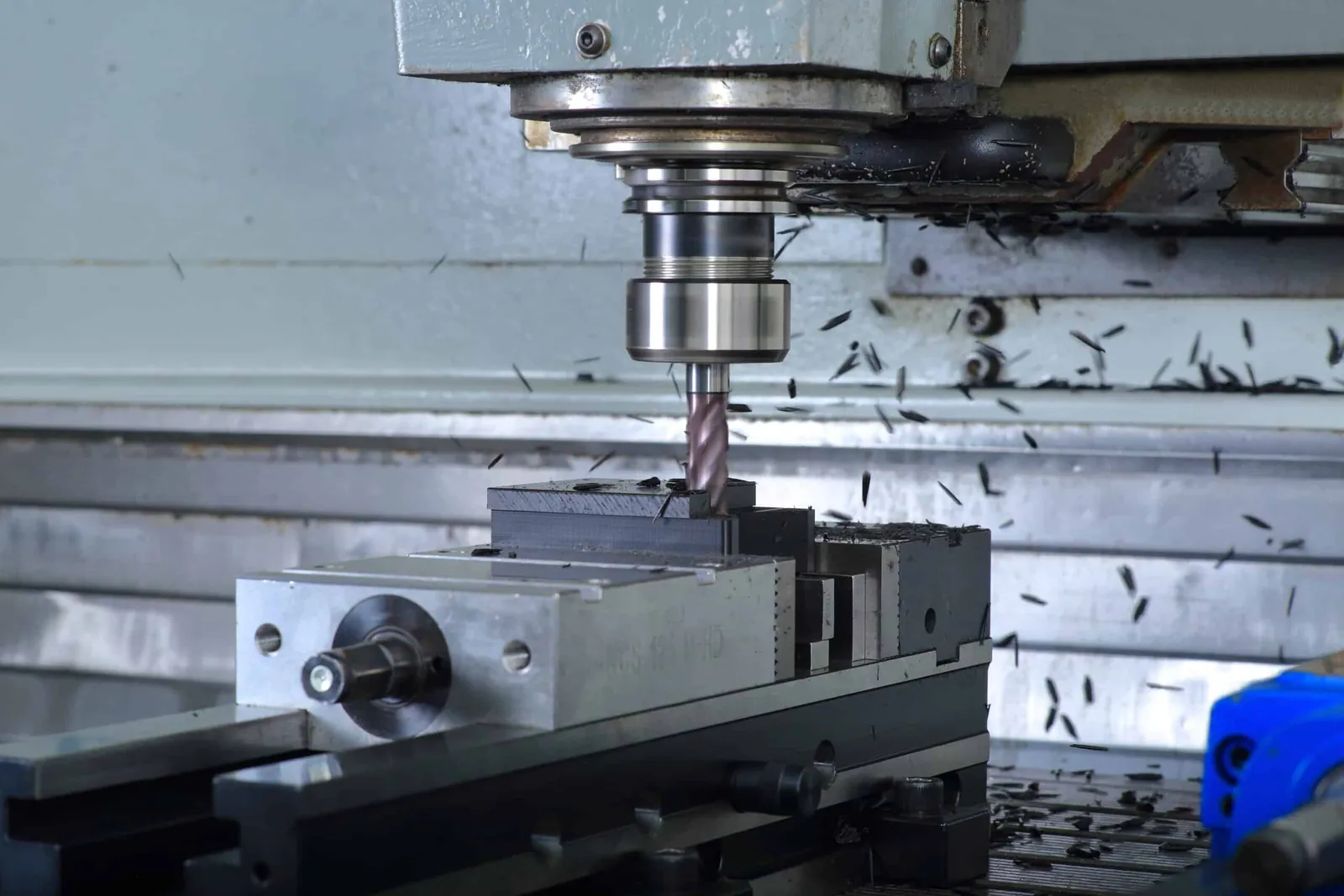
This image was created with artificial intelligence – marked under Art. 50 of the AI Act, Regulation (EU) 2024/1689. It is a placeholder until the company's photos arrive.
Centreless cylindrical grinding
Perfect roundness and tight tolerances thanks to centreless cylindrical grinding. Ideal for technical rubber parts. Calculate and secure your quote.
Centreless Round Grinding
THE GRINDING THAT MAKES YOUR WORKPIECE PERFECT
BW GUMMI GMBH
THE GRINDING THAT MAKES YOUR WORKPIECE PERFECT
Centreless round grinding for plastic rods and plastic tubes
Centreless round grinding (centerless grinding) produces cylindrical surfaces with defined roundness and reproducible dimensional accuracy. The process is suitable for plastic semi-finished products such as rods and tubes where surface quality and tight dimensional specifications are to be achieved reliably in the process. In the context of
centreless round grinding primarily serves fine machining: diameter, concentricity and surface can be specifically aligned to the requirements of the later function.
Machining range
- Diameter: 3.0 mm to 100 mm
- Length: up to 3000 mm
Typical requirements from practice
- defined surface quality for sealing and sliding areas
- constant diameter for fits, guides and bearing points
- stable reproducibility for series and repeat parts
Centreless round grinding grinds workpieces without centring between centres. This supports uniform machining over the entire length and facilitates throughput for recurring geometries.
Process and mode of operation of centreless round grinding
In centreless round grinding, the workpiece is machined without fixed centring. Guidance is provided between the grinding wheel, regulating wheel and support rail. This arrangement enables continuous machining of cylindrical plastic semi-finished products over the entire length.
Structure of the grinding process
- Grinding wheel: determines material removal, surface quality and final dimension
- Regulating wheel: controls feed rate and rotation of the workpiece
- Support rail: defines the position of the workpiece in the process
The workpiece rotates in a controlled manner between the wheels and is removed evenly. The absence of centring means no localised stresses arise, which is particularly relevant for longer plastic rods and thin-walled tubes.
Factors influencing dimension and surface
- hardness and elasticity of the plastic
- grinding wheel bond and grit
- feed rate and infeed
- thermal load during machining
Compared with turning processes, centreless round grinding is particularly suitable for uniform diameters with high requirements for concentricity and repeat accuracy. In combination with upstream steps of CNC machining of plastics, complex components can be finished reliably in the process.
Suitable materials for centreless round grinding
Centreless round grinding is suitable for numerous engineering plastics. Decisive factors are material hardness, structure, thermal behaviour and the required surface quality. The selection of the suitable material influences process stability, dimensional accuracy and repeat accuracy.
Typically machined plastics
- PA (polyamide)
- POM (polyoxymethylene)
- PEEK
- PTFE
- PE and PP with suitable process control
More highly filled or glass fibre reinforced plastics can also be ground. This requires adapted grinding wheels and reduced infeeds in order to avoid surface chipping.
Material-related limits
- very soft elastomers with strong springback
- highly temperature-sensitive plastics without a cooling strategy
- thin-walled tubes with a high tendency to ovality
For critical materials, prior coordination within the scope of material advice is recommended in order to define the machining strategy and target dimensions. This allows scrap and subsequent corrections to be avoided.
Fields of application and typical applications
Centreless round grinding is used wherever uniform diameters, reproducible dimensional accuracy and a clean surface are required. The process is particularly suitable for rotationally symmetrical plastic parts in series and repeat production.
Typical applications
- guide rods and sliding rods
- spacers and sleeves
- tubes with a defined outer diameter
- pre-stages for sealing and bearing components
Cross-industry use
- mechanical and plant engineering
- automation and conveyor technology
- medical technology and laboratory technology
- electrical engineering and equipment manufacturing
In many cases, centreless round grinding is carried out as final machining after upstream production steps. Especially for functionally critical components, the combination with CNC-milled plastic parts supports controlled compliance with the required dimensional and functional parameters.
Contact us
Frequently asked questions about centreless round grinding
What does centreless round grinding mean?
Centreless round grinding describes a grinding process in which cylindrical workpieces are machined without centring points. Guidance is provided between the grinding wheel, regulating wheel and support rail, which produces uniform diameters over the entire length.
For which components is the process particularly suitable?
The process is suitable for plastic rods, tubes and rotationally symmetrical components with a constant outer diameter. Typical applications are guides, sleeves, spacers and pre-stages for sealing or bearing components.
Which tolerances can be achieved?
With suitable materials, diameter tolerances down to ±0.01 mm can be realised. Roundness and dimensional accuracy remain stable and reproducible even for longer components.
What role does the material play?
Material hardness, thermal behaviour and structure influence material removal, surface and process stability. Engineering plastics such as PA, POM or PEEK offer favourable conditions for precise grinding results.
How is coordination carried out before production?
Before series start, material, target dimension and surface requirement are defined. Coordination is often carried out in conjunction with upstream services such as plastic machining, in order to ensure process reliability and repeat accuracy.
IMPRESSIONS FROM RUBBER MACHINING AND SEALING TECHNOLOGY
Plastic machining
Plastic special parts
Rubber seals
Plastic special parts
Plastic machining
Rubber seals
Plastic special parts
Plastic machining
Rubber seals
STANDARD PLASTICS
» PE 300 (natural, black, green, ) » PE 500(natural, black, green) » PE 1000 (natural, black, green) » PP (polypropylene) » PVC (polyvinyl chloride) » PPE (polyPhenyleneEther) » ABS (acryButadieneStyrene) » PE1000 REG (PE 1000 REG) » PE1000 AST (PE 1000 AST) » PE 500 ELS (PE 500 ELS) » PE100 natural » Acrylic glass(PMMA), » Polycarbonate(PC) » Foam sheets » Multiwall sheets » Composite sheets » Corrugated sheets » Honeycomb sheet
ENGINEERING PLASTICS
» PA6 G, PA 6.6, PA 12, PA 6 G » POM-C (polyoxymethylene) » PET(polyethylene terephthalate) » PBT, PBT GF (polyButhyleneTerephthalate) » PCTFE (polyChlorTriFluorEthylene) » ECTFE ((ethyleneChlorTriFluorEthylene) » ETFE (ethyleneTetraFluorEthylene) » POM sheets (cut pieces) » PA sheets (PA 6.6, PA G natural) » Round rods (rod sections)
THERMOSETS
» HP 2061 (paper laminates) » HGW2082 (cotton fabric laminates) » HGW 2372 (epoxy resin laminates) » HGM 2471 (polyester resin) » HGW 2282.5 (melamine resin laminates) » Silicone resin laminates, high-temperature laminates, special materials and much more » Fabric laminates(HGW) PF CC 201 (HGW 2082) EP GC 201 (HGW 2372) EP GC 202 (HGW 2372.1) Paper(HP) PF CP 201 (HP 2061) PF CP 202 (HP 2061.5) EP GC 203 (HGW 2372.4) Resitex, Vetronit, Carta-M, Umabord, Ferrozel, Celeron, Etronit, Novotex
HIGH-PERFORMANCE PLASTICS
» PEEK natural (PEEK GF30) » PTFE (polyTetraFluorEthylene) » PVDF (polyVinylDieneFluoride) »PCTFE(polyChlorTriFluorEthylene) »ECTFE(ethyleneChlorTriFluorEthylene) » ETFE (ethyleneTetraFluorEthylene) »PTFE (PTFE white (virginal) »PTFE GF 25 (PTFE+25% GLASS MOD. (alternatively TFM® 4105 ) ) » PTFE GF30 » PTFE-MOD. » PTFE+25% » PTFE+25% GLASS MOD. » PTFE+GLASS+MOS » PTFE+25% CARBON/GRAPHITE » PTFE+15%
REQUEST YOUR NON-BINDING QUOTATION NOW
Submit individual enquiry
Industries we supply
Mechanical & plant engineering
Conveyor technology
Food industry
Automotive industry
Packaging industry
Medical / laboratory technology
Vehicle technology
Water technology
Aerospace industry
Rail technology
Shop fitting
Aviation industry
Mechanical & plant engineering
Conveyor technology
Food industry
Automotive industry
Packaging industry
Medical / laboratory technology
Vehicle technology
Water technology
Aerospace industry
Rail technology
Shop fitting
Aviation industry
Contact us