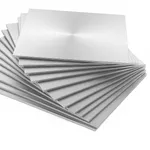
This image was created with artificial intelligence – marked under Art. 50 of the AI Act, Regulation (EU) 2024/1689. It is a placeholder until the company's photos arrive.
Stress-relief annealing for aluminium sheets
Stress-relief annealing of aluminium: when it makes sense, what effects it has on dimensional accuracy and distortion, and which cut pieces it is worth doing for.
The stress-relief annealing of aluminium sheets is a central process in industrial manufacturing for specifically reducing internal stresses. These arise during casting, rolling, cutting to size or mechanical machining and can become apparent through distortion, cracks or dimensional deviations. Particularly in the case of precise CNC-milled parts, the stress state of the semi-finished product has a direct effect on the quality and stability of the components. Through controlled heat treatment, these stresses can be neutralised and dimensional stability secured in the long term.
A practical example: in the CNC manufacturing operation of a mechanical engineering company, distortion occurred regularly in large-format aluminium sheets after finishing. After the introduction of stress-relief annealing, the components remained dimensionally stable – reworking of aluminium and rejects were reduced by up to 70%.
What does stress-relief annealing of aluminium mean?
The stress-relief annealing of aluminium is a targeted heat treatment in which the material is heated to such an extent that internal residual stresses present inside it are reduced without the mechanical properties such as strength or hardness being substantially changed. The process utilises the thermal movement of the atoms: as the temperature rises, local distortions in the crystal lattice can even out. These microscopic displacements lead at the macroscopic level to a relaxation of the material.
The temperature here is generally between 250 and 400 °C – significantly below the melting or solution annealing temperatures. The exact choice depends on the alloy, because every aluminium composition reacts differently to heat. More important than the exact temperature, however, is uniform heating across the entire cross-section, since temperature differences can generate new stresses. Equally crucial is the subsequent slow, controlled cooling, usually in the furnace, in order to prevent stresses from re-forming.
In practice this means: the material is thermally "calmed". This relaxation improves dimensional accuracy, the material reacts more uniformly during machining and the risk of distortion or cracking falls considerably. Stress-relief annealing thus serves as the link between material production and mechanical further processing.
Physical principles and mechanism of action
Internal stresses arise when different regions of a workpiece are deformed or cooled to differing degrees. Aluminium conducts heat very well, which enables rapid temperature equalisation but also generates local stress fields. During stress-relief annealing, controlled heating takes place, which facilitates the movement of dislocations in the crystal lattice. These microscopic displacements reduce macroscopic stresses – the material relaxes mechanically.
During cooling, it is crucial to avoid temperature gradients. If cooling is too rapid, new stresses can form. Cooling therefore generally takes place in a closed furnace or under defined air conditions.
Difference from solution annealing and artificial ageing
Stress-relief annealing differs clearly from other annealing processes:
| Process | Temperature range | Aim | Typical application |
|---|---|---|---|
| Stress-relief annealing | 250–400 °C | Reduction of residual stresses | After rolling, CNC milling or welding |
| Solution annealing | 480–550 °C | Microstructural hardening, bringing alloying elements into solution | T6 tempers, high-strength alloys |
| Artificial ageing (T5/T6) | 150–200 °C | Precipitation hardening | After solution annealing, targeted increase in strength |
Stress-relief annealing is therefore not a hardening process, but a measure for stabilising the microstructure and for avoiding distortion.
Causes of internal stresses in aluminium cut to size
Residual stresses can arise at various levels:
- Manufacturing-related stresses during rolling, casting or extrusion
- Mechanical stresses from machining with a high material removal rate
- Thermal stresses from uneven cooling after heat treatments
- Assembly stresses when joining different material thicknesses or alloys
Particularly in the case of large-format sheets or thin-walled components, these stresses lead to measurable distortion. If, for example, a heavily stressed semi-finished product is machined on the CNC machine, the material can suddenly relax after material removal and deform unevenly.
Procedure and typical parameters of stress-relief annealing
The annealing process takes place in several phases. First, the workpiece is brought evenly to the target temperature at a moderate heating rate of about 30 to 50 °C per hour. Depending on the alloy, this lies between 250 °C and 400 °C – for example in the case of EN AW-5083 or EN AW-7075. A holding phase then follows, which can last two to six hours, and longer for thicker sheets. During this time, the internal stresses can reduce evenly.
The decisive step is cooling: it takes place slowly and in a controlled manner, usually in the furnace or in still air, with a cooling rate of no more than 50 °C per hour. Only in this way can new stresses be avoided. What is decisive is temperature uniformity throughout the entire component, since even small differences between surface and core can lead to new stress zones. Modern industrial furnaces therefore work with multi-zone heating systems and precise temperature control in accordance with DIN EN 515 and EN 485-2.
Influence on distortion and dimensional accuracy in CNC machining
CNC millers are familiar with the phenomenon that an aluminium sheet warps slightly after the first machining pass or loses its flatness. The cause is released internal stresses that reduce unevenly during material removal. If, by contrast, a sheet is stress-relief annealed, it remains considerably more stable and more predictable in its behaviour. The workpiece reacts uniformly, whereby dimensional deviations, reworking and rejects are greatly reduced.
Furthermore, the stress state also affects tool wear. Uniformly relaxed material generates more constant cutting forces, which leads to a longer tool life and improves surface quality. Particularly in the case of large-volume milled parts with complex geometries and thin-walled areas, this effect is decisive in order to obtain precise, distortion-free components. In series production, the use of stress-relief annealed semi-finished products enables better reproducibility and consistent process reliability over long run times.
Stress-relief annealing of EN AW-5083, 6082 and 7075
Not every aluminium alloy reacts in the same way to stress-relief annealing:
- EN AW-5083 (AlMg4,5Mn): Seawater-resistant sheet, usually already stress-relief rolled – additional annealing only worthwhile for large formats.
- EN AW-6082 (AlSi1MgMn): Good strength, frequently CNC-machined – stress-relief annealing significantly improves dimensional accuracy.
- EN AW-7075 (AlZn5,5MgCu): High-strength alloy for aerospace and toolmaking – strongly prone to residual stresses, therefore thermal relaxation urgently recommended.
- EN AW-5754: Good cold formability, moderate degree of residual stress – annealing advantageous for large material removal.
Defect patterns in the case of insufficient heat treatment
- Distortion after finishing or engraving
- Cracking during welding or drilling
- Uneven anodising due to stress fields
- Surface waves after polishing
Such effects are an indication that the starting material was not stress-relief annealed or that the temperature control was uneven.
Measuring methods for determining stresses
Various measuring methods are available for assessing the effectiveness of stress-relief annealing. The hole-drilling method is a mechanical process in which a small hole is drilled into the material and the resulting strain is measured with the aid of strain gauges. Conclusions about the residual stresses present can be drawn from this. This method is practical, semi-destructive and suitable for many materials.
X-ray diffraction (XRD) allows a highly precise analysis of near-surface stresses. By examining the lattice distortions, even the smallest residual stresses can be detected. For deeper-lying areas, neutron-based methods are increasingly used, which can measure through the entire material. In addition, strain gauges (DMS) offer a way of monitoring stress profiles in real time during the annealing process. In this way, the reduction of stress can be specifically documented and controlled, which ensures high process reliability.
Combination with machining strategies
Stress-relief annealing is only one part of the chain of measures for manufacturing aluminium parts to size. In practice, it has been shown that machining strategy and heat treatment must be optimally coordinated with one another. Symmetrical machining – that is, the even removal of material on both sides – reduces uneven stress influences. In multi-side milling, intermediate clamping should be used in order to compensate for distortion. Likewise, temperature-controlled machining in climatically stable environments can help to prevent thermally induced dimensional changes.
Advanced CNC controls make it possible to optimise machining sequences in such a way that the thermal load is distributed evenly. In combination with stress-relief annealed material, this produces particularly precise components with minimal reworking requirements – an essential factor for series processes and automated manufacturing environments.
Advantages for downstream manufacturing steps
Stress-relief annealed aluminium sheets behave more stably in further processing. This has a positive effect on many processes: during welding, the risk of distortion and stress cracks falls, during anodising of aluminium a uniform layer thickness is produced, and during polishing or grinding the material reacts homogeneously without local hard zones. Precise fits also mean less corrective work during assembly.
Economic assessment
The additional effort involved in stress-relief annealing consists of energy and process costs, which vary depending on component size. Nevertheless, the advantages outweigh these: less rejects, shorter reworking, more stable manufacturing processes. Particularly in the case of CNC machining of high-quality alloys, the process pays for itself quickly.
Many aluminium suppliers therefore already offer pre-stressed or stress-relief annealed tempers ex works. The material designation frequently contains the note "statisch geglüht" or "fine-milled and stress relieved", which indicates thermal relaxation.
Alternatives and complementary processes
- Vibratory stress relief: mechanical method using vibrations – energy-efficient, but with a lower depth effect.
- Cryogenic treatment: deep-freeze process for stabilising the microstructure, rarely used for aluminium, but can be combined.
- Intermediate annealing: combination of milling and intermediate heat treatment for highly complex structures.
Sustainability and energy efficiency
Stress-relief annealing contributes not only to product quality but also to sustainability. Modern industrial furnaces today use heat recovery systems, precise temperature control and energy-saving insulation in order to reduce energy demand considerably. Targeted stress reduction lowers the reject rate in manufacturing, which reduces material losses and CO₂ emissions. In addition, the process enables a longer tool life, since uniformly relaxed materials place less load on cutting edges and machine components.
In combination with energy-optimised furnace systems and digital process monitoring (e.g. via temperature profiles and annealing curve records), a resource-saving overall process is created. Stress-relief annealing thus makes a measurable contribution to ecologically and economically sustainable metalworking.
Precision through controlled heat treatment
Stress-relief annealing is far more than an optional heat treatment – it is a decisive building block for the manufacture of precise, distortion-free aluminium parts. Through the targeted reduction of internal stresses, dimensional accuracy, surface quality and machinability are considerably improved. Particularly in the CNC sector, where hundredths of a millimetre decide between a fit and a reject, the process creates the basis for reproducible results.
Furthermore, stress-relief annealing extends the life of tools, reduces reworking and ensures process stability in automated production environments. Anyone who uses aluminium sheets for highly precise applications such as mechanical engineering, aerospace or tool technology benefits twice over: through improved quality and through more efficient, more sustainable manufacturing.
Avoid distortion and dimensional deviations: obtain advice on stress-relief annealing or configure your aluminium cut to size directly with the appropriate material treatment.
Frequently asked questions about stress-relief annealing of aluminium
What happens during stress-relief annealing of aluminium? During heating and holding in the range of 250–400 °C, internal stresses reduce through plastic strain processes. The microstructure remains unchanged.
How is the optimum temperature determined? It depends on the alloy. Pure aluminium is usually treated at 250–300 °C, while high-strength alloys require temperatures of up to 380 °C.
How does stress-relief annealing affect strength? Strength is largely retained, but can fall slightly. However, the gain in dimensional accuracy clearly outweighs this.
Can stress-relief annealed sheets be recognised? Yes, suppliers often mark these with "SR" (stress relieved) or "statisch geglüht". The material is generally also fine-milled.
Can stress-relief annealing be carried out several times? Yes, particularly in the case of repeated mechanical machining or weld repairs, renewed annealing can be worthwhile.
How does stress-relief annealing affect anodised surfaces? It improves layer uniformity, since the material reacts free of stress.
Is vibratory stress relief an alternative? Partly – it is energy-efficient, but does not achieve the same depth effect as thermal annealing.