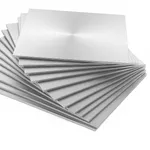
This image was created with artificial intelligence – marked under Art. 50 of the AI Act, Regulation (EU) 2024/1689. It is a placeholder until the company's photos arrive.
Warp-free cut pieces: How to avoid stress in the material
Avoiding distortion in aluminium sheets – with the right alloys, low-stress pre-treatment and clean cut-to-size technique.
When cutting aluminium sheets to size, unwanted distortion often occurs – even when precise machines and high-quality tools are used. Dimensional accuracy, flatness and function can be severely affected. This not only affects the quality of the end product, but also causes additional work steps, lost time and material costs. Particularly in industrial production, this can delay entire processes or increase reject rates. To prevent this, a deep understanding of the causes is just as crucial as consistently implementing technical measures in practice. Anyone who takes targeted preventive action here secures stable results, minimises rejects and saves costs in the long term.
Why aluminium sheets tend to distort during cutting
Aluminium is a sought-after material in industry – light, corrosion-resistant and easy to machine. Yet despite its positive properties, the material tends to distort during cutting, milling and drilling. The reason lies in the internal stresses that arise during the manufacturing process. These residual stresses can be released during cutting and cause the sheet to deform after machining.
Large-format or thick sheets are particularly affected, as are components where material is removed from one side only. Uneven temperature development during machining or unsuitable storage can also exacerbate the problem. Depending on the cutting sequence, machine parameters and material condition, a sheet may subsequently warp, twist or change in flatness. Anyone who wants to work without distortion must therefore not only cut precisely – but also take targeted action at the material stage, in preparation and in the clamping concept.
Causes of stresses in the material
Residual stresses from production
Most aluminium sheets are rolled or cast. During cooling after the production process, residual stresses arise – particularly in thick sheets. These stresses are often invisible, but have a clear effect during cutting: the sheet "distorts" as soon as material is removed.
Temperature differences during machining
When aluminium is machined, the cutting zone heats up. With uneven cooling – for example due to a lack of lubrication or asymmetrical material removal – additional stresses arise. These lead to deformations that become visible after cutting.
Improper storage
Stresses can also be encouraged by incorrect storage. If a sheet is not stored flat over a longer period, it can distort due to its own weight or temperature fluctuations. This factor plays a role particularly with large-format cut pieces.
Measures to prevent distortion during cutting
Choose suitable alloys
Not every aluminium alloy is equally prone to distortion. For stress-critical applications, materials such as EN AW 5083 or EN AW 7022 are advisable, as they are considered particularly dimensionally stable. The condition (rolled, cast, stress-relief annealed) is also decisive.
Pre-treatment: stress-relief annealed sheets
Stress-relief annealed aluminium sheets offer a high degree of stability. The annealing process significantly reduces residual stresses and creates the basis for distortion-free cutting – particularly in precision applications in mechanical engineering or jig and fixture construction.
Clamp correctly, cut gently
When sawing or milling, the clamping of the sheet on the machine table is decisive. It must be held firmly but without stress. Over- or under-clamping can lead to additional distortion. The cutting sequence should also be set up symmetrically to avoid one-sided loading.
Tool selection and cutting strategy
Sharp tools, suitable cutting speeds and a uniform feed motion are essential. Modern milling tools with low cutting pressure help to remove material gently. This preserves dimensional stability and accuracy.
Influence of the alloy on distortion behaviour
Different aluminium alloys show very variable behaviour during cutting. While EN AW 5083 is used primarily in shipbuilding, mechanical engineering or jig and fixture construction due to its good strength, corrosion resistance and weldability, high-strength alloys such as EN AW 7022 or EN AW 7075 offer particular advantages in terms of dimensional accuracy and low weight. The latter are preferably used where low weight combined with high precision is required – for example in aviation or mould making. The suitable alloy should be selected specifically for each application, whereby not only mechanical properties but also distortion behaviour and the availability of stress-relief annealed variants must be taken into account.
Recommendations for practice
- For critical applications, use stress-relief annealed aluminium sheets
- Carry out cutting symmetrically and in several stages
- Minimise temperature development through cooling
- Plan the machining direction at an early stage
- Store and transport sheets on flat surfaces
When is mechanical post-processing advisable?
Despite all measures, slight distortion cannot always be avoided. In such cases, parallel-face post-processing helps, for example by CNC milling with reference surfaces. Re-clamping components can also help to correct the final state – particularly where high precision is required.
Conclusion: Low-distortion cut pieces are plannable
Distortion in aluminium sheets is usually caused by internal stresses or thermal influences. Through targeted material selection, suitable pre-treatment and clean cutting technology, however, it can be avoided in most cases. Anyone who depends on precision should therefore pay attention to low-stress cut pieces at an early stage – for stable results and smooth further processing.