POM-C cut to size
The POM material commonly referred to as acetal (chemical name polyoxymethylene) is produced by various manufacturers in standard semi-finished products for…
POM-C cut to size natural and black
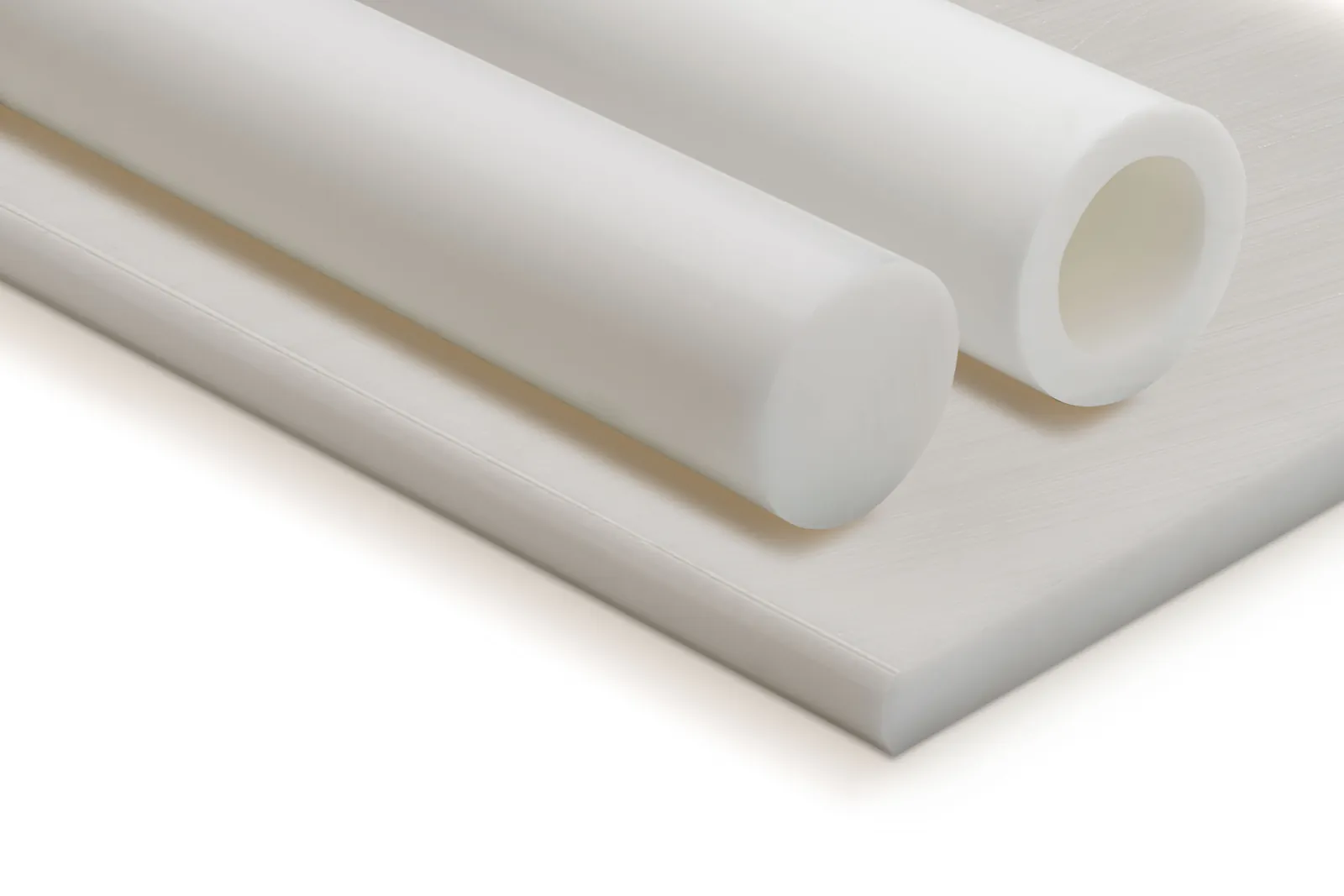
The POM material commonly referred to as acetal (chemical name polyoxymethylene) is produced by various manufacturers in standard semi-finished products for further processing and extruded in the form of sheets, rods and hollow rods. POM plastic is a partially crystalline thermoplastic with high mechanical strength and rigidity. Acetal polymer offers good sliding properties, excellent wear resistance and low moisture absorption. Thanks to its good dimensional stability, outstanding fatigue strength and excellent machinability, POM polymer is an extremely versatile engineering material – including for complex components.
With regard to their properties, a distinction is made between acetal homopolymers (POM-H) and acetal copolymers (POM-C). Due to the higher degree of crystallinity, POM H is characterised by a slightly higher density, hardness and strength. The POM C material, on the other hand, offers higher impact strength and higher abrasion resistance. The chemical resistance of the POM acetal copolymer is also higher and the melting point lower.
Properties and specifications of POM materials Properties of POM semi-finished products: high strength, rigidity and toughness high impact strength, even at low temperatures low moisture absorption (0.8 % at saturation) excellent wear resistance and sliding properties excellent machinability good creep resistance high dimensional stability good hydrolysis resistance (up to approx. 60 °) outstanding spring effect/resilience
- POM-AH – unfilled POM-C
- POM-AH LA – blue POM-C with solid lubricant
- POMAH SD – POM-C ESD
- POM-AH GF25 – POM GF, 25% glass-fibre reinforced
- POM AH LM – POM-C white laser-markable
- POM AD AF – POM-H with PTFE filler
- POM AH ELS black – conductive POM-C black
- POM AH MT – POM-C for applications in medical technology
- POM AH ID – POM-C with detectable filler
- POM AD – POM-H machined from DuPont™ Delrin® raw material
BW Kunststoffe supplies, among others, the following acetal shapes:
- POM rods
- POM sheet material
- POM hollow rods
The availabilities of the individual POM cut pieces from POM plastic sheets or rod material can be found on the respective product detail pages. Delrin® is a registered trademark of E.I. du Pont de Nemours and Company.
- sliding applications
- excellent design solutions with snap fastenings
- sliding parts such as bearing bushes, rollers, slide rails
- electrical insulating bodies
- components with water contact
- parts with scratch-resistant high-gloss surfaces
- a wide variety of components for food technology, pharmaceutical technology,
drinking water technology and medical technology
POM plastics are available in various versions. They can be used in many ways. This is why products made from the plastic POM are used in the most diverse areas, such as in machinery and plant. There, gears, sliding and guide elements, housing parts or pump parts are produced from POM. In electrical engineering, POM plastics are used, among other things, for insulators, coil formers or connectors. For vehicles, window regulators, door lock systems and joint shells are produced from the plastic. Further typical areas of application are vehicle construction, model making, furniture making, the construction industry, the catering industry, the packaging and sports industry as well as medicine. Parts made from the plastics are also used in the textile industry – zip fasteners are often made from the plastic polyoxymethylene. In addition, parts made from the versatile plastic are produced for musical instruments.
From us you can purchase various products made from the plastic POM-C. We offer precise POM cut pieces, rods, hollow rods, films, panels and sheets. Thanks to state-of-the-art machines and the highest quality standards, you will get only the best POM products from us. We supply our products made from various plastics to both private and commercial customers from the most diverse branches of industry. Benefit from fast availabilities, the highest quality and our flexible all-round service. If you have any questions about our products, you are welcome to contact our expert team. Challenge us.
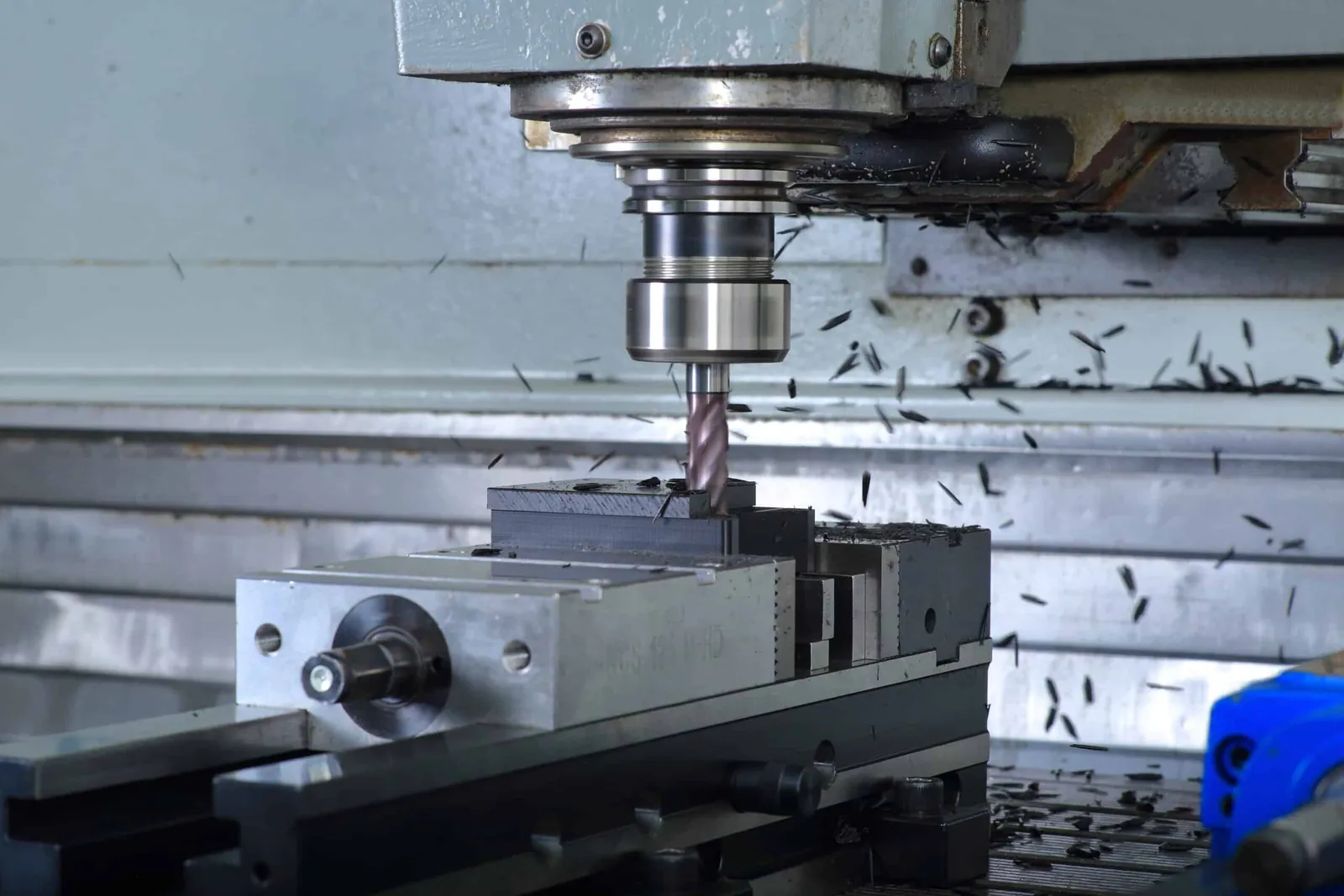
Our computer-controlled sawing and cutting machines (Mayer PS100) are state of the art. This means we guarantee our customers high cutting quality and exact dimensional accuracy. Whether solid sheets, multiwall sheets, the thinnest films or tubes and rods – we produce cut pieces to your specifications – quickly, efficiently and cost-effectively.
A distinction is made between the homopolymer (POM H) and the copolymer (POM C), which can be produced by different processes.
The most important processing method for POM plastics is injection moulding. POM plastics can be processed by injection moulding at 180 to 220 °C (POM-H) or 180 to 230 °C (POM-C). These plastics can also be processed by extrusion blow moulding. In the case of a sheet, a rod, a hollow rod, a panel or a cut piece made of (POM) polyoxymethylene, a fundamental distinction is made between two different versions. The POM type homopolymer and the polyoxymethylene variant copolymer. The cut pieces of the homopolymer plastic type carry the abbreviation POM-H and differ essentially through the corresponding degree of polymerisation of paraformaldehyde. In the production of the plastic POM-H, the end groups are closed for stabilisation in the form of an etherification or esterification process. This ensures that depolymerisation is prevented under the influence of acid or thermal load acting on cut pieces of POM sheets. The production of copolymers involves a different possibility of stabilisation and protection against the influence of acid. The plastic resulting from this production variant is given the abbreviation POM-C. For cut pieces of this POM type, the respective end groups are built up for stabilisation by hydrolysis to formaldehyde. The plastics can be clearly distinguished from one another on the basis of their given melting point. Cut pieces of the plastic type POM-H melt at a temperature of about 178°C, while a sheet of the plastic type POM-C already melts at approx. 166°C.
Abbreviated POM, polyoxymethylene is valued for its rigidity, low friction coefficients and dimensional stability. Here too, it is an engineering plastic that is used as a technical plastic for precision parts. POM can be used at temperatures in the range from -40° C to 130° C. At more than 220° C, the material begins to decompose thermally. The sliding properties, electrical and dielectric properties of POM are good. The material is used both in mechanical engineering and in electrical engineering, in vehicle and model making, in medicine and in furniture making. Lighters, clothing and packaging are made of POM, as are plectra for plucked instruments and individual parts of the e-cigarette. The material can be used in many ways.
| Polyamide extruded | PA 6, PA 6.6, PA & G +GF30 | |
|---|---|---|
| Polyamide cast | PA 6 G, +oil, +PE, +HI, +MOS, +GL, +GI | |
| Polyamide PA 6.6 | PA 6.6, +GF30, +CF20, +MOS, +HI | |
| other polyamides | PA 12, PA 4.6, PA 12G | |
| Polyoxymethylene | POM-C, +AST, +ELS, +PE, POM-H, +PTFE | |
| Polyethylene terephthalate | PET, +GL, +PTFE, +G | |
| Polyethylene PE 300 | PE 300, +ELS | |
| Polyethylene PE 500 | PE 500, +AST, +Reg. | |
| Polyethylene PE 1000 | PE 1000, +AST, + ELS, +Reg., +Reg. AST | |
| Polyethylene soft PE | soft PE (LD PE) | |
| Polypropylene | PP, +ELS, +MT, +GF30, PPs | |
| Polyvinyl chloride | rigid PVC, rigid PVC-C | |
| Polytetrafluoroethylene | PTFE, +KO25, +GF25, +GF15, +GR15, +BR40, +BR60, E-ECTFE | |
| Polyvinylidene fluoride | PVDF, +ELS | |
| Polyetheretherketone | PEEK, +GF30, +CF30, MOD, +PTFE, +MT , MT CF30, PEKEKK | |
| Polyimide | PI, +GR15, +DR40, +GR15 +PTFE10, +MOS15 | |
| Polyamide-imide | PAI, PSU, PPS, +GF40, +MOD, PEK, PPE, +GF30, PBT GF30, PEI | |
| Polymethyl methacrylate | PMMA XT, PMMA GS | |
| Polycarbonate | PC, PC with UV +GF30 | |
| Polystyrene | PS, ABS white/black | |
| Hard paper | HP 2061, .5, .6, HP 2063, HP 2062.8, .9 V0, HP 2361.1 | |
| Hard fabric | DIN designation HGW 2082, .5, HGW 2083, .5, HGW 2282.5 | |
| Glass hard fabric | HGW 2372, .1, .2, .4, HGW 2072, HGW 2272, HGW 2572 | |
| Special laminates | HGW 2082 GMP, GMG, GMP, MKHP 2061 | |
| Hard mat | HM 2471, HM 2472 | |
| Polyurethane | DIN designation PU D44 | |
| Vulkollan | DIN designation PU D15 | |
| Welding rods | PET G, PE 300, +ELS, PE 500, PP, +ELS, PPs, PVC, PVC-C, E-CTFE, PVDF |
BW Kunststoffe e.K: