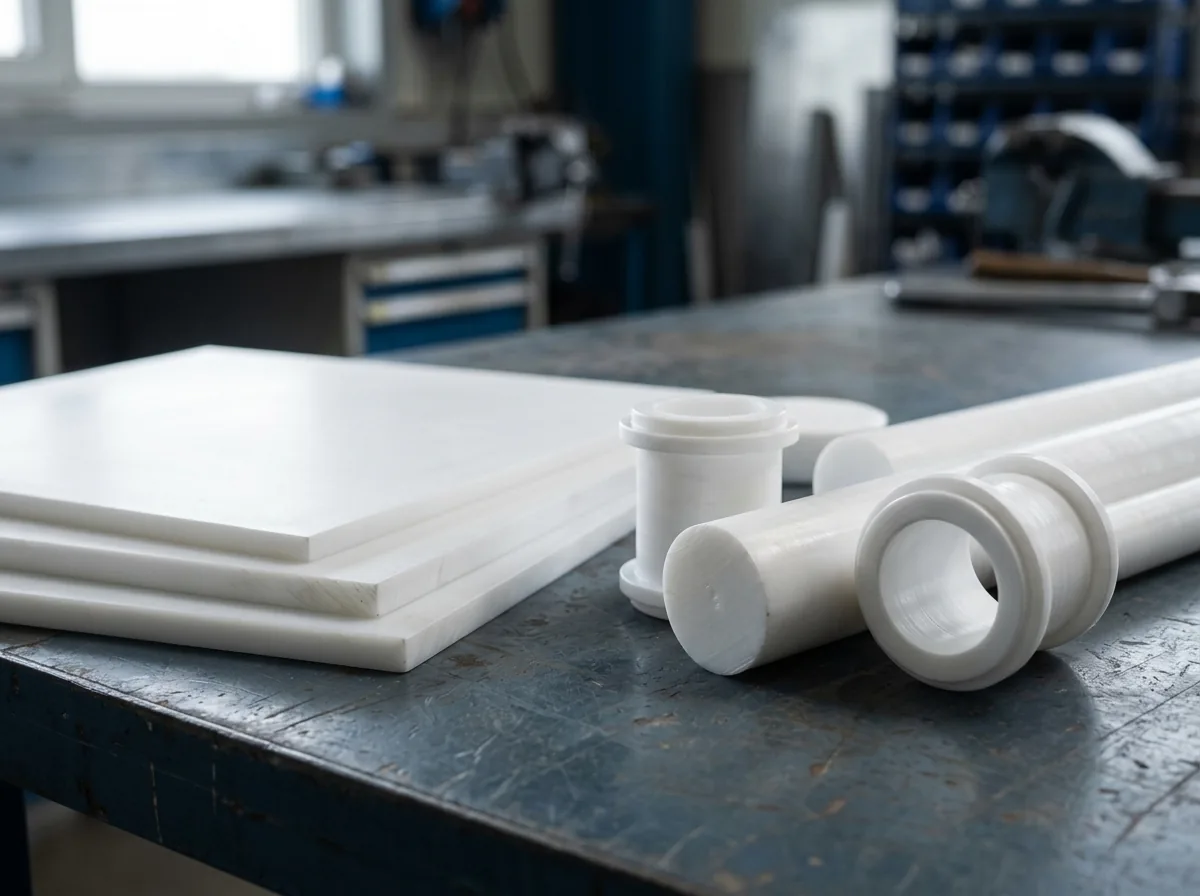
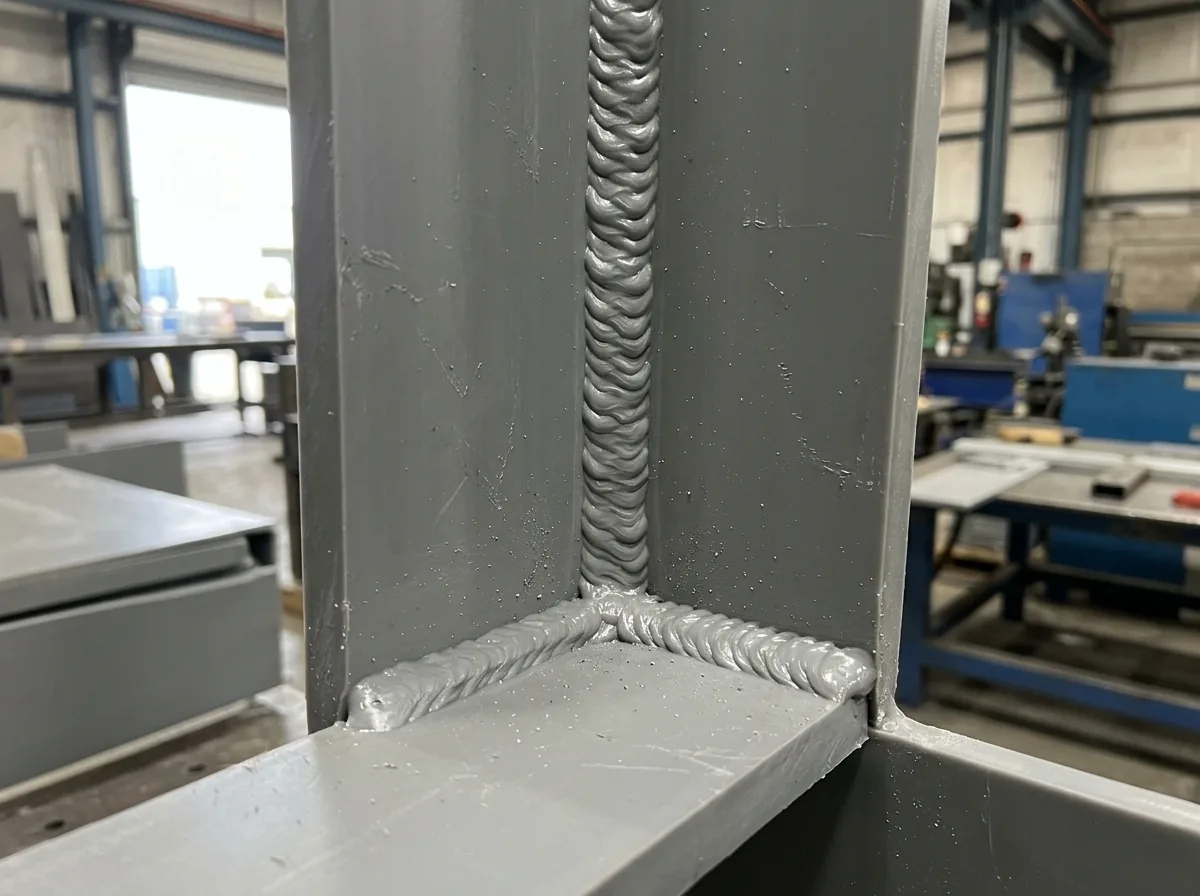
 This image was created with artificial intelligence – marked under Art. 50 of the AI Act, Regulation (EU) 2024/1689. It is a placeholder until the company's photos arrive.
High-performance plastics: when standard plastics reach their limits
High-performance plastics such as PEEK, PTFE or PI stand out for their extreme resistance to temperature, chemicals and wear. Find out where they are used and when their use is worthwhile.
In many industrial applications, conventional standard plastics such as polyethylene (PE) or polypropylene (PP) quickly reach their physical and chemical limits. While they offer good value for money and are easy to process, they fail under demanding conditions such as high temperatures, heavy mechanical stress or contact with aggressive chemicals.
High-performance plastics were developed to close precisely this gap. They are characterised by exceptional material properties and enable solutions that would not be feasible with conventional polymers. This opens up new possibilities in design, miniaturisation and weight reduction across numerous industries.
| Plastic class | Examples | Temperature range |
|---|---|---|
| Standard plastics | PE, PP, PVC | low |
| Engineering plastics | PA6, POM, PET | medium |
| High-performance plastics | PEEK, PTFE, PPS | high |
What are high-performance plastics?
High-performance plastics form the top class of thermoplastic materials and are characterised by their exceptional resistance to thermal, mechanical and chemical stress. They retain their structural integrity even under extreme operating conditions, such as those encountered in aerospace, medical technology or semiconductor manufacturing.
High-performance plastics are typically defined by a continuous service temperature of above 150 °C, combined with excellent strength, stiffness and chemical resistance. Unlike engineering plastics such as POM, PA or PC, they retain their properties even at very high or low temperatures, under continuous load or in contact with aggressive substances.
Their outstanding features include:
- Excellent thermal and chemical resistance
- Low friction and very good sliding properties
- High dimensional stability and low water absorption
- In some cases flame-retardant or self-extinguishing properties
- Biocompatibility in certain applications (e.g. PEEK)
Well-known high-performance plastics at a glance
| Plastic | Abbreviation | Special features |
|---|---|---|
| Polyetheretherketone | PEEK | Temperature-resistant up to 260 °C, chemical-resistant, self-extinguishing |
| Polyimide | PI | Exceptional heat resistance (>300 °C), flame-retardant |
| Polytetrafluoroethylene | PTFE | Excellent sliding and non-stick properties, chemically inert |
| Polyethersulfone | PES | High transparency, good hydrolysis resistance |
| Polyphenylene sulfide | PPS | Outstanding dimensional stability and chemical resistance |
Typical areas of application
High-performance plastics are used in a wide range of industries where the highest demands are placed on material properties. Their unique combination of temperature stability, chemical resistance, low friction and high mechanical load capacity makes them indispensable for numerous high-tech industries.
Aerospace
In aerospace, high temperatures, vibrations and tight tolerances are the order of the day. Here, components must be lightweight, robust and reliable at the same time. High-performance plastics such as PEEK or PI are used in insulation, cable sheathing, fasteners and structural components – often as a replacement for metal.
Medical technology
In medical technology, PEEK is a sought-after material for implants, surgical instruments and housings for medical devices. It is biocompatible, easy to sterilise and allows a high degree of design freedom combined with outstanding mechanical stability.
Semiconductor industry
The manufacture of semiconductor components places extreme demands on purity, temperature and chemical resistance. Materials such as PI, PFA and PTFE guarantee particle-free operation and high process reliability in cleanroom systems.
Chemical plant engineering
In pumps, valves, seals and pipelines that come into contact with aggressive media, high-performance plastics such as PPS and PTFE are indispensable. They prevent corrosion and offer a long service life even under continuous stress.
Automotive industry
In the development of modern vehicles – particularly in the field of electric mobility – weight, temperature management and durability play a major role. High-temperature-resistant plastics are increasingly replacing metallic components in engines, transmissions and battery units.
Are polyolefins high-performance plastics?
Polyolefins form an important group of plastics and primarily include polyethylene (PE) and polypropylene (PP). These materials are characterised by their good chemical resistance, low moisture absorption and attractive value for money. They are therefore used in numerous industries, for example in plant engineering, in the food industry or in containers and piping systems.
Despite their versatile properties, polyolefins are generally not classed as high-performance plastics. They are usually assigned to the standard plastics or engineering plastics categories. High-performance plastics such as PEEK, PTFE or PPS offer significantly higher temperature resistance as well as better mechanical properties under extreme operating conditions.
The high chemical resistance of polyolefins in particular makes them interesting for many applications. PE and PP show excellent resistance to numerous acids, alkalis and other chemicals. However, where permanently high temperatures or extreme mechanical loads occur, high-performance plastics are often used.
The choice between polyolefins and high-performance plastics therefore always depends on the technical requirements of the respective application.
Which high-performance plastics are heat-resistant?
High-performance plastics are often used in applications where standard or engineering plastics reach their limits. Particularly at high temperatures, these materials impress with their dimensional stability, mechanical load capacity and resistance to chemicals.
One of the best-known heat-resistant plastics is PEEK (polyetheretherketone). The material is suitable for continuous service temperatures of up to 250 °C and is used, among other things, in mechanical engineering, medical technology and aerospace. PTFE (polytetrafluoroethylene) is also widely used and is known for its excellent temperature and chemical resistance.
Other temperature-resistant plastics include PPS (polyphenylene sulfide), PEI (polyetherimide) and PSU (polysulfone). These materials retain their properties even under continuous thermal load and are suitable for demanding technical applications.
While engineering plastics such as PA6, POM or PET already withstand significantly higher loads than standard plastics, high-temperature plastics offer even greater reserves. They are preferred when high temperatures, aggressive media or heavy mechanical loads occur on a permanent basis.
The selection of the right material always depends on the specific requirements regarding temperature, chemical resistance, wear behaviour and mechanical load.
Limits and costs
The excellent properties of these plastics come at a price. High-performance plastics are generally significantly more expensive than engineering or standard plastics. Processing also requires special machines and know-how, as high processing temperatures are necessary. Nevertheless, their use pays off when safety, durability or functionality are the priority.
In conclusion
High-performance plastics have established themselves as key materials in numerous high-tech industries. They offer solutions where other materials reach their performance limits – whether due to heat, chemicals, friction or mechanical load. Although their purchase and processing involve higher costs, their durable and reliable properties justify their use in many cases.
Anyone looking for reliable materials for extreme requirements will find in high-performance plastics a future-proof alternative to metal or standard polymers. They enable innovation, miniaturisation and efficiency gains – and will play an even more significant role in product development in the future.
FAQ
What is the difference between engineering plastics and high-performance plastics? Engineering plastics such as PA, POM or PC have good mechanical properties, but reach their limits at high temperatures or with aggressive media. High-performance plastics outperform them in almost every discipline.
Are high-performance plastics recyclable? Some are mechanically or chemically recyclable, but recycling is often complex and economically viable only on a large scale.
Where can I buy high-performance plastics? High-performance plastics are available from specialist plastics suppliers, who also supply custom cut pieces or semi-finished products.