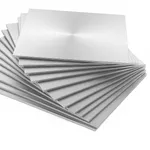
This image was created with artificial intelligence – marked under Art. 50 of the AI Act, Regulation (EU) 2024/1689. It is a placeholder until the company's photos arrive.
CNC machining of aluminium sheets – precise solutions for industry and engineering
Aluminium sheets precision CNC-machined: milling, drilling, engraving to drawing. Technical information, tolerances & tips for industry & engineering.
The CNC machining of aluminium sheets is a key manufacturing step in numerous industrial sectors. From machine enclosures to high-precision fixtures in plant engineering – milled aluminium sheets enable millimetre-accurate results that would not be achievable manually. What matters here is not only the material, but also the quality of the machining: freedom from burrs, dimensional accuracy and clean edges are prerequisites for use in technical applications.
What does CNC machining mean for aluminium sheets?
CNC stands for "Computerized Numerical Control" and refers to the computer-aided control of machine tools. This technology makes it possible to machine aluminium sheets with high precision and repeat accuracy. At its centre is the automated process: a digital CAD drawing is translated via CAM software into machine commands, which then guide milling tools, drills or engraving styli precisely.
When machining aluminium sheets, milling, drilling and engraving are primarily used. Typical operations include outer contours, pockets, holes, countersinks or individual contours. CNC technology makes it possible to manufacture both simple and highly complex components economically in a short time – and that from a quantity of 1. Combining various machining steps in a single operation is also possible, which not only saves time but also increases quality and process reliability.
Particularly in the industrial environment – for example in machine and enclosure construction – the CNC machining of aluminium sheets is an indispensable basis for precisely fitting, functional components.
Typical aluminium alloys for CNC machining
Not every aluminium alloy can be machined equally well. The following types have proven themselves in CNC manufacturing:
- EN AW-5083: Very good corrosion resistance, good machinability, often used in shipbuilding and mechanical engineering.
- EN AW-6082: High strength, good millability, ideal for mechanical components.
- EN AW-7075: Very hard, but more difficult to machine; ideal for aviation and highly stressed constructions.
The choice of the right alloy depends on the required stability, the weight and the desired surface treatment.
Technical requirements and tolerances
In industrial applications, exact values count. CNC-machined aluminium sheets generally meet tolerance specifications in accordance with DIN ISO 2768. Depending on the application, tight form and position tolerances are necessary. It is particularly important that the cut edges are burr-free in order to enable safe further processing and assembly.
Flatness and planarity also play a central role, especially with large-format sheets that must be mounted or further processed without stress. In addition, surface quality is of great importance: depending on the intended use, the aluminium sheets can be left raw or provided with a protective film, anodised layer or powder coating in order to ensure corrosion protection and an attractive appearance.
From drawing to the finished aluminium cut piece – this is how the CNC process runs
- Data provision: common formats are STEP, DXF, DWG
- CAM programming: conversion of the drawing into milling paths
- Clamping technology & tool selection: e.g. vacuum clamping systems for thin sheets
- Machining: milling, drilling, deburring in one step
- Quality control: inspection reports, measurement, visual inspection
Milling strategies for aluminium sheets – what is possible?
- Contour milling: cut to size to the exact outer dimension
- Pocket milling: recesses for electronics or assembly
- Holes & countersinks: for screw connections, fits
- Slots: for adjustable constructions
- Engravings: e.g. for labelling parts or serial numbers
Typical areas of application for milled aluminium sheets
Mechanical and plant engineering
Milled aluminium sheets are used here as carrier plates, protective towers or control panels. The high stability and precise fit enable safe integration into complex constructions.
Electrical engineering & metrology
Here, CNC-milled sheets often serve as enclosures, front panels or mounts. The precise machining guarantees an exact accommodation of components and connectors.
Aviation and aerospace
In this industry, milled aluminium sheets are used as structural components, covers or adapters. High-strength but weight-optimised materials such as EN AW-7075 are particularly in demand.
Furniture and interior fitting
CNC-machined aluminium sheets are also used in the design sector. Whether as a visible part, reinforcement plate or individual design surface – they offer a high-quality appearance and durability.
What to look out for when choosing a supplier
Not every supplier has the necessary technology or experience. Look out for:
- Machine park: 3-axis or 5-axis? What workpiece size is possible?
- Material selection: Large range of alloys available?
- Quality assurance: inspection reports, documented processes
- Digitalisation: online configurators, CAD upload, price preview
Cost factors & economic efficiency
The costs for CNC-machined aluminium sheets are determined by various influencing factors. The material used plays a central role – depending on the alloy, sheet thickness and raw format, considerable price differences can arise. The machining effort is also decisive: complex geometries, many milling operations or tight tolerances increase the manufacturing time and therefore the costs.
The quantity also has an influence: one-off productions are generally more expensive per piece than series productions, in which set-up times and programming can be used more efficiently. In addition, a surface treatment such as anodising or powder coating can significantly influence the final price. Anyone who wants fast quotes and transparent cost structures benefits from suppliers with online configurators and direct CAD data processing.
Conclusion: CNC cut pieces made of aluminium – flexible, precise, industry-compliant
The CNC machining of aluminium sheets combines high precision with industrial efficiency. Depending on the application, various milling strategies, alloys and tolerance classes are required. Anyone who chooses the right supplier receives not only an exactly manufactured component, but also assurance in quality, delivery time and reproducibility.
FAQ – CNC machining of aluminium sheets
Which aluminium alloy is best suited for CNC milling? EN AW-6082 is a common all-rounder with good millability and strength. For special requirements, 5083 or 7075 are also used.
How accurate are CNC-milled aluminium sheets? Tolerances of up to ±0.1 mm are realistic depending on the supplier and component geometry. Tighter tolerances are possible for highly accurate parts.
What does the CNC machining of an aluminium sheet cost? The prices vary greatly depending on the material, machining effort and quantity. Online configurators offer a good initial estimate.
Can I upload my own CAD drawings? Yes, many suppliers support STEP, DXF or DWG. Make sure the dimensions are exact and the layer structure is valid.
Which is better: waterjet or milling? Milling offers higher precision and better edge quality. Waterjet is suitable for thicker sheets or when thermal influences are to be avoided.