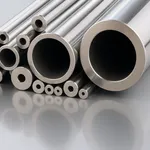
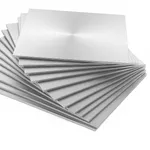
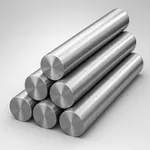
This image was created with artificial intelligence – marked under Art. 50 of the AI Act, Regulation (EU) 2024/1689. It is a placeholder until the company's photos arrive.
AlSi1MgMn – silicon-magnesium alloy
AlSi1MgMn is a silicon-magnesium alloy for cast and structural sheets. More about properties, applications and advantages.
AlSi1MgMn is one of the most precise and homogeneous aluminium alloys used in modern industry. It was specially developed to meet the highest requirements where dimensional stability, flatness and machining quality decide the success of a project. In practice, this means: less distortion, better dimensional accuracy and a uniform machined structure across the entire sheet surface.
This makes AlSi1MgMn ideal for cast and structural sheets in mechanical engineering, toolmaking and mould making – wherever dimensionally accurate aluminium sheet cut pieces and reproducible results are required. Companies that need aluminium components for precise fixtures or complex tool systems value this alloy for its excellent homogeneity, low stress and corrosion resistance. The result is long-lasting, distortion-free components with consistently high quality.
What is AlSi1MgMn?
The designation AlSi1MgMn describes an aluminium alloy whose composition consists of around 1 % silicon (Si), along with targeted proportions of magnesium (Mg) and manganese (Mn). This alloy belongs to the group of aluminium-magnesium-silicon alloys and is characterised by an excellent balance between mechanical strength, machinability and corrosion resistance.
Compared with purely rolled aluminium sheets, AlSi1MgMn is usually produced in a stress-relieved casting process. This means that the cast blocks are cooled in a controlled manner, thereby minimising internal stresses and preventing porosity. This produces homogeneous, isotropic material structures that are ideal for precise further processing.
The alloy is often regarded as a high-quality alternative to EN AW-5083 or EN AW-6082, particularly when the highest dimensional accuracy and a defined surface quality are required. Compared with these alloys, AlSi1MgMn offers an even higher uniformity of the material structure throughout the entire sheet thickness.
Composition and material character
AlSi1MgMn combines four key alloying elements, each of which contributes specific properties:
- Silicon (Si): improves castability and reduces the coefficient of thermal expansion.
- Magnesium (Mg): increases strength and hardness without significantly impairing toughness.
- Manganese (Mn): increases corrosion resistance and improves formability.
- Aluminium (Al): provides low weight and good thermal conductivity in aluminium.
This composition leads to a material structure that allows high precision in mechanical machining – a decisive advantage for structural components, fixtures and measuring tables.
Properties of AlSi1MgMn
Mechanical strength: The alloy has a medium to high tensile strength and is particularly suitable for components that require a good combination of rigidity and weight. It remains dimensionally stable even at greater sheet thickness and hardly distorts.
Low stress and homogeneous: The controlled casting process produces virtually no internal stresses. This enables precise machining even with complex geometries and large dimensions.
Corrosion resistance: Thanks to the manganese and magnesium content, AlSi1MgMn shows excellent resistance to environmental influences, moisture, salt spray and industrial atmospheres. This also makes it suitable for outdoor applications and use in humid production environments.
Thermal stability: The alloy maintains its shape even under changing temperatures. This is particularly relevant in applications where components could react to temperature changes, e.g. fixture plates or measuring systems.
Machinability: AlSi1MgMn can be sawn, milled, drilled or ground exceptionally well. The chips break short, tool lives are long, and the surface quality is particularly fine. This makes the material ideal for CNC machining centres and high-precision milling work.
Surface quality: The alloy enables extremely flat, glossy or matt surfaces. Depending on requirements, the sheets can be ground, polished, anodised or coated.
Typical applications
Structural sheets in mechanical engineering
Structural sheets made of AlSi1MgMn are used in mechanical engineering in a wide variety of ways. They serve as support plates, machine tables or assembly platforms that provide a precise and vibration-free base. Due to their high rigidity and flatness, machine frames remain dimensionally accurate even under continuous load.
Especially in CNC milling centres, packaging machines or automated production lines, these sheets are crucial for functional reliability. Their low weight reduces the overall load of the construction and thus contributes to energy efficiency. Even with large sheet formats, the surface remains flat and free from internal stresses – an important advantage over rolled sheets.
Fixture and toolmaking
In toolmaking, AlSi1MgMn plays a central role in the production of clamping fixtures, mounts, gauges and mould carriers. The alloy is particularly popular because it can be precisely milled, drilled and faced without the geometry changing after machining. This is crucial for the repeat accuracy of tools, especially in automated manufacturing processes.
The high thermal conductivity also helps to dissipate thermal loads evenly – an advantage for tools used under temperature differences. For modular systems or tool plates with interchangeable inserts, AlSi1MgMn is the preferred choice, as it offers a lasting combination of strength and dimensional stability.
Model and mould making
In model and mould making, smooth surfaces, dimensional accuracy and good polishability are decisive. AlSi1MgMn fulfils these requirements to a high degree. The low-stress cast structure means no distortion occurs when milling large moulds or master models. The homogeneous structure makes it possible to work out fine details and exact contours – for example in design models, deep-drawing tools or casting moulds.
The alloy also reacts uniformly during polishing and engraving, so that high-gloss or matt surfaces can be achieved without difficulty. For prototype construction, AlSi1MgMn offers a reliable basis for creating dimensionally stable and long-lasting models.
Precision and measuring technology
In precision and measuring technology, dimensional accuracy is of central importance. Here, AlSi1MgMn is used for measuring plates, test gauges, optical mounts and holders where even the smallest deformation could influence the measurement results. Thanks to its high damping capacity and thermal stability, the material remains true to shape even under temperature changes.
In addition, the fine surface structure ensures excellent flatness, which is indispensable in precision manufacturing. In measuring technology, the alloy is often used in combination with granite or steel components in order to achieve an optimal combination of lightweight construction and precision.
Aerospace and vehicle technology
In aerospace and vehicle technology, AlSi1MgMn is increasingly used for fixtures, structural components, support plates and holders. Here, weight saving, vibration damping and corrosion protection are particularly decisive. The alloy offers an optimal ratio of weight to rigidity and is at the same time resistant to vibrations and external influences.
In the manufacture of body parts, assembly fixtures or lightweight components, AlSi1MgMn ensures high operational reliability and a long service life. Especially in the electrical and vehicle industry, where aluminium is increasingly replacing steel, this alloy is valued for its combination of strength and machinability.
Processing of AlSi1MgMn
The processing of AlSi1MgMn is extremely versatile and efficient in both machining and surface finishing. The material shows uniform, controllable machining behaviour, which makes it ideal for precise CNC machining centres. Milling, drilling and sawing work can be carried out with high dimensional accuracy, as the alloy is low in stress and homogeneous. The fine cast structure produces excellent chip control, which leads to long tool life and consistently high surface quality.
Welded joints are possible with suitable filler materials such as AlMg5 or AlSi5, whereby clean surface preparation is crucial for optimal results. The high quality of the alloy is also evident during polishing and grinding, as it can be machined uniformly and without chipping. For decorative or functional surface treatments such as anodising of aluminium, powder coating or polishing, AlSi1MgMn is very well suited, as the material structure reacts uniformly and forms durable layers.
In addition, controlled stress-relief annealing can further improve dimensional stability after machining, which is particularly advantageous for large-format sheets. Overall, the alloy offers an exceptionally high degree of precision, process reliability and visual quality in processing.
Technical properties of AlSi1MgMn
| Property | Value / range | Unit | Description |
|---|---|---|---|
| Density | approx. 2.66 | g/cm³ | Low weight for high rigidity in relation to mass |
| Tensile strength (Rm) | 260–300 | MPa | Depends on casting condition and sheet thickness |
| Yield strength (Rp0.2) | 120–160 | MPa | Good elastic reserves under mechanical load |
| Brinell hardness (HBW) | 75–90 | HB | Hard, wear-resistant surface, easy to polish |
| Modulus of elasticity | approx. 70,000 | MPa | Typical value for aluminium alloys, high rigidity |
| Thermal conductivity | 120–150 | W/m·K | Very good heat dissipation, ideal for toolmaking and measuring technology |
| Coefficient of expansion | 23.4 × 10⁻⁶ | 1/K | Low thermal expansion, high dimensional stability |
| Melting point | approx. 635–650 | °C | Uniform solidification behaviour during casting |
| Corrosion resistance | very good | – | Insensitive to moisture, air and industrial atmosphere |
| Weldability | good | – | With suitable filler materials such as AlMg5 or AlSi5 |
These characteristic values make it clear that AlSi1MgMn is an excellently balanced material that combines mechanical strength with high dimensional stability and corrosion resistance. In particular, the low internal stress and high homogeneity make it the preferred choice for structural sheets and precision applications.
Sustainability and recycling
AlSi1MgMn is convincing not only technically but also ecologically. Aluminium is one of the few materials that can be recycled almost without loss. In the production of cast sheets from AlSi1MgMn, secondary aluminium is often used – i.e. recycled material from industrial or production residues. As a result, energy consumption falls by up to 95 % compared with primary production. At the same time, the material quality is fully retained, as aluminium undergoes no structural degradation when melted down.
In addition to good recyclability, durability also contributes to the sustainability of aluminium: components made from this alloy rarely need to be replaced, as they remain corrosion-resistant and mechanically stable. In addition, the high thermal conductivity and low weight enable energy-efficient processes in machines and systems. In this way, AlSi1MgMn makes a measurable contribution to conserving resources and reducing the CO₂ footprint in industrial manufacturing.
Comparison with other aluminium alloys
| Alloy | Main alloying elements | Characteristics | Advantages | Disadvantages |
|---|---|---|---|---|
| AlSi1MgMn | Si, Mg, Mn | Stress-relieved cast, homogeneous, corrosion-resistant | Very good machinability, high dimensional accuracy, good corrosion resistance | Medium strength, not hardenable |
| EN AW-5083 | Mg, Mn | Wrought alloy with high corrosion resistance | Good weldability, very resistant in maritime environments | Less homogeneous, higher stresses, difficult to mill |
| EN AW-6082 | Si, Mg, Mn | Hardenable alloy with good strength | High strength, good machinability | Lower corrosion resistance than 5083, tends to distort |
| EN AW-7075 | Zn, Mg, Cu | High-strength aerospace alloy | Very high strength, good wear resistance | Susceptible to corrosion, difficult to weld, more expensive |
This comparison shows that AlSi1MgMn is regarded as a balanced solution between strength, stability and machinability. While 7075 is designed for maximum strength and 5083 for corrosion protection, AlSi1MgMn offers consistent structural quality and excellent dimensional stability – decisive for precise cast and structural sheets.
Decision aid: when is AlSi1MgMn the right choice?
The alloy is ideal for all applications that require precise, stable and easy-to-machine aluminium sheets. It combines high dimensional accuracy with good surface quality and consistent material properties throughout the entire sheet thickness.
In comparison:
- EN AW-5083: good corrosion resistance, but less homogeneous.
- EN AW-6082: higher strength, but more susceptible to stresses.
- EN AW-7075: very high strength, but lower corrosion resistance.
AlSi1MgMn is the optimal solution for precise structural and cast sheets where dimensional accuracy, flatness and machinability take priority.
Practical example
A mechanical engineering company manufactures precise assembly fixtures for CNC centres, in which the flatness and torsional rigidity of the base plate are decisive. Previously, the company used rolled sheets that distorted slightly after machining. After switching to AlSi1MgMn, rejects were reduced by over 30 %. Thanks to the low-stress cast structure, the fixtures remain exactly dimensionally accurate even after repeated changeovers or thermal loads.
In another application example, a toolmaker uses the alloy for mould carrier plates which, due to their homogeneous structure, show no microcracks even after intensive milling. This extends the service life of the tools and significantly reduces maintenance effort.
In conclusion
AlSi1MgMn is a modern, technically mature aluminium alloy that combines precision, cost-effectiveness and sustainability. It offers an exceptionally uniform microstructure, outstanding machinability and high corrosion resistance – combined with low weight and high thermal conductivity. This makes the alloy ideal for applications where dimensional accuracy, repeat accuracy and surface quality are decisive.
Compared with conventional wrought alloys, AlSi1MgMn delivers significantly more stable results thanks to its low-stress casting process and minimises rework or rejects. Its good weldability, recyclability and energy efficiency in production also make it a sustainable material for the future. Anyone wishing to invest in precision, durability and material quality will make a technically and economically convincing choice with AlSi1MgMn.
FAQ – AlSi1MgMn
What does the designation AlSi1MgMn mean? The abbreviation stands for aluminium with around 1 % silicon, supplemented by magnesium and manganese. This combination provides strength, corrosion protection and good castability.
What is AlSi1MgMn used for? Typical applications are structural sheets, fixtures, machine tables, tools and precision components in industry.
How does AlSi1MgMn differ from EN AW-5083? AlSi1MgMn offers a more uniform structure, lower stresses and better machinability, while 5083 scores above all with high corrosion resistance.
Is AlSi1MgMn weldable? Yes, with suitable filler materials the material is readily weldable, whereby pre-cleaning of the surface is decisive.