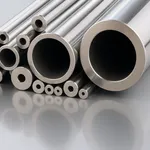
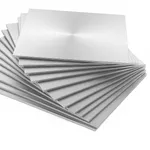
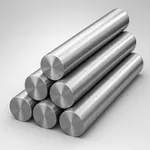
This image was created with artificial intelligence – marked under Art. 50 of the AI Act, Regulation (EU) 2024/1689. It is a placeholder until the company's photos arrive.
Aluminium sheets in 3D printing
3D printing in metal and aluminium engineering: possibilities, limits and areas of application – when processes complement cut-to-size.
Aluminium plays a decisive role in modern 3D printing – not only as a material for components, but above all as the technical basis for precise and stable manufacturing processes. As base plates, build platforms and fixtures, aluminium plates contribute significantly to process reliability, dimensional accuracy and quality in additive manufacturing. Their thermal and mechanical properties make them a key material in industrial production, increasingly complemented by intelligent and sensor-monitored systems.
In addition, aluminium offers an excellent combination of low weight, high thermal conductivity and precise machinability, which makes it indispensable for many additive manufacturing systems. In practice, it is used both in large industrial systems and in desktop systems. Particularly in repeated manufacturing processes and series production, the reliability of aluminium as a base material is a decisive factor for quality, cost-effectiveness and sustainability.
Importance of aluminium in the additive manufacturing process
Aluminium has established itself in additive manufacturing as an indispensable construction and carrier material. While in many cases it is used as a material for components, its role as a base plate, fixture and build platform is equally decisive. The excellent thermal conductivity of aluminium, the good dimensional stability and the ease of machining make aluminium an ideal material for use in modern 3D printing systems.
Thanks to its high thermal conductivity, aluminium can optimally dissipate the process heat generated and thus ensures uniform temperature conditions throughout the entire build chamber. This thermal stability is a basic prerequisite for avoiding stresses in the component and ensuring layer adhesion. In addition, aluminium can be precisely faced, milled and drilled, which means it can be reused again and again – a considerable cost advantage with frequently changing print jobs. Its recyclability also contributes to aluminium being increasingly regarded as a sustainable material in additive manufacturing.
In practice, aluminium is used as the basis for virtually all metal and polymer-based 3D printing systems – from Fused Deposition Modeling (FDM) through Selective Laser Melting (SLM) to Binder Jetting and Directed Energy Deposition (DED). Its properties contribute significantly to the process reliability, precision and cost-effectiveness of the additive manufacturing process.
Requirements for aluminium base plates in 3D printing
The print base plate is the foundation of every additive manufacturing process. It carries the structure being created and significantly influences its adhesion, dimensional accuracy and thermal stability. Particularly high requirements therefore apply to aluminium base plates:
- Flatness and evenness: Even minimal unevenness can lead to adhesion problems or warping. A typical flatness of ±0.1 mm/m is necessary.
- Thermal stability: A uniform temperature distribution during printing prevents local stresses.
- Low-stress manufacturing: Targeted heat treatment reduces internal stresses.
- Fine machining: Milled or lapped surfaces ensure optimum adhesion and reusability.
Properties at a glance
| Property | Significance in 3D printing |
|---|---|
| Thermal conductivity | Uniform temperature distribution, avoidance of hotspots |
| Low weight | Easy handling, quick installation and removal of the platform |
| High machinability | Easy post-processing after printing ends |
| Dimensional stability | Minimisation of warping during the build process |
| Corrosion resistance | Long service life and low maintenance costs |
Aluminium base plates as build platforms in metal 3D printing
In metal 3D printing processes, in particular in Laser Powder Bed Fusion (LPBF), the aluminium plate functions as the central build platform. The powder bed is applied to it and then melted layer by layer by a laser. The thermal conductivity of aluminium ensures a uniform temperature distribution and prevents the formation of stress cracks.
The use of a high-quality aluminium base plate not only ensures the adhesion of the first layers, but directly influences the dimensional accuracy and surface quality of the printed component. An unevenly heated substrate can lead to faulty melt pools, resulting in deformation or pores. Aluminium is therefore preferred because it exhibits high dimensional stability even under repeated thermal loads. With reusable build platforms, easy cleaning and post-processing also play a central role – aluminium can be quickly faced, cleaned and used again, which reduces operating costs.
A common mistake in day-to-day production is the use of unsuitable plates with insufficient flatness. This leads to adhesion problems of the first layers, as a result of which components can become detached or warp during printing. High-quality aluminium plates with tolerances below 0.05 mm and controlled surface roughness (Ra < 0.8 µm) are therefore standard in industrial manufacturing.
Suitable aluminium alloys for 3D printing
- EN AW-5083: Very good thermal conductivity, excellent machinability, corrosion-resistant.
- EN AW-6061: Good mechanical strength, easy machining, stable microstructure.
- EN AW-7075: High strength, but limited weldability – only for special applications.
Comparison of build platform materials
| Material | Thermal conductivity (W/mK) | Weight | Price level | Reusability | Remark |
|---|---|---|---|---|---|
| Aluminium | 150–230 | Low | Medium | High | Standard material, very good heat distribution |
| Steel | 45–60 | High | Medium | High | Suitable for high-temperature processes |
| Copper | 300–400 | Medium | High | Low | Outstanding heat conduction, expensive |
Temperature control and process stability
Temperature control plays a central role in 3D printing with metals and is closely linked to the quality of the build platform. Aluminium plates with high thermal conductivity (150–230 W/mK) ensure uniform temperature profiles across the entire build area. This prevents the formation of thermal stresses or uneven melt pools. Insufficient heat dissipation can lead to cracking, layer detachment or dimensional deviations.
The plate thickness also significantly influences temperature behaviour. Thin plates react more quickly to temperature fluctuations but can deform more easily. Plates that are too thick, on the other hand, lengthen the heating and cooling times. In practice, the optimum thickness is between 10 and 25 mm – depending on build chamber size, laser power and build volume. A precisely coordinated heating strategy and uniform temperature control are therefore decisive for reproducible results.
In addition, many manufacturers are now developing sensor-monitored build platforms in which integrated temperature sensors monitor the heat distribution during printing. This allows deviations to be detected in real time and process parameters to be adjusted automatically, which further improves quality and cost-effectiveness.
Fixtures and clamping systems made of aluminium
In addition to the base plate, aluminium also plays a key role in post-processing. Fixtures, clamping frames and positioning systems made of aluminium are used for the precise fixing of components during milling, EDM or grinding. By using aluminium, these fixtures can be manufactured to be lightweight, dimensionally stable and cost-effective.
Modular clamping systems make it possible to machine several components simultaneously or to change different workpieces quickly. The good machinability of aluminium also allows the integration of fitting bores, threaded inserts and reference surfaces, which ensures precise positioning.
Post-processing and reuse of aluminium base plates
After the printing process is complete, the component is usually separated from the aluminium plate by sawing, wire EDM or CNC milling. The plate can then be reused several times – provided it is regularly inspected and faced. Light re-milling can regenerate the surface.
Typical wear characteristics such as minor scratches or marks usually do not impair function as long as flatness is maintained. Manufacturers recommend regular measurement and documentation of the plates, particularly in series production. In this way, reusability can be specifically monitored.
Tips for practical use
- Regular checking of flatness with a measurement record.
- Cleaning after every print to avoid powder residues.
- Use of defined clamping points to prevent distortion.
- Flat, dry storage protects against warping and corrosion.
Typical applications and areas of use
Aluminium plates in 3D printing are used in a wide variety of industrial applications:
- Additive manufacturing of prototypes and small series in the automotive industry
- Build platforms for aerospace with high temperature loads
- Medical technology: fixing plates for implants or surgical tools
- Mechanical engineering: fixtures for functional prototypes and test specimens
- Research and development: reusable build platforms for experimental materials
Future prospects: intelligent and adaptive build platforms
The next generation of aluminium base plates will be equipped with integrated sensors and process monitoring. Built-in sensors measure temperature gradients, stress distributions or deformations during the printing process. This data is transmitted to the machine control system in real time in order to make adaptive process adjustments.
In addition, research institutes are developing concepts for hybrid build platforms in which aluminium is combined with copper, steel or graphite. The aim is even more precise control of heat flows and greater energy efficiency. The combination of aluminium with functional coatings or embedded heating structures opens up completely new possibilities in additive manufacturing.
Sustainability and resource efficiency
The reusability of aluminium plates contributes significantly to the resource efficiency of 3D printing. By using recycled aluminium materials, energy consumption and the CO₂ balance can be further improved. Aluminium can be melted down again almost without loss, without its material properties being significantly impaired.
Sustainability of aluminium also plays a role in process optimisation: a stable base plate prevents print aborts and rejects – a decisive factor for the ecological and economic balance of additive manufacturing. You can find more on this topic in the article Post-processing of aluminium plates – surfaces, deburring and edge processing.
Aluminium as a key component in 3D printing
Aluminium plates are far more than just mechanical supports – they form the technical foundation of additive manufacturing. Their high thermal conductivity, dimensional accuracy, low stress and reusability make them an indispensable part of every professional 3D printing process. Thanks to their excellent machinability, aluminium plates can easily be adapted to new requirements, which means they are used equally in research, development and series production.
With the integration of sensors and adaptive controls, aluminium will become an even more active part of the manufacturing process in the future. Intelligent build platforms will make it possible to control temperature distributions precisely, use energy more efficiently and further reduce rejects. Aluminium thus remains not only a base material but a strategic key element in the further development of additive manufacturing – powerful, sustainable and technologically pioneering.
Evaluate the right manufacturing technology for your project: get advice or implement proven aluminium cut pieces directly online.
FAQ
Which aluminium alloys are suitable for 3D printing base plates? EN AW-5083 and EN AW-6061 are frequently used. Both offer a good combination of thermal conductivity, stability and machinability.
How often can a base plate be reused? Depending on the load and post-processing, 20 to 30 uses are possible. Regular measurement of flatness is decisive here.
Why is thermal conductivity so important? It enables a uniform temperature distribution across the entire build area and minimises thermal stresses and cracking.
How are components separated from the plate? Usually by sawing, milling or EDM. The lowest possible mechanical load should be ensured in order to protect the surface of the plate.
Are there alternatives to aluminium as a build platform? Yes, at very high process temperatures, steel or copper plates are used. However, aluminium remains the preferred solution because of its favourable ratio of weight, conductivity and price.
How thick should an aluminium base plate be in 3D printing? Depending on the print size and material temperature, the ideal thickness is between 10 and 25 mm. A plate that is too thin warps easily, while one that is too thick lengthens the heating time.
Which surface treatment is optimal for good adhesion? Milled or slightly roughened surfaces with Ra values below 1 µm offer the best balance of adhesion and releasability.