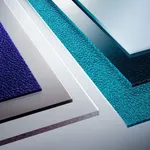
This image was created with artificial intelligence – marked under Art. 50 of the AI Act, Regulation (EU) 2024/1689. It is a placeholder until the company's photos arrive.
Cut pieces for machine cladding – what needs to be considered?
What matters when cutting to size for machine enclosures: materials, tolerances, machining and planning. Find out more now!
The cut to size of sheet materials for machine enclosures requires more than just exact dimensions. In industrial applications, the choice of material, tolerances, machinability and ambient conditions play a decisive role. Anyone who proceeds methodically here not only saves time and costs, but also safeguards the functionality and longevity of the enclosure.
Requirements for machine enclosures
Machine enclosures perform central tasks in the industrial environment. In addition to protecting operating personnel from moving parts or hot surfaces, they make a significant contribution to compliance with statutory requirements, for example within the framework of the Machinery Directive or CE certification. At the same time, they contribute to the operational safety and longevity of the system.
Depending on the industry, additional requirements are added: in food processing and the pharmaceutical industry, the focus is on hygiene and cleanability, while in heavy industry, robustness and weather resistance are above all what counts. Aspects such as sound insulation, fire protection or antistatic properties may also be required. The design and the cut to size of the enclosure must therefore be precisely matched to the respective application.
Suitable materials in comparison
Aluminium
Aluminium sheets are ideal for machine enclosures, as they are light, corrosion-resistant and easy to machine. Anodised or powder-coated aluminium in particular offers additional surface protection.
HPL sheets
High Pressure Laminates (HPL) are very resistant, dimensionally stable and impact-resistant. They are frequently used in areas with high hygiene or cleaning requirements.
Plastic sheets (e.g. PE, PP, PVC, PC)
Plastics are chemical-resistant, easy to process and available in many variants. PC (polycarbonate) additionally offers high impact strength and transparency.
Steel / stainless steel
Stainless steel is used particularly in heavily stressed or hygienic areas (food industry). The disadvantage: high weight, more complex processing.
Tolerances in sheet cutting
In industrial practice, tight tolerances are decisive, especially when assembling machine enclosures. Even minor dimensional deviations can lead to fit problems, stresses or leaks. It is therefore important to define the required tolerances precisely at the planning stage and to coordinate them with the design engineers and the cut-to-size service provider. The choice of tolerance depends both on the material and on the later area of use.
Common cutting tolerances range between ±0.5 mm and ±1.5 mm depending on the material and machining process. For particularly demanding applications or for milled cuts, tighter tolerances can also be achieved – provided the data situation is unambiguous and production is geared accordingly.
Machining options and options
In addition to the classic rectangular cut, further machining operations are often required:
- Drilled holes for fastening
- Milled contours for rounded or complex geometries
- Cut-outs for cables, ventilation, viewing windows etc.
- Edge processing (e.g. deburring, chamfering)
These should be planned on a CAD basis and specified exactly.
Surface requirements and protection
Depending on the area of application, different requirements may apply:
- Anodising or powder coating for aluminium for corrosion and abrasion protection
- UV stability for enclosures outdoors
- Antibacterial surfaces for pharmaceutical and food technology
Protective films during transport and assembly are also important in order not to damage the visible side.
Assembly-friendly planning
The following should already be taken into account during design:
- Accessibility of the fastening points
- Thermal expansion (especially with plastic and HPL)
- Modular construction for simplified disassembly
- Material compatibility of the fastening means
Assembly-friendly planning reduces downtime and facilitates maintenance and replacement.
Operating conditions: indoors vs. outdoors
Machine enclosures must withstand the most diverse ambient conditions – depending on the place of use and industry. In indoor areas, the focus is often on functionality, cleanability and aesthetics. Here, above all, plastic sheets, coated HPL or painted aluminium are used. Outdoors, on the other hand, UV radiation, temperature fluctuations, precipitation or aggressive media place additional demands on the material and processing.
Aluminium with anodised or powder coating as well as weather-resistant HPL sheets offer long-term resistance here. Plastics must be UV-stabilised in order to avoid embrittlement. It is important to include the complete environment – including moisture, dust, chemical exposure and mechanical stress – in the choice of material. Only in this way can a durable and functional solution be realised.
Ordering and data handover
An exact order is essential for a precisely fitting cut. Important details are:
- Material (e.g. AlMg3, PE1000, HPL 6 mm)
- Thickness, dimensions, tolerance range
- Machining operations (with drawing or STEP file)
- Surface requirement (e.g. anodised EV1)
- Specification of visible sides / protective film
- Quantity, delivery date, packaging request
Conclusion
Anyone who wants machine enclosures cut to fit precisely should already pay attention at the planning stage to material-appropriate design, sensible tolerances and precise data. In this way, a simple cut becomes a functional component that fulfils technical, visual and safety-relevant requirements.
FAQ
Which materials are suitable for machine enclosures outdoors? Aluminium (anodised or coated) and HPL are particularly weather-resistant. Plastics must be UV-stabilised.
Which tolerances are realistic in sheet cutting? Depending on the material, cutting tolerances of ±0.5 to ±1.5 mm are usual. For milled parts, tighter tolerances are possible.
Can I order drilled holes and cut-outs directly as well? Yes, provided a technical drawing or STEP file is available. Many suppliers also offer these machining operations.
What does a cut for a machine enclosure cost? The costs depend on the material, size, machining and quantity. A simple aluminium cut can start from approx. €20, while complex milled parts are significantly higher.
What should be paid attention to during assembly? Thermal expansion, good accessibility and secure fastening are central points. The material combination (e.g. stainless steel screws with aluminium) should also be suitable.