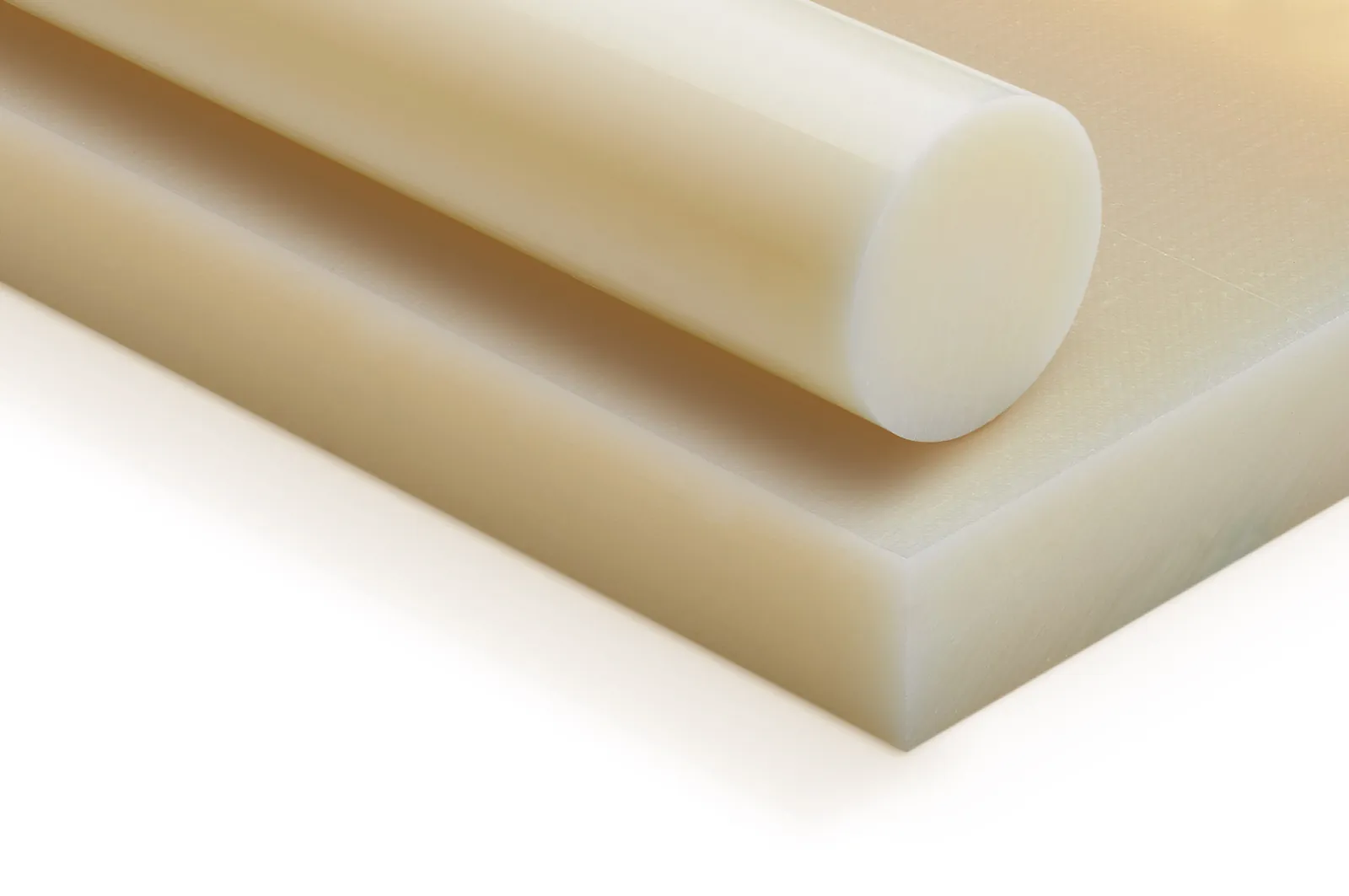
Polyamide 66
Polyamide 66 was developed in DuPont's laboratory as early as 1935 and has been part of the important polyamide material group ever since. These plastics, often also referred to as nylon, are characterised by a wide range of technical properties that make them attractive for numerous applications.
Polyamide 66 (PA 66) is particularly known for its higher heat deflection temperature. This property means that PA 66 retains its shape and remains mechanically loadable even at elevated temperatures. Compared with polyamide 6 (PA 6), PA 66 shows an overall similarly balanced property profile, but with specific advantages that make it superior in certain areas of application.
An outstanding feature of PA 66 is its impact resistance and notched impact strength. Although PA 66 is slightly inferior to PA 6 in this respect, it still offers remarkable resistance to mechanical effects. This toughness makes PA 66 particularly suitable for applications where material stresses from impacts and blows are to be expected.
In addition, polyamide 66 is extremely abrasion-resistant. This property comes into its own particularly when it is used in mechanical components that are exposed to constant friction. Even with rough sliding partners, which can cause high friction, PA 66 shows remarkable resistance to wear.