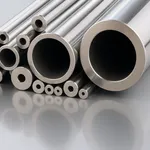
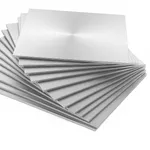
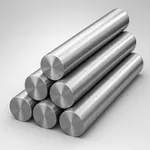
This image was created with artificial intelligence – marked under Art. 50 of the AI Act, Regulation (EU) 2024/1689. It is a placeholder until the company's photos arrive.
Material selection for turned and milled parts
The most important materials for turned and milled parts: aluminium, brass, bronze and stainless steel. Properties, areas of application & decision.
Choosing the right material is one of the most important decisions in CNC machining. It determines how a component will function later, how durable it is and how economically production can be organised. Materials react differently to loads, temperature changes, friction or media contact. Factors such as weight, surface quality, tolerance capability and machining times also depend heavily on the material used.
In practice, this means: a precise material decision not only improves the performance of a component, but often also reduces manufacturing costs. Aluminium, brass, bronze and stainless steel are among the most frequently used materials for turned parts and milled parts. Each of these materials has clear strengths and typical areas of application. A well-founded analysis before production begins helps to avoid later adjustments, unnecessary costs or functional limitations.
Requirements for material selection
The optimum material selection always results from the interaction of several technical, design and economic requirements. The most important considerations include:
Mechanical requirements: What forces act on the component? Is it subjected to static load or moved dynamically? Do impact loads, pressure or permanent friction occur? Thermal load: What temperatures occur during operation? How does the material behave under thermal expansion, temperature changes or exposure to heat? Weight and dynamics: Does the component need to be particularly light, for example for moving axes, robotics or drive technology? Corrosion and media resistance: Does the component come into contact with moisture, chemicals, oil, cleaning agents or even seawater? Tolerances and dimensional accuracy: Does the part require fine contours, precise threads or tight tolerances that certain materials make possible more easily? Hygiene or cleanroom requirements: Relevant in food technology, medical technology or pharmaceutical production. Machinability and surface quality: How well can the material be milled, turned or drilled? What surfaces can be achieved? How high is tool wear? Economic efficiency: Material price, machine running time, tool life and post-processing determine the actual unit costs. Availability: For series production, short delivery times and stable semi-finished product availability are important.
By systematically considering these points, the selection can be narrowed down in a targeted way and the material found that best suits your component both technically and economically.
Aluminium – light, versatile and easy to machine
Aluminium is one of the most important materials in CNC machining because it offers an exceptionally good ratio of weight, strength and machinability. Modern alloys such as EN AW‑5083, EN AW‑6082 or EN AW‑7075 enable both lightweight structural components and highly stressed components. Particularly in mechanical engineering and in automation technology, aluminium is indispensable due to its dynamic advantages.
Aluminium impresses with very high cutting speeds, low tool wear and excellent surface qualities. It is eminently suitable for milled parts with complex contours, thin-walled components, precise fits and prototypes that must be manufactured in a short time. Processes such as anodising, hard anodising or surface passivation can significantly increase corrosion resistance.
Brass – highly precise and ideal for turned parts
Brass is one of the most precise materials for CNC turned parts. Its excellent chip formation ensures extremely short machining times, clean edges and particularly high dimensional accuracy. Alloys such as CuZn39Pb3 (Ms58) are standard in precision engineering because they enable tight tolerances, fine threads and high-quality surfaces.
Due to its electrical conductivity and corrosion resistance, brass is frequently used in plant engineering, electrical engineering and fluid technology. Components made of brass are stable, dimensionally accurate and visually appealing – ideal for visible components or functional parts with high quality requirements. Series production benefits from the excellent repeatability.
Bronze – resilient under friction and pressure
Bronze is the preferred material for components that are exposed to extreme friction, pressure or sliding loads. Typical alloys such as bearing bronze (CuSn12) or aluminium bronze (CuAl10Ni5Fe4) offer exceptional wear resistance, high compressive strength and excellent emergency running properties. As a result, bronze remains functional even if lubricants fail briefly.
Bronze is also very corrosion-resistant – even in seawater, chemical environments or under permanent moisture. This is why the material is frequently used in marine applications, pumps, guide bushes, bearing points or highly stressed machine elements. Its high damping capacity reduces vibrations and ensures smooth running.
Stainless steel – robust, corrosion-resistant and hygienic
Stainless steel is the material of choice for applications in which maximum strength, corrosion resistance or hygiene are decisive. The common grades 1.4301 (V2A) and 1.4404 / 1.4571 (V4A) are particularly resistant to moisture, chemicals, cleaning agents and abrasive media. Stainless steel is suitable for components that are exposed to permanently high loads or used in sensitive environments.
Although machining is more demanding – longer chip formation, lower cutting values and higher tool wear – stainless steel provides durable and extremely robust components. It is preferred when components must be reliable, temperature-resistant and easy to maintain. Stainless steel is also an indispensable standard for hygienic applications such as food production, medical technology or pharmaceutical plants.
Comparison of the materials of the materials
The four materials differ significantly in machinability, strength, corrosion resistance and economic factors. Aluminium impresses with low weight and very good machinability. Brass offers the highest precision and short production times. Bronze is ideal under friction and pressure loads. Stainless steel provides maximum resistance and strength.
| Property | Aluminium | Brass | Bronze | Stainless steel |
|---|---|---|---|---|
| Machinability | very good | excellent | good | medium |
| Strength | medium | medium | high | very high |
| Wear resistance | low–medium | medium | very high | high |
| Corrosion resistance | good | good | very good | excellent |
| Weight | very light | medium | heavy | heavy |
| Temperature resistance | medium | medium | good | very good |
| Hygiene suitability | limited | limited | limited | very good |
| Price level | low–medium | medium | medium–high | medium–high |
Decision criteria in practice
The decision for a material is always based on the interaction of several technical and economic factors. In practice, it becomes clear that no material fulfils all requirements optimally at the same time – rather, the right weighing up is decisive. Function, load, application environment, vertical range of manufacture and even future expansions of the system all play a role.
A central criterion is the type of load: dynamically stressed components often benefit from aluminium due to its low weight, while stainless steel is indispensable under permanent or extreme forces. In applications with continuous friction, vibrations or oscillating movements, bronze dominates, as it offers reliable emergency running properties even with insufficient lubrication. Brass, on the other hand, impresses in components that require the highest precision or filigree contours.
The environmental conditions also significantly determine the material choice. In damp, hygienically sensitive or chemically demanding areas, stainless steel is the first choice. Aluminium also offers good resistance with suitable surface treatment, while bronze proves particularly effective in saline or marine environments. Brass is eminently suitable for moderate environments, fluid technology and electromechanical applications.
Machinability also has a clear influence on the choice. Aluminium and brass enable short machining times, low tool load and clean surfaces – an advantage for prototypes, small series and economically demanding projects. Stainless steel and bronze are more demanding to machine due to their material properties, but offer advantages where service life, load capacity or functional reliability are decisive.
Common mistakes in material selection in material selection
- Focus exclusively on the material price instead of total unit costs
- Corrosion and environmental conditions not taken into account
- Incorrect assessment of the required strength or stiffness
- Unclear or too late defined tolerance and surface requirements
- Use of unnecessarily complex or expensive alloys without technical benefit
- Lack of coordination between design and production
- Underestimation of machining times, tool wear and machine running times
Checklist for determining the material for determining the material
- What forces, temperatures and loads act during later operation?
- What requirements exist for weight, dynamics and stiffness?
- Are there corrosion or hygiene specifications?
- What tolerance level is required?
- Which economic factors (series quantity, machining time, delivery time) play a role?
- Does the component need to be particularly wear- or pressure-resistant?
Material recommendations by industry
The requirements differ depending on the area of application. Clear material tendencies can be derived for typical industries.
Mechanical engineering: Aluminium for light components, stainless steel for highly stressed parts, bronze for stressed bearing points. Automation: Aluminium for dynamic axes and mounts, brass for precise connecting elements. Vehicle technology: Aluminium for structural parts, stainless steel for components exposed to heat or corrosion. Food technology: Stainless steel due to its hygienic and corrosion-resistant properties. Medical technology: Stainless steel for sterile environments, aluminium for light housings. Marine technology: Bronze for pumps, bearings and valves due to its high seawater resistance.
Influence of material selection on CNC machining costs
The material influences manufacturing costs more than is often assumed.
- Cutting data: Aluminium enables high cutting speeds, stainless steel requires lower feed rates.
- Tool wear: Stainless steel places heavy demands on tools, brass is gentle on them.
- Machining time: Aluminium and brass are faster to machine than bronze or stainless steel.
- Chip behaviour: Brass produces short chips, stainless steel long chips and therefore higher effort.
- Post-processing: Aluminium can be anodised well, stainless steel may require additional surface treatments.
Series vs. single-part production by material
Depending on the production goal, different material advantages arise. Single parts & prototypes: Aluminium due to fast machining and good availability. Small series: Brass for precise turned parts with short cycle times. Large series: Materials with predictable tool life such as brass or stainless steel. Functional prototypes: Stainless steel and bronze when high loads are to be tested in real conditions.
Sustainability & recycling of the materials
Compared with many other materials, metallic materials offer a significant advantage: they can be almost completely recycled without their technical properties being significantly lost. This makes them particularly sustainable in CNC machining. Aluminium can be produced with a very high recycled content while retaining almost all of its original quality. Brass and bronze have also been processed in closed material cycles for decades, as their alloy components can be easily separated and reused.
Stainless steel is characterised by a particularly long service life and can also be almost completely recycled at the end of its use. The recycling of these materials reduces energy demand, lowers raw material consumption and overall contributes to resource-efficient production.
Recommendation matrix – the right material for typical requirements
A compact overview makes selection easier:
| Requirement | Recommendation |
|---|---|
| Lightweight construction & dynamics | Aluminium |
| Precise turned parts & threads | Brass |
| High friction or pressure load | Bronze |
| Corrosion or hygiene area | Stainless steel |
| Cost-optimised series production | Brass / aluminium |
| Extreme loads | Stainless steel |
In conclusion
The four materials aluminium, brass, bronze and stainless steel cover a broad spectrum of technical requirements and enable precise, durable and economically manufactured CNC components. Aluminium impresses as a light material that is very easy to machine, brass offers the highest precision in turned parts, bronze is ideal for friction-intensive and heavily loaded applications and stainless steel provides maximum strength as well as excellent corrosion and hygiene properties.
The optimum choice always depends on function, environment, load and economic factors. A structured assessment of these points ensures that components function reliably and are manufactured efficiently.
FAQ
Which material is the cheapest to machine? Aluminium and brass offer the best machining properties, which reduces machining times and tool costs.
When should stainless steel be chosen? When high strength, corrosion resistance or hygiene requirements are decisive.
Which materials are suitable for high loads? Stainless steel for maximum strength, bronze for friction and pressure load.
Is aluminium suitable for industrial applications? Yes, especially modern alloys such as EN AW-6082 or EN AW-7075.
Which material is particularly precise in turned parts? Brass is eminently suitable for tight tolerances and high-quality surfaces.
How strongly does the material influence CNC costs? Very strongly – stainless steel increases tool wear, aluminium and brass reduce machining time.
Which materials are particularly corrosion-resistant? Stainless steel and bronze, aluminium with anodising also very good.
Which material is suitable for series production? Aluminium and brass due to short cycle times and stable machining. Aluminium, brass, bronze and stainless steel cover different technical requirements and enable precise, durable and economically manufacturable CNC components.