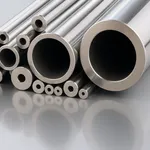
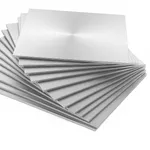
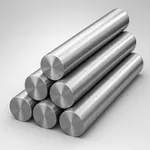
This image was created with artificial intelligence – marked under Art. 50 of the AI Act, Regulation (EU) 2024/1689. It is a placeholder until the company's photos arrive.
Solid aluminium vs. composite sheets vs. anodised aluminium
Comparison of solid aluminium, composite sheets and anodised aluminium: differences in strength, weight, machinability and application.
Aluminium is hard to imagine modern industry and technical everyday life without. Whether as solid full material, as innovative composite panel or in anodised form – every variant fulfils specific requirements for stability, weight and appearance. While solid aluminium stands for precision, strength and durability, composite panels impress with their lightness and cost-effectiveness. Anodised aluminium, in turn, combines function and design through its resistant, decorative surface.
The differences between these material types are decisive for material selection in practice. Because depending on the application – whether in mechanical engineering, architecture or interior fitting – weight, machinability and surface quality have a direct effect on function, costs and service life. The following comparison provides a detailed overview of the most important properties, areas of application and future prospects of these three aluminium variants and helps you find the right material for your project.
Aluminium is hard to imagine modern industry without. Whether as solid full material, as lightweight composite panel or in anodised form – every variant offers specific advantages for construction, design and manufacturing. But which solution is the right one when it comes to strength, weight and machinability? The following comparison shows the differences between the three most important variants and helps with selecting the optimum material for your project.
Materials at a glance
What is solid aluminium?
Solid aluminium consists of solid, consistently homogeneous aluminium without a plastic core or coating. It is a pure metal material that – depending on the alloy – has different properties. Particularly in an industrial environment, aluminium alloys such as EN AW-5754, EN AW-5083 or EN AW-7075 are used. These are characterised by excellent strength, formability and corrosion resistance.
A major advantage of solid aluminium lies in the uniform structure of the material: it can be precisely milled, drilled or sawn and offers reliable stability even under high mechanical loads. In addition, thermal and electrical conductivity are very high, which makes the material ideal for machine components, heat sinks, tool holders, vehicle frames or construction components. Thanks to the consistent material density, no weak points arise, which makes solid aluminium a durable and universally usable material.
What are aluminium composite panels?
Aluminium composite panels, often referred to as alu composite panels or sandwich panels, consist of two thin aluminium cover layers and a core of polyethylene (PE) or a mineral-filled plastic. This material combination enables an optimum ratio of low weight, good rigidity and high flatness. Due to the construction, the panel is significantly lighter than solid aluminium, while at the same time offering good flexural rigidity.
In practice this means: composite panels can be easily cut, milled, bent or edged – ideal for façade cladding, exhibition stand construction, advertising boards, interior fitting or cladding in vehicle construction. They offer excellent surface qualities and are available in numerous colours and décors. However, the plastic core is not load-bearing, which is why composite panels are less suitable for structural applications. They score above all in large-area projects where weight, appearance and costs are the priority.
What is anodised aluminium?
Anodised aluminium is a refined variant of solid aluminium in which the surface is specifically converted into a hard, transparent oxide layer by electrolytic oxidation (anodising process). This layer is firmly bonded to the metal and offers excellent corrosion protection, high abrasion resistance and a particularly attractive appearance.
The anodised layer can be colourless or coloured in various shades (e.g. bronze, black or gold). In addition to the aesthetic effect, it also improves functionality: anodised surfaces are UV-resistant, easy to care for and retain their quality over decades. Typical areas of application are architectural profiles, housings in mechanical engineering, design and visible components as well as control panels or technical covers.
A further advantage: anodising leaves the surface structure of the aluminium visible, which creates a high-quality metallic feel. The oxide layer is electrically insulating, which means the material can also be used specifically in electrotechnical applications.
Technical properties in comparison
Strength and stability
Solid aluminium impresses with its high mechanical load capacity. Depending on the alloy, tensile strengths of 250 – 500 MPa are usual, which is decisive for structural applications and heavily stressed components. Aluminium composite panels achieve only a fraction of these values, as the core consists of plastic. Anodised aluminium has the same basic strength as the base material, but gains additional surface protection from the hard anodised layer.
| Material type | Typical tensile strength (MPa) | Dimensional stability | Use in load-bearing structures |
|---|---|---|---|
| Solid aluminium | 250 – 500 | very high | yes |
| Composite panel | 20 – 100 | medium | no |
| Anodised aluminium | 250 – 500 | very high | yes |
Weight and formability
A decisive advantage of the composite panel is its low weight. A 3 mm thick composite panel weighs around 4 kg/m², while an equally thick solid aluminium sheet weighs about 8 kg/m². Anodised aluminium remains at a similar density, so differs hardly in mass, but in surface hardness. For lightweight constructions, exhibition stands or façades, composite panels are therefore often the more economical choice.
| Material type | Density (kg/m³) | Weight of 3 mm sheet (kg/m²) | Formability |
|---|---|---|---|
| Solid aluminium | approx. 2,700 | approx. 8.1 | good, but limited |
| Composite panel | approx. 1,200 – 1,500 | approx. 4.0 – 4.5 | very good (bending, milling) |
| Anodised aluminium | approx. 2,700 | approx. 8.1 | good, anodised layer brittle |
Machinability and surface quality
Solid aluminium can be excellently milled, sawn, drilled or turned. The surfaces can be anodised, painted or polished. Composite panels score with easy millability and very good flatness, but are more sensitive to thermal machining. Anodised aluminium is somewhat more demanding in mechanical machining, as the hard oxide layer can promote tool wear. In return, it delivers the best surface quality for visually demanding applications.
Areas of application and advantages in practice
- Mechanical engineering and vehicle technology: Solid aluminium is preferably used when high strength, dimensional accuracy and thermal conductivity of aluminium are required – for example in housings, machine cladding, support plates or structural components. Anodised variants additionally provide corrosion resistance and a high-quality surface.
- Architecture and design: Aluminium composite panels are suitable for façades, ceiling cladding and interior fittings. They are light, easy to form and offer numerous colour and surface variants. Anodised aluminium is frequently used for window frames, profiles and visible components where design and durability are decisive.
- Advertising and interior fitting: Composite panels are standard for signs, displays, exhibition walls and guidance systems. They are stable, light and easy to machine. Solid aluminium is suitable when milling, engraving or mechanical loads are added.
- Transport and vehicle construction: In trailers, commercial vehicles and mobile systems, solid aluminium is valued for its low weight and high stability. Composite panels are used for lightweight covers or partition walls.
- Apparatus and equipment construction: Anodised aluminium is used in housings, control panels and covers where precise machining must be combined with visual quality.
Sustainability and cost-effectiveness
Solid aluminium and anodised aluminium are almost completely recyclable and can be reused without loss of quality. The energy required for recycling is only about five percent of primary production, which makes them particularly resource-efficient. Composite panels, by contrast, are more difficult to recycle due to their multi-layer construction, as the aluminium and plastic must be separated from one another. This limits their ecological balance.
The materials also differ significantly in economic terms: composite panels are inexpensive and suitable for large-area applications where weight plays a greater role than strength. Anodised aluminium is in the mid-price range, but in return offers a very long service life and virtually maintenance-free surfaces. Solid aluminium is the most expensive, but also the most versatile solution when stability, precision and durability come first.
Decision aid: Which material suits your project?
Anyone who needs maximum strength and machining precision should choose solid aluminium. It is ideal for constructions, technical components or milled parts where stability and dimensional accuracy are decisive.
Aluminium composite panels are suitable when weight is the priority – for example in large-area façades, exhibition walls or signs. They are light, dimensionally stable and easy to process.
Anodised aluminium offers the best surface when aesthetics and corrosion protection are to be combined – for example for visible machine parts, design housings or architectural elements.
In many projects, combinations are now even used: solid aluminium for load-bearing structures, anodised surfaces for visible areas and composite panels for non-load-bearing cladding.
Future prospects
Developments in the field of aluminium materials show that lightweight construction and sustainability of aluminium are increasingly the focus. New composite technologies and hybrid material concepts are intended to combine the advantages of solid aluminium and composite panels in future – high strength with lower weight at the same time. There is also progress in anodising processes: modern anodisings enable more precise colour shades, improved surface hardness and even greater environmental protection through more environmentally friendly electrolytes.
In an industrial environment, digitally controlled manufacturing processes, for example in CNC cutting, are gaining importance. This allows materials to be used more precisely and efficiently, which reduces material consumption and improves cost-effectiveness. In addition, interest in circular concepts is growing – particularly in solid aluminium, which is almost infinitely recyclable. The future of aluminium processing therefore lies in the combination of technical performance, sustainable use of resources and digital manufacturing technology.
Using the differences clearly
Each of these materials has its strengths and areas of application. Solid aluminium impresses with its high strength, precise machinability and long service life. It is the best choice for all applications where stability, dimensional accuracy and mechanical load capacity are the priority – for example in mechanical engineering, vehicle construction or technical constructions.
Aluminium composite panels offer a clear weight advantage and are ideal when large areas are to be realised with low material use. They are particularly suitable for architecture, advertising and interior fitting, where design, cost-effectiveness and simple installation are required. Their lightness enables flexible design with good flatness and surface effect at the same time.
Anodised aluminium combines functional and aesthetic properties. Thanks to the hard oxide layer, the surface remains permanently protected and visually appealing. It is predestined for high-quality visible parts, architectural profiles, equipment housings and applications where corrosion protection and design are equally important.
Ultimately, the purpose decides: anyone who needs load-bearing structures should choose solid aluminium. For light, decorative or large-area applications, composite panels are the more economical solution. If a high-quality surface with resistance to weather and chemicals is also to be achieved, anodised aluminium is the first choice. Through the deliberate combination of these materials, technical performance, weight and costs can be optimally balanced.
FAQ – Solid aluminium, composite panels and anodised aluminium
When is solid aluminium the better choice? When components are exposed to high forces, temperatures or continuous load – e.g. in machines, vehicles or mounts.
What are the limits of composite panels? They are not suitable for load-bearing applications and can deform under strong heat or point loading. They are unsuitable for mechanical precision or milled parts.
How durable is anodised aluminium? Anodised surfaces last for decades, as the oxide layer is firmly bonded to the metal. They are resistant to UV light, corrosion and chemical influences.
Which sheets are the lightest? Composite panels are around 50 % lighter than solid aluminium and are outstandingly suitable for large-area, non-load-bearing applications.
Can anodised aluminium be machined subsequently? Yes, although with drilling or milling it must be noted that the anodised layer is interrupted at the edges. A post-treatment is then recommended.