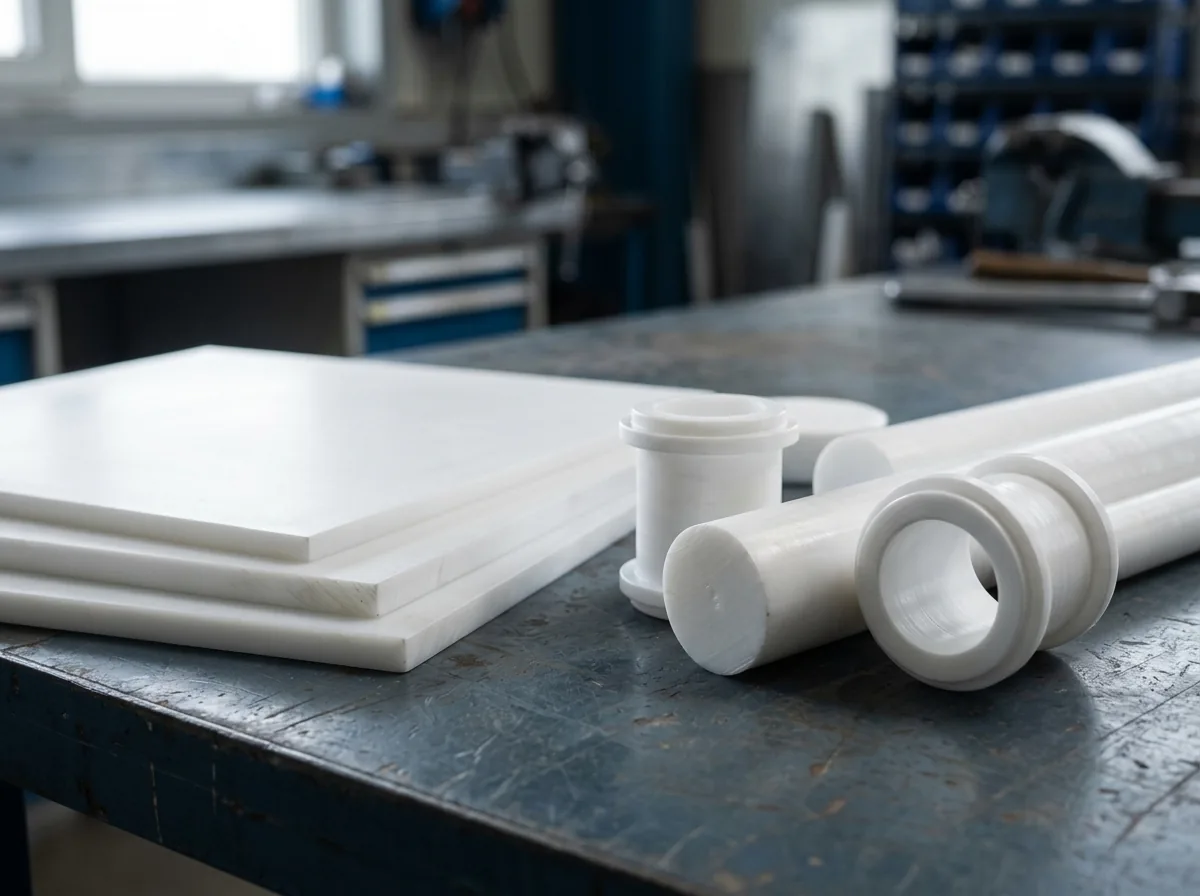
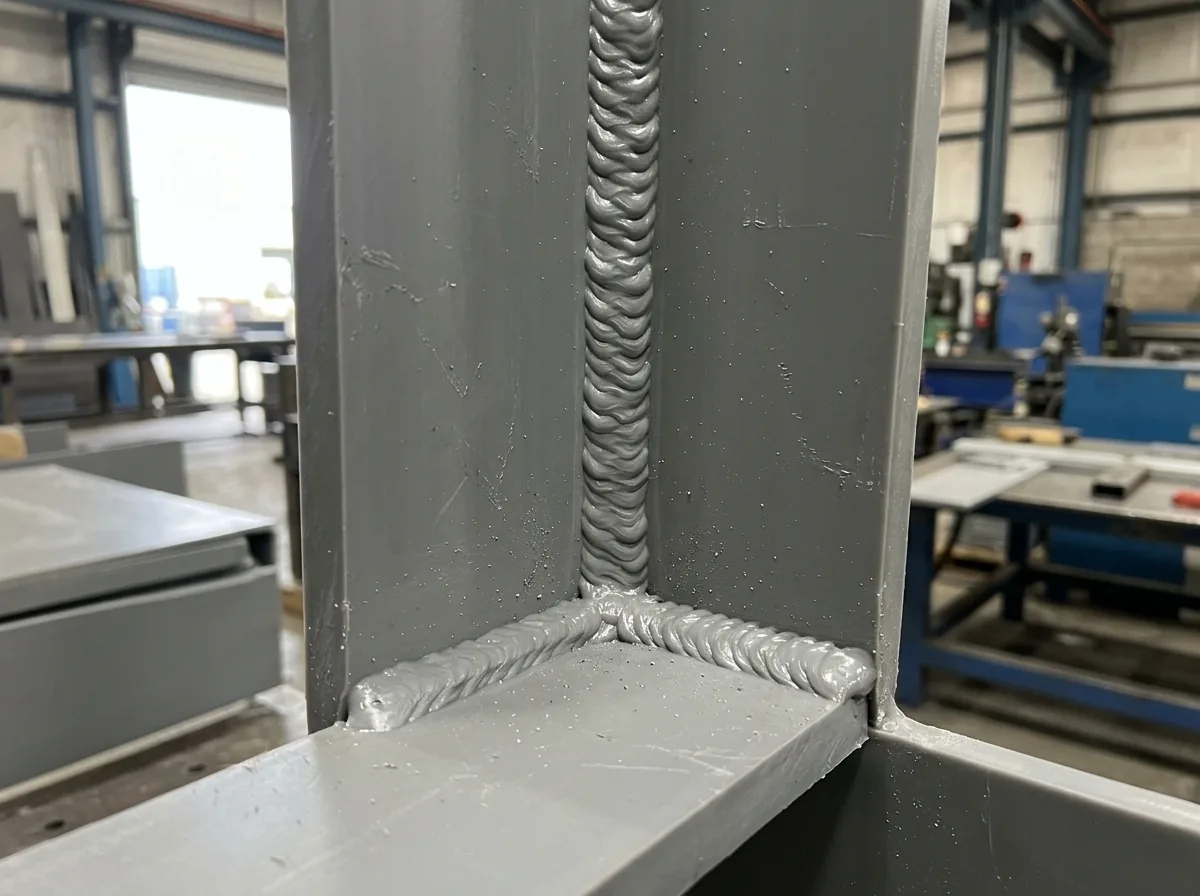
 This image was created with artificial intelligence – marked under Art. 50 of the AI Act, Regulation (EU) 2024/1689. It is a placeholder until the company's photos arrive.
Standard plastic or high-performance plastic? Decision criteria in comparison
Standard plastic or high-performance plastic? This article compares properties, areas of application and decision-making criteria and helps with the selection of the right material for engineering applications.
Whether in mechanical engineering, medical technology or vehicle construction: the choice of the right plastic is a decisive factor in the quality, longevity and cost-effectiveness of a product. The question often arises as to whether an inexpensive, easy-to-process standard plastic is sufficient or whether a specialised high-performance plastic is required. This decision has far-reaching consequences – both technically and economically. In this article we compare the most important properties, areas of application and decision criteria of both classes of plastic. The aim is to provide you with a sound basis for material selection and to avoid typical wrong decisions.
What are standard and high-performance plastics?
Standard plastics are widely used materials characterised by cost-effective production, good processability and a broad range of applications. Well-known representatives are polyethylene (PE), polypropylene (PP), polystyrene (PS) or polyvinyl chloride (PVC). These plastics are produced in large quantities and are the basis for many everyday products, packaging and simple technical parts. Their mechanical, thermal and chemical properties are sufficient for many applications, but reach their limits under higher requirements.
High-performance plastics (also called high-performance polymers) are distinguished by special properties that qualify them for use under extreme conditions. These include high temperature resistance, excellent chemical resistance, low friction, outstanding mechanical load capacity and defined electrical properties. Typical materials are PEEK (polyetheretherketone), PPS (polyphenylene sulphide), PVDF (polyvinylidene fluoride), LCP (liquid crystal polymer) or PTFE (polytetrafluoroethylene). They are often used in safety-critical or highly stressed applications, e.g. in aerospace, medical technology, electronics or the chemical industry. Production is more complex, which is reflected in higher costs.
Decision criteria in comparison
1. Temperature resistance
Standard plastics can usually only be used up to approx. 100 °C. High-performance plastics, by contrast, often retain their shape and function up to 250 °C or even beyond. For applications in the engine compartment or in the process industry, high-performance plastics are therefore often without alternative.
2. Chemical resistance
While PE or PP are resistant to many bases and weak acids, high-performance plastics such as PVDF or PTFE also offer protection against aggressive chemicals and solvents. In chemical process engineering or medical technology this is a decisive criterion.
3. Mechanical load capacity
High-performance plastics exhibit higher stiffness, strength and creep resistance. If components are constantly exposed to dynamic or high static loads, a high-performance plastic is often more cost-effective, even if it is more expensive.
4. Friction and wear behaviour
For moving parts with high friction – e.g. bearings, slide guides or gears – materials such as POM, PTFE or PEEK are suitable due to their excellent sliding properties and low abrasion.
5. Electrical properties
In electrical or electronic applications, insulating or conductive properties can be decisive. High-performance plastics offer defined electrical properties, e.g. for components with ESD protection.
6. Costs and availability
Standard plastics are inexpensive and available immediately in many formats. High-performance plastics are significantly more expensive and often require a minimum order quantity or special processing. Cost-effectiveness therefore depends heavily on the area of application.
7. Standards and approvals
In regulated industries (e.g. aviation, medical technology, food industry), compliance with certain standards or certifications is often required, which only high-performance plastics fulfil.
Table: Comparison – standard plastics vs. high-performance plastics
| Criterion | Standard plastics | High-performance plastics |
|---|---|---|
| Temperature resistance | up to approx. 100 °C | up to over 250 °C |
| Chemical resistance | limited | very high |
| Mechanical load capacity | medium | high |
| Sliding/wear behaviour | mostly good (e.g. POM) | excellent (e.g. PEEK) |
| Electrical properties | mostly insulating | definable |
| Costs | low | high |
| Approvals | limited | extensively available |
Conclusion: When is which plastic worthwhile?
The choice between standard and high-performance plastic should not depend on price alone, but on the requirements of the application:
- For simple geometries, low loads and moderate ambient conditions, standard plastics are ideal.
- In safety-critical areas, at extreme temperatures or where high chemical and mechanical resistance is required, high-performance plastics are used.
A cost-effective selection succeeds when the requirements for the material are precisely defined and compared with the properties of the plastics.
FAQ
When is PEEK worthwhile? PEEK is ideal for highly stressed components that must also be temperature-, chemical- and wear-resistant. Typical in aerospace, medical technology or drive technology.
Are there inexpensive high-performance plastics? Some materials such as PPS or PSU already offer very good properties at moderate prices and thus form a bridge between the standard and high-performance segment.
How do I find the right plastic? Best with a material consultant or on the basis of technical data sheets that clearly present all relevant characteristic values.