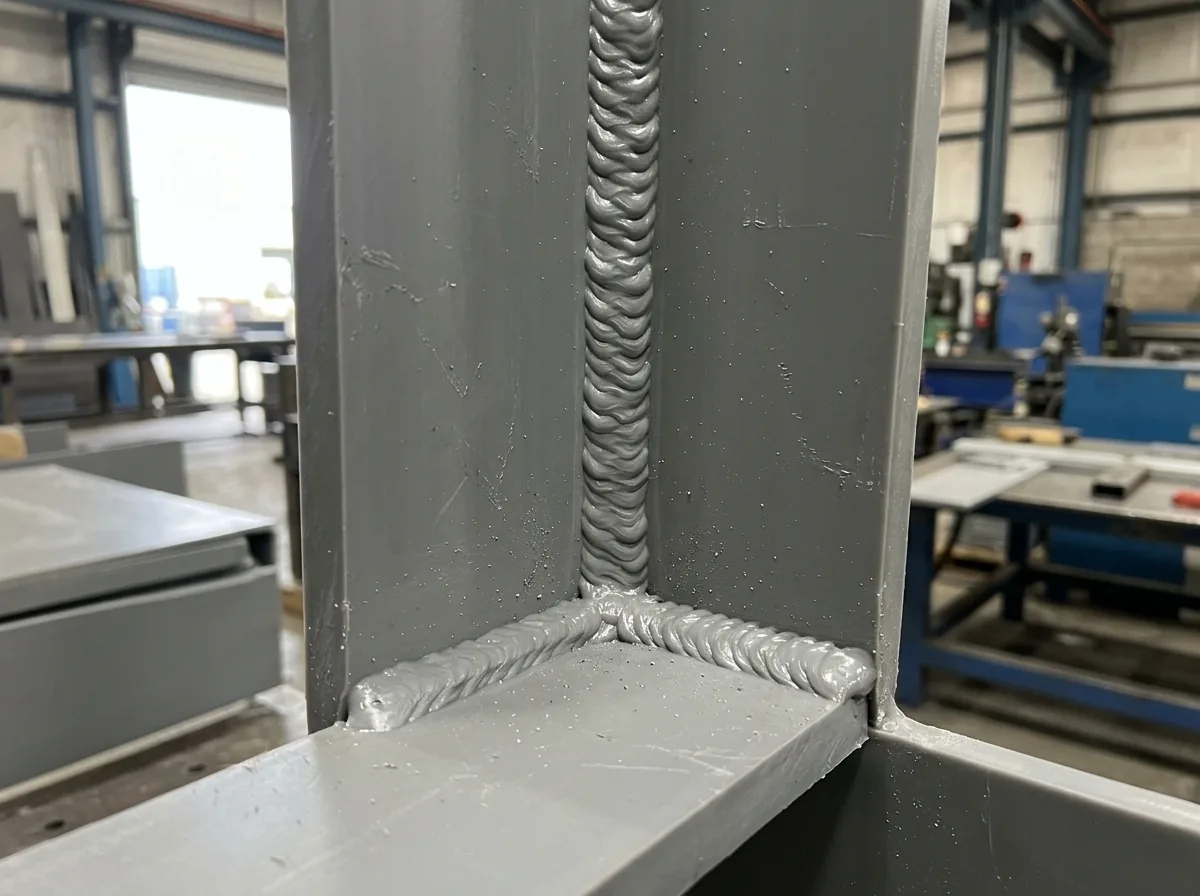
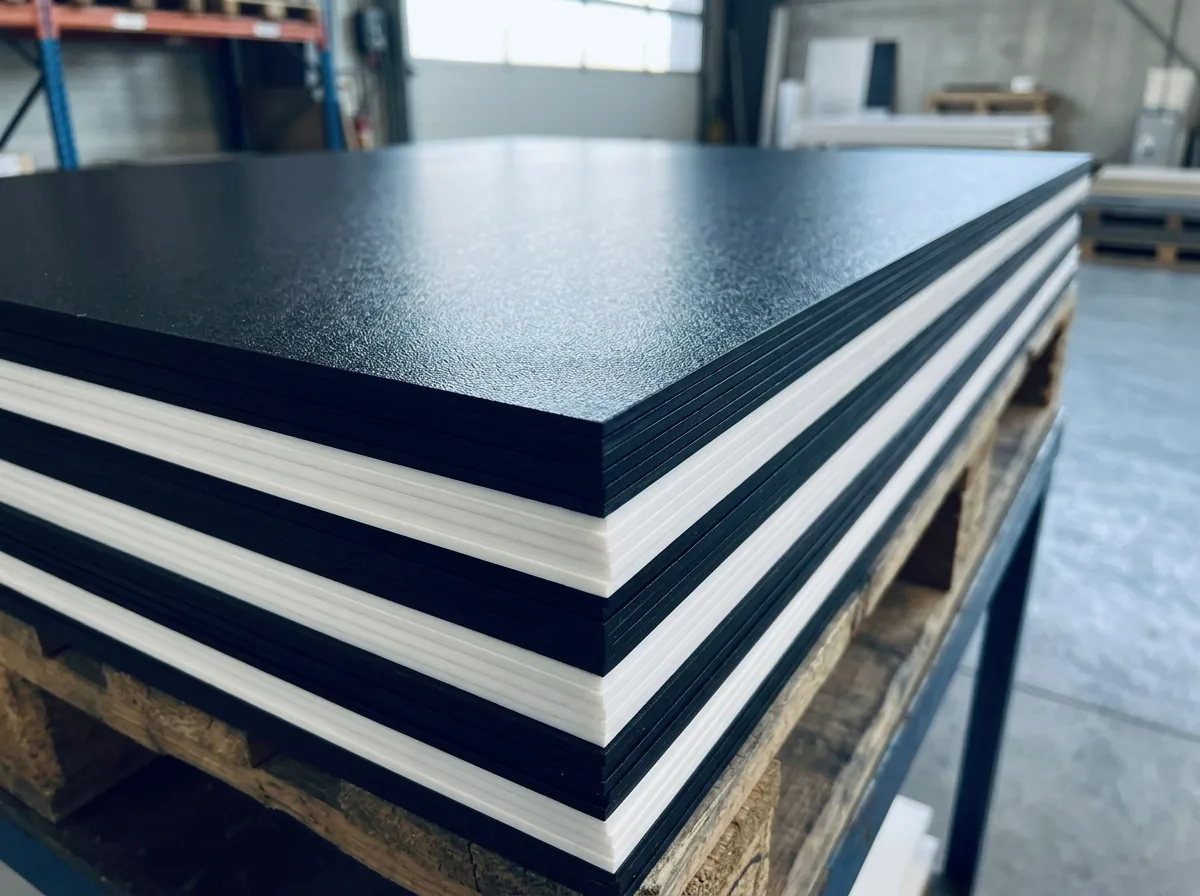
 This image was created with artificial intelligence – marked under Art. 50 of the AI Act, Regulation (EU) 2024/1689. It is a placeholder until the company's photos arrive.
PVC sheets - properties and possible applications
The advantages of PVC sheets 2000 x 1000 mm: robust, weather-resistant and versatile. Ideal for construction, industry, exhibition stand construction & DIY.
PVC sheets are among the most versatile engineering plastic sheets in the industrial environment.
If you are looking for a dimensionally stable, chemical-resistant and economically machinable plastic sheet, rigid PVC sheets offer a technically reliable solution for mechanical engineering, tank construction and structural applications. Standard formats such as PVC sheets 2000 x 1000 mm as well as cut-to-size pieces accurate to the millimetre allow projects to be implemented efficiently, predictably and with optimised material use. Rigid PVC sheets (PVC-U) in particular stand out thanks to their high dimensional stability, chemical resistance and good machinability. The standard format PVC sheets 2000 x 1000 mm is available in many thicknesses and covers a large proportion of typical applications.
This page bundles all relevant information on PVC sheets, rigid PVC sheets, PVC sheets 2000 x 1000, material alternatives, processing, fire protection, tolerances and purchasing criteria.
What are PVC sheets?
PVC sheets are flat semi-finished products made from polyvinyl chloride (PVC), a thermoplastic material that can be formed under the influence of heat and remains permanently dimensionally stable after cooling. PVC is one of the most widely used plastics in the technical and industrial sector worldwide.
In the sheet sector, rigid PVC (PVC-U) is predominantly used. This version contains no plasticisers and is characterised by high rigidity, good mechanical load-bearing capacity and very good chemical resistance. PVC sheets are industrially extruded or pressed and are available in different thicknesses, formats and surfaces.
Characteristic of PVC sheets is the combination of:
- Good dimensional stability
- Resistance to many acids and alkalis
- Low moisture absorption
- Electrical insulating capability
- Economical machinability
Thanks to these properties, PVC sheets are suitable both for structural applications in mechanical and plant engineering and for chemically stressed components, cladding, protective sheets or technical insulation solutions.
In addition to rigid PVC, there is also flexible PVC, which becomes flexible through plasticisers. Flexible PVC is used primarily for films, sealing profiles or hoses. In the field of technical PVC sheets, almost exclusively rigid PVC is used.
Typical properties of rigid PVC sheets
- High surface hardness
- Good compressive and flexural strength
- Very good chemical resistance
- Low water absorption
- Good electrical insulation
- Very good weldability
- Good weather resistance
- Flame-retardant depending on the version
Technical characteristics of rigid PVC
| Property | Typical value |
|---|---|
| Density | 1.38–1.45 g/cm³ |
| Tensile strength | 45–55 MPa |
| Flexural strength | 70–90 MPa |
| Modulus of elasticity | 2,800–3,200 MPa |
| Continuous service temperature | -10 °C to +60 °C |
| Short-term temperature | up to approx. 70 °C |
| Water absorption | very low |
| Dielectric strength | high |
PVC sheets 2000 x 1000 – formats and thicknesses
The 2000 × 1000 mm format is one of the common standard sizes in the technical trade.
Common thicknesses for PVC sheets 2000 x 1000
| Format | Thickness | Temperature range |
|---|---|---|
| 2000 × 1000 mm | 2 mm | -10 to +60 °C |
| 2000 × 1000 mm | 3 mm | -10 to +60 °C |
| 2000 × 1000 mm | 4 mm | -10 to +60 °C |
| 2000 × 1000 mm | 5 mm | -10 to +60 °C |
| 2000 × 1000 mm | 6 mm | -10 to +60 °C |
| 2000 × 1000 mm | 8 mm | -10 to +60 °C |
| 2000 × 1000 mm | 10 mm | -10 to +60 °C |
| 2000 × 1000 mm | 15–20 mm | -10 to +60 °C |
Other formats such as 3000 × 1500 mm are available depending on the project.
Dimensional tolerances and flatness
In technical applications, dimensional accuracy and flatness play a central role. PVC sheets are subject to production-related thickness tolerances, which are based on the respective manufacturer's standard. Typical thickness tolerances for extruded rigid PVC sheets are, for example, around ±0.2 mm to ±0.5 mm for thinner thicknesses and can vary accordingly for thicker versions. Length and width tolerances also depend on the format and the manufacturing process and for standard formats such as 2000 x 1000 mm are often in the range of a few millimetres. As a rule, these deviations are within a technically usual range for extruded plastic sheets.
The flatness of PVC sheets depends among other things on the thickness, storage and processing. Thinner sheets react more sensitively to temperature differences or improper storage, while thicker versions exhibit higher dimensional stability. Flat storage on continuously supporting surfaces contributes to permanent flatness.
For precise components or accurately fitting constructions, dimensionally accurate CNC cutting is recommended, in which project-specific tolerance requirements can be specifically taken into account. This allows tight dimensional specifications to be reliably met and further processing steps to be significantly simplified.
Surface variants
PVC sheets are available in different versions:
- Smooth surface
- Matted surface
- Textured variant
- Foamed PVC sheets
- Colour versions in white, grey, black
Foamed PVC sheets are frequently used in the display and advertising sector.
Fire protection and flammability
Rigid PVC has good fire protection properties.
- Flame-retardant depending on the version
- Self-extinguishing properties
- Variants with fire protection classification available
For projects with increased fire protection requirements, corresponding material certificates are required.
Areas of application for PVC sheets
- Mechanical and plant engineering: PVC sheets serve as dimensionally stable protective cladding, cover sheets or structural elements with chemical resistance.
- Chemical and electroplating plants: Due to their resistance to many acids and alkalis, PVC sheets are suitable for tanks, baths and linings.
- Electrical and control cabinet construction: The high electrical insulating capability makes PVC sheets suitable mounting and partition sheets.
- Tank and apparatus construction: Rigid PVC is used for media-carrying components where chemical resistance is required.
- Advertising and display technology: Foamed or smooth PVC sheets are used as signs, printing sheets or presentation surfaces.
- Construction and interior fitting: PVC sheets are used for technical cladding, damp-room applications or functional wall solutions.
Rigid PVC vs alternatives (ABS, PP)
| Criterion | Rigid PVC | ABS | PP |
|---|---|---|---|
| Rigidity | High | Medium | Medium |
| Impact strength | Medium | High | Medium |
| Chemical resistance | High | Medium | Very high |
| Temperature resistance | up to 60 °C | up to 80 °C | up to 100 °C |
| Weldability | Very good | Limited | Very good |
The material selection depends on the temperature range, chemical exposure and mechanical stress.
Processing of PVC sheets
Rigid PVC can be machined efficiently with common tools and is suitable both for one-off production and for series production. Mechanical machining is typically carried out by sawing, milling or drilling, whereby CNC cutting for precise dimensional requirements is also possible without difficulty. The homogeneous material structure produces clean cut edges and good further processability.
In addition to mechanical machining, thermal processing plays an important role. PVC sheets can be bent or formed under controlled heat input. In addition, the material is very easy to weld, which allows stable and tight joints to be produced.
Various methods are available for joining several components. In addition to plastic welding, special PVC adhesives and classic screwed connections are used. The choice of method depends on the load, area of application and structural requirements.
Weight of PVC sheets 2000 x 1000
Example at 5 mm thickness: 2.0 m × 1.0 m × 0.005 m = 0.01 m³ 0.01 m³ × 1,400 kg/m³ ≈ 14 kg
Price factors for PVC sheets
The price of PVC sheets depends on:
- Thickness
- Format
- Colour
- Surface variant
- Cutting effort
- Purchase quantity
Thinner sheets are cheaper per square metre, thicker gauges increase material usage and weight.
Buy PVC sheets online and have them cut to size
When buying PVC sheets online, the following points are relevant:
- Selection of format and thickness
- Option for cutting to size accurate to the millimetre
- Specification of tolerances
- Material quality and technical data
- Transparent price structure
A dimensionally accurate cut reduces waste and simplifies assembly. If you would like to configure PVC sheets directly or have them cut to size individually, direct access to the corresponding product category or the cut-to-size service is recommended in order to define format, thickness and dimensions specific to the project.
Decision aid: which PVC sheet for which application?
The selection of the right PVC sheet depends on mechanical load, chemical exposure and temperature range. For light covers or cladding in indoor areas, thicknesses between 2 mm and 4 mm are often sufficient. For structural applications in mechanical engineering or for self-supporting elements, 5 mm to 10 mm are common practical values. Thicker versions from 15 mm are used primarily for load-bearing components or heavily stressed constructions.
Under chemical exposure to acids or alkalis, rigid PVC offers high resistance to many aqueous solutions, salt solutions and numerous acids within the usual concentration range. For particularly aggressive media or elevated temperatures, a project-specific resistance test is recommended.
In outdoor areas, UV-stabilised variants should be chosen to ensure long-term colour and material stability. For fire protection-relevant applications, versions with the appropriate classification are advisable, particularly in the commercial or public sector.
Typical practical examples:
- Machine cladding in indoor areas: 4–6 mm rigid PVC
- Chemical bath in the laboratory environment: 8–10 mm rigid PVC
- Mounting sheet in control cabinet construction: 5–8 mm rigid PVC
- Technical protective cover with mechanical load: from 10 mm
These guide values serve as orientation and do not replace structural or design calculation for complex projects.
Summary and classification
PVC sheets represent an established and economical material in the technical environment, which is distinguished by a balanced ratio of stability, chemical resistance and ease of processing. Rigid PVC sheets in particular offer high dimensional stability combined with moderate weight and are suitable for structural components as well as for protective and cladding solutions.
The standard format PVC sheets 2000 x 1000 mm covers a large proportion of typical industrial applications and enables efficient stockholding as well as economical cut pieces. In combination with different thicknesses, surface variants and fire protection versions, a broad spectrum of applications is created, from mechanical engineering through tank construction to advertising and display technology.
Thanks to the good machinability, the option of precise CNC cutting and the availability of technical data and material variants, PVC sheets can be specifically tailored to project-specific requirements. Rigid PVC thus offers a technically reliable and predictable solution for numerous industrial applications.
FAQ on PVC sheets
Which PVC sheets are most commonly used? Rigid PVC sheets in the 2000 x 1000 mm format with thicknesses between 3 and 10 mm are among the most widely used variants.
Are there PVC sheets 2000 x 1000 mm? Yes, this format is one of the common standard sizes.
What does rigid PVC mean? Rigid PVC refers to plasticiser-free PVC-U with high dimensional stability.
What is the temperature range of PVC sheets? The continuous service range is typically between -10 °C and +60 °C.
Are PVC sheets chemical-resistant? Rigid PVC shows high resistance to many acids and alkalis.
Can PVC sheets be welded? Yes, rigid PVC is very well suited to thermal plastic welding.
Which thicknesses are available for PVC sheets 2000 x 1000? Typical thicknesses range from 2 mm to 20 mm.
Are PVC sheets UV-resistant? UV-stabilised variants are suitable for outdoor applications.
Are there foamed PVC sheets? Yes, foamed PVC sheets are frequently used in the display and advertising sector.
What fire protection class do PVC sheets have? Depending on the version, variants with the appropriate classification are available.
How heavy is a PVC sheet 2000 x 1000? At 5 mm thickness, the weight is around 14 kg.
What influences the price of PVC sheets? Thickness, format, colour, surface variant and cutting determine the price.