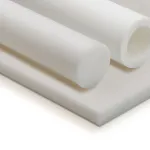
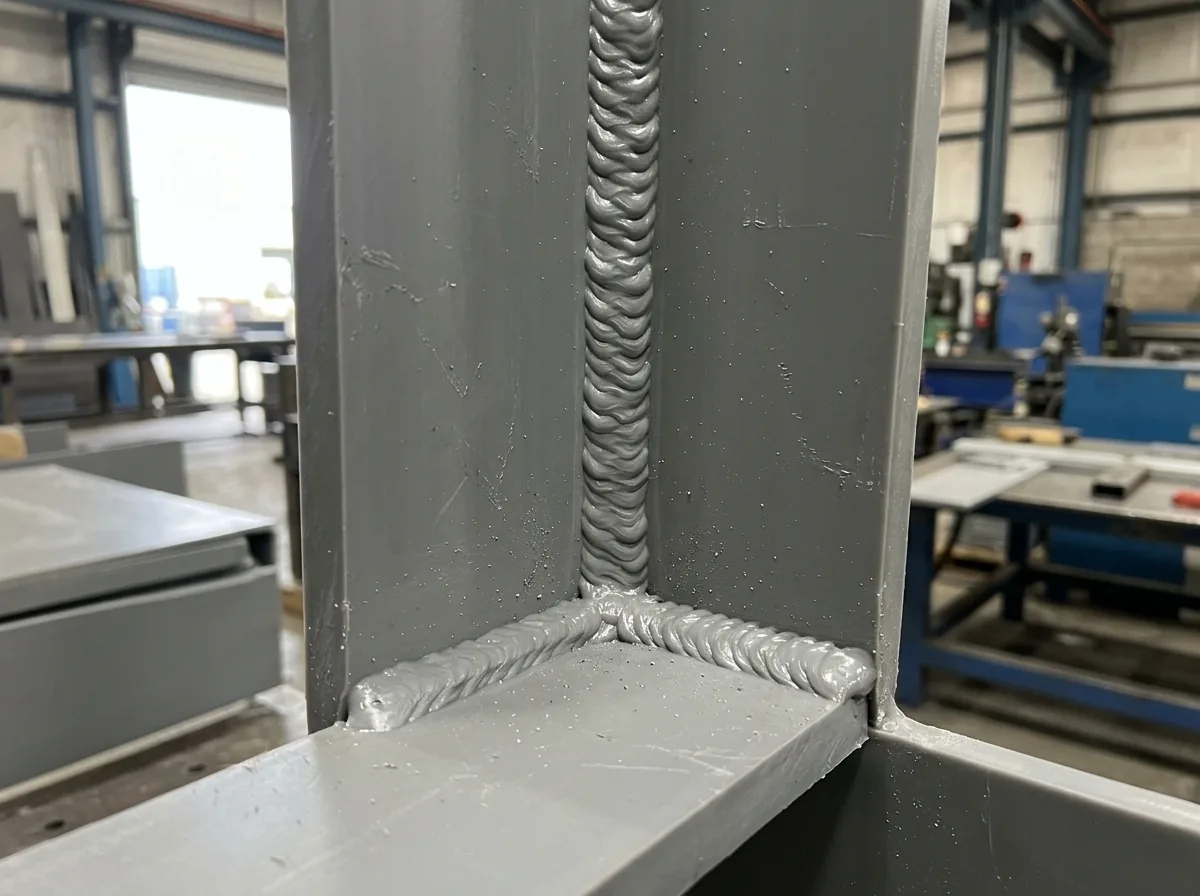
 This image was created with artificial intelligence – marked under Art. 50 of the AI Act, Regulation (EU) 2024/1689. It is a placeholder until the company's photos arrive.
How are engineering plastics made? The path from monomer to semi-finished product
How are engineering plastics made? Learn step by step how monomers are turned into high-quality semi-finished products for industrial applications through polymerisation, compounding and shaping.
Engineering plastics play a central role in industry. Their high strength, thermal stability and chemical resistance make them the ideal choice for applications in mechanical engineering, medical technology, electrical engineering or the automotive industry. But how is such a plastic actually created? The path from the chemical building block to the semi-finished product ready for processing is complex and highly specialised. In several coordinated steps, a high-performance material with precisely defined properties is created from simple molecules. This article sets out the entire development process – from the monomer through polymerisation to the ready-to-use semi-finished product.
From the idea to the molecular structure
At the beginning is the targeted selection of suitable monomers. These building blocks determine the properties of the end product. Monomers such as ethene, propene, caprolactam or terephthalic acid are small, reactive molecules that can combine into long chains (polymers). The selection is based on the required properties of the desired plastic:
- temperature resistance
- impact toughness
- chemical resistance
- electrical insulation
In materials development, a precise analysis is carried out of which molecular structure produces the desired macroscopic properties. The geometry of the molecules, the number of functional groups and the possibility of crystallisation also play a role. Depending on the application, homopolymers (from one monomer) or copolymers (from several monomers) are used. The combination with additives or reinforcing materials is also already planned at this stage.
Polymerisation: the key step
The conversion of monomers into polymers takes place through chemical reactions, in particular:
Chain polymerisation
Individual monomers are linked to one another via chain reactions. Typical plastics: polyethylene (PE), polypropylene (PP), polystyrene (PS). This method is particularly suitable for large production volumes with simple polymer structures.
Step polymerisation
Here functional groups react with one another, e.g. hydroxyl and carboxyl groups. The reaction is slower, but allows more complex polymer structures. Typical: polyamides (PA), polyesters (PET). Step polymerisation enables finer control over the end product properties.
Polyaddition
A special form without the elimination of by-products. Used among others for polyurethanes (PUR), in which the reaction leads directly to the polymer. This method is often used in the reaction directly in the mould (in situ).
The choice of polymerisation method has a considerable influence on the chain length, branching structure, crystallinity and thermal properties of the plastic. Modern processes even enable targeted control of these properties through temperature, pressure and reaction time.
Compounding: adjusting properties in a targeted way
After polymerisation, the pure polymer is often not yet sufficiently suitable for industrial applications. In compounding, additives, fillers and reinforcing fibres are added to the plastic. The aim is to improve the material properties in a targeted way:
- UV stabilisers protect against light ageing
- Flame retardants increase safety
- Lubricants improve processability
- Fibres (e.g. glass fibre) increase mechanical load capacity
The combination of polymer matrix and additives creates a material tailored to the respective application.
Extrusion, pressing or casting: from granulate to semi-finished product
The compounded plastic granulate is now ready for conversion into semi-finished products. Depending on the plastic type and application, various shaping processes are used:
Extrusion
Here the granulate is melted in an extruder and pressed through a die. Typical for sheets, films or pipes.
Pressing and calendering processes
Often used for thermosetting plastics or fibre-reinforced materials. The plastic is brought into shape under pressure and heat.
Casting processes
Used for certain thermoplastic plastics such as PA 6G. Here the monomer is poured directly into the mould and polymerised (in-situ polymerisation).
Semi-finished products as the starting basis for components
At the end of this process are the semi-finished products: sheets, rods, hollow rods or profiles. They serve as the starting material for a wide range of processing methods. In practice, semi-finished products are often converted into functional components by CNC machining, thermoforming, milling or welding.
Particularly engineering plastics such as POM, PA or PEEK can thus produce highly loadable, precise and long-lasting components. These are found in gears, plain bearings, housings, medical instruments or electronic insulators. The quality of the semi-finished products is crucial for the performance of the end product, which is why their production is strictly controlled and matched to the respective material type.
FAQ
What is the difference between thermoplastics, thermosets and elastomers?
- Thermoplastics can be melted and reshaped multiple times (e.g. PA, POM).
- Thermosets are dimensionally stable after curing and can no longer be reshaped (e.g. EP, PF).
- Elastomers are rubber-like and flexible (e.g. PU, TPE).
What role does the molecular structure play? It largely determines the strength, chemical resistance and temperature tolerance of a plastic.
What is meant by engineering plastics? These are polymers with increased performance compared with standard plastics. They are characterised by improved mechanical, thermal or chemical properties.