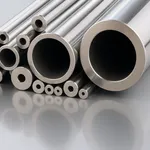
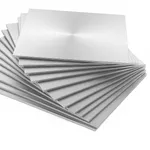
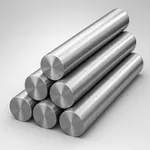
This image was created with artificial intelligence – marked under Art. 50 of the AI Act, Regulation (EU) 2024/1689. It is a placeholder until the company's photos arrive.
From block to precision cut – how aluminium semi-finished products are made
How aluminium semi-finished products are made: from raw material through rolling and extrusion to sheet – processes, differences and significance.
The production of aluminium sheets is a highly precise, multi-stage process in which metallurgical expertise, machine precision and digital monitoring interlock seamlessly. From the melting of the aluminium through casting and rolling to mechanical processing, every single step determines the dimensional accuracy, surface quality and microstructure of the material.
Modern production lines work with sensors, real-time data and strictly controlled parameters to manufacture aluminium semi-finished products that meet the requirements of industry, mechanical engineering, aviation or architecture. The goal is always a consistently high-quality, low-stress and dimensionally stable end product that can be further processed with precision.
From raw material to continuous cast block
At the beginning of semi-finished product production is the selection and preparation of the aluminium. Aluminium can be obtained both from primary raw material (bauxite) and from recycled material. While the production of primary aluminium takes place via the energy-intensive molten-salt electrolysis process, the recycling process uses existing metal and saves up to 95% energy in the process – a decisive sustainability advantage.
In melting furnaces, the aluminium is heated to around 700 °C and freed from impurities by degassing and filtration. Alloying elements such as magnesium, silicon, copper or zinc are then added. These determine the material properties such as strength, corrosion resistance or machinability. The result is a precisely defined melt, which is further processed in casting plants.
In the continuous casting process, the melt is passed continuously through a water-cooled mould. This produces an endless strand, which after solidification is cut into cast blocks of equal length. Alternatively, for special alloys, die casting is also used, in which individual blocks are cast in moulds. What is decisive is that solidification takes place in a controlled and uniform manner in order to avoid shrinkage cavities, inclusions and grain segregation.
These cast blocks form the starting material for the subsequent forming – the actual semi-finished product production.
Hot rolling and cold rolling: densification and microstructure optimisation
During hot rolling, the aluminium block is heated to around 450 °C and passed step by step through several rolling stands. In the process, the thickness is reduced from originally several hundred millimetres to a few millimetres. The high rolling pressure and the temperature produce a dense, fine-grained microstructure. This improves mechanical stability and eliminates casting defects such as pores or shrinkage cavities.
During hot rolling, the material is repeatedly recrystallised. This allows the aluminium grains to rearrange and distribute evenly – an important factor for subsequent machinability and dimensional accuracy. In the final step, quenching is often carried out in order to fix certain properties of the alloy.
During the subsequent cold rolling, forming takes place at room temperature. Here the focus is on dimensional accuracy and surface finish. Cold-rolled sheets or plates have higher strength, since the deformation causes work hardening. For precision applications – for example in electronics or vehicle construction – cold-rolled semi-finished products are preferred.
Some aluminium alloys, such as EN AW-5083 or EN AW-7075, are specifically hot- and cold-formed in order to achieve a balance of strength, formability and corrosion resistance.
Heat treatment and stress-relief annealing
After rolling, the material is heat-treated in order to reduce internal stresses and to specifically adjust the microstructure. Aluminium reacts strongly to thermal processes: even small temperature differences can change the grain structure and thus the material properties.
The heat treatment of aluminium usually takes place in several phases:
- Solution annealing: Heating to around 500 °C in order to distribute alloying elements evenly in the microstructure.
- Quenching: Rapid cooling (usually in water or air) in order to "freeze" the equilibrium state system.
- Ageing: Tempering at 100–200 °C, which produces finely distributed precipitates that harden the material.
In stress-relief annealing, by contrast, the focus is on relaxing the material. Rolling, CNC milling or grinding create residual stresses that can later lead to distortion. Annealing at around 250 °C ensures that these stresses are reduced and the material remains dimensionally stable – a prerequisite for highly precise CNC machining.
Sawing, milling and CNC machining: from semi-finished product to precision cut piece
After rolling and annealing, the semi-finished product is brought to the desired size on saws or CNC machines. In industrial practice, vertical band saws, plate saws or circular saws with carbide or diamond tips are used for this. The saw cut does produce minor tolerances, but it is economical and fast.
For higher requirements, milling follows. CNC milling centres work with tolerances in the tenth or even hundredth of a millimetre range. Coolants ensure uniform heat dissipation in order to prevent dimensional deviations. Particularly with large plates, symmetrical machining of both sides ensures dimensional stability.
Typical tolerances in aluminium cut to size
| Machining process | Dimensional tolerance | Surface quality (Ra) | Typical application |
|---|---|---|---|
| Saw cut | ± 0.5 mm | 12.5–25 µm | Rough cut pieces, construction |
| CNC-milled | ± 0.1 mm | 1.6–3.2 µm | Mechanical engineering, fixtures |
| Surface-ground parallel | ± 0.05 mm | < 1 µm | Mould making, optics, medical technology |
Surface quality: from raw casting to high-gloss plate
The surface of an aluminium plate depends on the entire process chain – from casting through rolling to finishing. While raw rolled plates usually have a matt, slightly textured surface, ground or polished plates achieve roughness values in the range of a few micrometres.
For applications where design and feel are important, anodising of aluminium is often used. In this process, a protective oxide layer is created electrochemically, which makes the material corrosion-resistant and colourable. Anodised layers can be transparent or coloured – typical, for example, in aluminium façades or visible parts in mechanical engineering.
Alternatively, chemical pickling, polishing or painting offer further possibilities for surface finishing. What is decisive is that every treatment is matched to the previous machining step: insufficient pre-treatment can lead to visible grinding marks or uneven degrees of gloss.
Quality assurance and test methods
Quality control in semi-finished product production is fully digitalised and highly automated. Modern rolling mills have laser measuring systems, optical roughness testers and infrared thermography in order to detect even the smallest deviations in real time.
Important test methods
- Ultrasonic testing: Detection of pores, shrinkage cavities and bonding defects inside the plate.
- Hardness measurement: Checking the ageing condition and comparison with target values according to standard (e.g. EN 485).
- Tensile testing: Determination of yield strength, tensile strength and elongation at break.
- 3D measuring systems: Optical or tactile systems check dimensional accuracy and flatness to an accuracy of hundredths of a millimetre.
In addition, material certificates according to EN 10204-3.1 are issued, which document chemical composition, strength and test results – an indispensable component for industrial applications with quality verification.
Sustainability and material efficiency
Aluminium is one of the most sustainable metallic materials – in particular due to its unlimited recyclability without loss of quality. Around two thirds of the aluminium produced worldwide is already in circulation today and is continuously recycled. This cycle not only reduces energy requirements but also CO₂ emissions considerably.
In modern semi-finished product production, closed material cycles are created: saw chips, milling residues and rolling waste are collected directly on site, melted down and fed back into the production process. In addition, energy-efficient furnace technologies, waste heat utilisation systems and digital production planning are used in order to control energy flows optimally.
Furthermore, leading manufacturers invest in green aluminium, in which the energy input comes from hydropower, wind or solar energy. As a result, the environmental impact per kilogram of aluminium falls significantly. Reducing packaging and transport effort also increasingly contributes to improving the environmental balance.
Sustainability of aluminium in this context therefore means not only recycling, but also the holistic optimisation of processes – from the raw material source to the end product.
Application examples for aluminium semi-finished products
- Mechanical and plant engineering: Clamping fixtures, machine tables, precision housings
- Vehicle construction: Structural and lightweight elements, underbodies, panelling
- Aerospace: High-strength structural components with low weight
- Electrical engineering: Housings, heat sinks, carrier plates for power electronics
- Architecture and design: Façades, furniture, displays, interior fitting
CNC-milled aluminium plates in small series are particularly popular, as they combine short production times with high precision. The combination of mechanical machining and surface finish produces components that are ready for direct assembly.
Future prospects: digital manufacturing and process optimisation
Semi-finished product production is increasingly developing into an intelligent manufacturing chain. Sensors, data analysis and AI-based process control enable real-time monitoring of the entire production line. Systems automatically detect deviations and adjust parameters such as rolling pressure, temperature or feed rate.
In addition, the approach of the digital twin is gaining in importance: every plate is represented virtually – including material data, machining history and quality characteristics. This allows seamless traceability and opens up new possibilities for predictive maintenance and quality assurance.
In the long term, the combination of automation, sustainability and precision manufacturing will ensure that aluminium semi-finished products become even more efficient, more homogeneous and more environmentally friendly.
Precision arises through process control
The creation of aluminium semi-finished products is a prime example of the interaction of materials science, technology and quality awareness. From casting through rolling to final CNC machining, mastery of every process step determines the precision and reliability of the end product.
Only when the entire process chain is exactly coordinated – from the alloy composition to the final finish – are aluminium plates created that meet the highest requirements. This combination of technical perfection and sustainable responsibility makes aluminium a material with a future: light, stable, precise and usable in almost endless variety.
Understand the material down to the last detail: Get advice on the right aluminium plate or configure your cut to size directly on the basis of the suitable semi-finished product.
FAQ
What is an aluminium semi-finished product? A semi-finished product is a prefabricated intermediate product that is produced by rolling, casting or extrusion and serves in further processing into components.
How are aluminium plates created? They are hot- and cold-rolled from cast blocks, heat-treated and then sawn, milled or ground.
Which tolerances apply in aluminium cut to size? Depending on the process, they lie between ± 0.05 mm (ground) and ± 0.5 mm (sawn). Highly precise CNC cut pieces even achieve lower values.
Which surface qualities are possible? From raw-rolled through ground and milled to anodised, polished or painted – depending on the application and design requirement.
Why is aluminium so popular? Because it is light, corrosion-resistant, conductive, aesthetic and exceptionally easy to machine – a material that combines efficiency, function and sustainability.