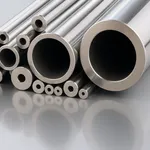
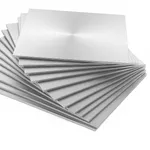
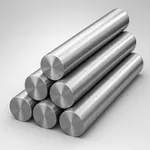
This image was created with artificial intelligence – marked under Art. 50 of the AI Act, Regulation (EU) 2024/1689. It is a placeholder until the company's photos arrive.
EN AW-2024 – High-strength aluminium alloy for demanding applications
Properties, applications and advantages of the high-strength aluminium-copper alloy. Ideal for aerospace, mechanical engineering and toolmaking.
The aluminium alloy EN AW-2024 is one of the most important materials when it comes to lightweight construction, strength and precision. It has been used for decades in aviation, in mechanical engineering, in the automotive industry and in toolmaking. Its reputation is based on an exceptional combination of high tensile strength, good machinability and low weight, which makes it a standard for demanding technical designs.
In contrast to softer or more corrosion-resistant aluminium alloys, EN AW-2024 was developed specifically for situations in which mechanical loads are the priority – for example in load-bearing structures, complex housings or high-precision fixtures. Through the targeted composition of copper, magnesium and manganese, the material achieves a performance that in many cases comes close to steel alloys, while at the same time having a significantly lower density. This saves weight, energy and material costs – with unchanged safety and stability.
What is EN AW-2024?
EN AW-2024 (in accordance with DIN EN 573-3: AlCu4Mg1) is a hardenable aluminium-copper alloy that ranks among the so-called high-strength alloys of the 2000 series. The material contains around 4 to 5 per cent copper, 1 to 1.8 per cent magnesium and 0.3 to 0.9 per cent manganese. These elements have a decisive influence on the microstructure: copper provides strength and hardness, magnesium improves toughness, and manganese increases stability against material fatigue.
In practice this means: EN AW-2024 can achieve very high strength values in the heat-treated condition (e.g. T351). The material is frequently used for structurally load-bearing components, precision elements and highly stressed components that must withstand high forces permanently.
Compared with EN AW-5083 (magnesium-based, corrosion-resistant but soft) and EN AW-7075 (zinc-based, extremely strong but brittle), the alloy exhibits a balanced ratio of strength, ductility and machinability. This makes it ideal for designs in which both mechanical stability and exact dimensional accuracy are decisive.
EN AW-2024 is also particularly valued for its heat treatment properties: through targeted solution annealing, quenching and subsequent ageing, the alloy can be optimised for the respective application – from tough, easily deformable conditions through to high-strength, hard variants for maximum load capacity.
The combination of strength, weight efficiency and dimensional stability makes EN AW-2024 a material that is indispensable in structurally demanding industries – whether in aircraft fuselages, support structures, frame components or precision fixtures. It is a prime example of how targeted metallurgy enables peak technical performance.
Chemical composition (guide values)
| Element | Symbol | Proportion [%] |
|---|---|---|
| Copper | Cu | 3.8 – 4.9 |
| Magnesium | Mg | 1.2 – 1.8 |
| Manganese | Mn | 0.3 – 0.9 |
| Iron | Fe | ≤ 0.5 |
| Silicon | Si | ≤ 0.5 |
| Zinc | Zn | ≤ 0.25 |
| Titanium | Ti | ≤ 0.15 |
| Remainder | Al | Balance |
The targeted combination of these elements produces a fine precipitation structure that achieves high strength through heat treatment (e.g. condition T351 or T4).
Mechanical properties
Depending on the condition (T4 = solution annealed and naturally aged, T351 = stress-relieved and pre-stretched), the characteristic values vary slightly. Typical values at 20 °C:
| Property | Condition T351 | Unit |
|---|---|---|
| Tensile strength Rm | 450 – 480 | MPa |
| 0.2 % proof stress Rp₀.₂ | 320 – 340 | MPa |
| Elongation at break A₅ | 12 – 15 | % |
| Modulus of elasticity E | 72,000 | MPa |
| Density | 2.78 | g/cm³ |
EN AW-2024 is therefore one of the high-strength aluminium alloys and in many applications achieves values that approach those of modern titanium or steel alloys – at a significantly lower weight.
Processing and machinability
EN AW-2024 can be machined very well by cutting (e.g. milling, turning, drilling). The surface quality remains high even with precise CNC machining, as the alloy tends to form fine chips.
Welding, on the other hand, is only possible to a limited extent – the material tends to crack. Instead, riveted, screwed or bonded joints are usually chosen.
When milling or turning, cooling is advisable in order to keep heat generation low and avoid dimensional deviations.
Anodising or painting is also frequently used to improve corrosion protection, as the copper content slightly weakens the natural oxide layer.
Typical applications
- Structural components in aerospace (e.g. ribs, frames, brackets)
- Machine and tool construction (e.g. fixtures, clamping plates, adapters)
- Automotive engineering and racing (lightweight components, chassis parts, engine mounts)
- Precision elements in equipment and plant engineering
- Electronic housings with high requirements for rigidity and dimensional accuracy
- Highly stressed components in model making, motorsport or robotics
Corrosion behaviour and surface treatment
Due to its high copper content, EN AW-2024 is only limitedly corrosion-resistant compared with other aluminium alloys. Copper does improve strength, but at the same time promotes electrochemical processes that can lead to contact corrosion and pitting – especially when the material is exposed to moisture, salt-laden air or galvanic influences. EN AW-2024 is therefore rarely used unprotected in its raw form.
To increase resistance, anodising of aluminium is frequently carried out. This produces a dense, hard oxide layer that reliably protects the aluminium against chemical and mechanical influences. The E6/EV1 (natural-colour anodised) or hard anodised (reinforced oxide layer) processes are particularly widespread, as they offer both corrosion protection and improved surface hardness.
Alternatively, coatings, paints or clear lacquer layers are used, which additionally seal the material and enhance its appearance. In safety-critical areas – above all in aerospace – Alclad variants (2024 Clad) are preferred. Here a thin pure aluminium layer is rolled on, which serves as a cathodic protective film and prevents the formation of corrosion centres. This protective layer significantly increases the service life and reliability of the components.
In an industrial environment it is also customary to passivate or coat edges and cut surfaces after machining, in order to ensure full corrosion protection there as well. In this way, despite its metallurgical sensitivity, EN AW-2024 remains a robust material when it is treated and used correctly.
Standards and delivery forms
- DIN EN 573 – Chemical composition and designation of aluminium alloys
- DIN EN 485 – Mechanical properties and dimensional tolerances
- DIN EN 515 – Condition designations for aluminium semi-finished products
- DIN EN 754 – Requirements for extruded profiles and precision bars
- Delivery forms: plates, sheets, flat bars, rods and dimensionally accurate cut pieces
- Particularly common: EN AW-2024 T351 – stress-relieved, distortion-free, easy to machine and dimensionally stable
Sustainability and economic efficiency
A key advantage of aluminium alloys such as EN AW-2024 lies in their complete recyclability. The material can be reused without loss of quality, whereby melting requires only around five per cent of the energy that would be needed for primary production. This low energy requirement significantly reduces the CO₂ balance and makes aluminium a future-proof material in resource-saving production processes.
From an economic point of view, EN AW-2024 is in the middle to upper price segment, but justifies this through its long service life, low maintenance costs and an outstanding ratio between weight and strength. In machine and tool construction, the material enables a long service life and high process reliability, as a result of which the investment costs are quickly amortised.
Decision aid: when is EN AW-2024 worthwhile?
The decision in favour of EN AW-2024 depends essentially on the requirements for strength, weight, precision and loading. This alloy is used when other aluminium types reach their limits – for example under high dynamic loads, tight tolerances or when the ratio between weight and stability is decisive.
EN AW-2024 is particularly worthwhile when:
- Components must withstand static or alternating forces, for example supports, frames or connecting elements.
- A low dead weight is required in order to increase energy efficiency or mobility – for example in aviation, motorsport or robotics.
- High dimensional stability and accuracy are required during machining, for example in fixture plates or clamping systems.
- Components must endure high temperatures and mechanical vibrations over long periods.
In these cases EN AW-2024 clearly surpasses classic cast alloys or soft aluminium types. The material is particularly popular in the aviation industry, where every reduction in weight is a decisive advantage without compromising on safety. It is likewise widely used in tool and machine construction, where the material costs are amortised through long service lives and precise machining.
EN AW-2024 is, by contrast, less suitable for welded constructions or corrosive environments, for example in marine areas or chemical plants. In such cases alloys such as EN AW-5083 or EN AW-5754 are the better choice, as they offer significantly better corrosion resistance due to their high magnesium content.
From an economic point of view, the use of EN AW-2024 is particularly worthwhile when the service life, precision and stability of a component are more important than the pure material price. In precision mechanics, fixture systems or lightweight structural components, this alloy is often the decisive factor for quality and reliability.
Future prospects and further developments
With the growing focus on lightweight construction and energy efficiency, EN AW-2024 is gaining further importance. In modern manufacturing processes such as additive manufacturing, friction stir welding or hybrid constructions, the alloy is increasingly used in combination with other materials. Newly developed variants with a modified copper-magnesium balance are also intended to offer better corrosion values in future while maintaining the same strength.
EN AW-2024 thus remains a material that is constantly evolving and will also find its place in new industries in future, for example in electric vehicles or robotics components.
Technically demanding and proven at the same time
EN AW-2024 is an alloy that is distinguished by its exceptional strength, stability and precision. It was developed for applications in which conventional aluminium types reach their limits, and it convinces through an outstanding combination of mechanical load capacity, machinability and weight efficiency.
Despite its limited corrosion resistance, the material remains an indispensable part of modern designs in many industries – in particular aviation, machine and tool construction as well as vehicle and racing engineering. Its high fatigue strength and dimensional accuracy make it the first choice for components that are exposed to constant loads over many years.
In the long term it becomes apparent that EN AW-2024 is not only a technical but also an economic decision: the higher material quality leads to a longer service life, lower maintenance costs and more precise manufacturing results. In combination with suitable surface treatments of aluminium, the alloy offers an optimal ratio between performance, economic efficiency and sustainability – and thus remains a key material for demanding engineering applications.
FAQ on EN AW-2024
Which conditions are available for EN AW-2024? Frequently T3, T4, T351 and T6 – depending on the field of application and the requirement for strength or formability.
Is EN AW-2024 weldable? Only to a limited extent. The alloy tends to crack and is usually riveted, screwed or bonded.
How does EN AW-2024 differ from EN AW-7075? 7075 is stronger, but more brittle and more expensive; 2024 is more ductile and easier to machine.
Can EN AW-2024 be anodised? Yes, although with limited corrosion effect. Hard anodised or Alclad variants offer better protection.
Where can I buy EN AW-2024 plates and cut pieces? From specialist suppliers such as aluplattenzuschnitt.de – individually configurable, in millimetre-accurate execution, in the online configurator.