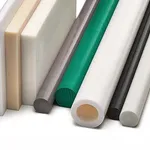
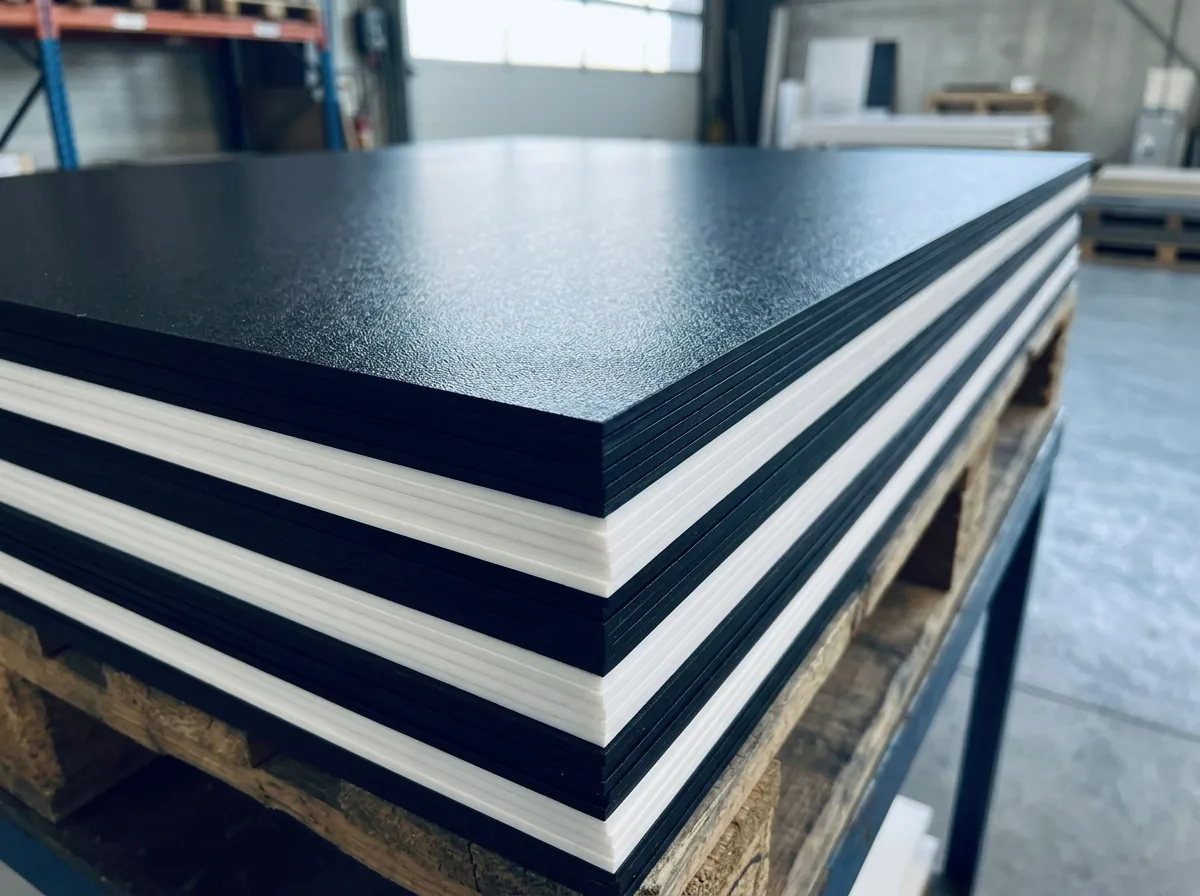
 This image was created with artificial intelligence – marked under Art. 50 of the AI Act, Regulation (EU) 2024/1689. It is a placeholder until the company's photos arrive.
Acrylonitrile butadiene styrene (ABS)
ABS explained simply: the most important properties of acrylonitrile butadiene styrene, typical areas of application and advantages for industry.
Acrylonitrile butadiene styrene, or ABS for short, is an impact-resistant thermoplastic with a balanced ratio of strength, rigidity and surface quality. The material combines good mechanical properties with straightforward processing and high dimensional accuracy.
ABS is characterised by high impact resistance, including at lower temperatures. At the same time, the material offers good surface hardness and can be precisely machined, milled and bonded. Its electrical insulating capability supports use in technical applications.
Typical of ABS is the combination of robustness and visual quality. Components can be easily coloured, textured or painted. The material is suitable for series components as well as for functional prototypes.
As an engineering plastic, ABS is positioned in the environment of rubber, foam and plastic solutions and is frequently used where mechanical load-bearing capacity and clean surfaces are required.
Properties of ABS
ABS is suitable for technical components where impact resistance, dimensional accuracy and a clean surface are required. For many applications it is also relevant that the material can be easily machined and assembled. Notes on processing can be found in the context of plastic machining.
Mechanical properties
- High impact resistance for components subject to impact
- Good rigidity and strength for dimensionally stable constructions
- Good surface hardness for visible covers and housings
Thermal properties
- Dimensional stability within the usual service temperature range of technical plastic components
- Suitable for applications with short-term temperature peaks in device and housing construction
Chemical resistance
- Solid resistance to many aqueous media and cleaning agents in everyday use
- Material selection is based on the specific medium, the temperature and the exposure time
Electrical properties
- Good electrical insulating capability for technical components
- Use in device environments with requirements for basic insulation
Machining and processing
- Easy to mill and drill for precise contours
- Easy to bond with suitable pre-treatment
- Good surface quality for painting and visual requirements
Areas of application for ABS
ABS is used wherever components need to be mechanically load-bearing, dimensionally stable and visually clean. The material is suitable both for functional components and for visible covers and housing parts. In many projects, use is made in combination with other engineering plastics.
Housing and device construction
ABS is frequently used for device housings, covers and functional parts. The good surface quality and the impact resistance support use in technical devices and systems.
Mechanical and plant engineering
In mechanical engineering, ABS is used for covers, protective hoods and structural components with moderate mechanical load. The dimensional accuracy facilitates integration into existing assemblies.
Electrical engineering and electronics
Thanks to its electrical insulating properties, ABS is suitable for housings, mounts and technical components in the environment of electrical and electronic assemblies.
Vehicle and interior applications
ABS is used in interior trim, mounts and functional plastic parts where impact resistance and surface quality are required.
Prototypes and small series
Due to its good machinability, ABS is suitable for functional prototypes, sample parts and smaller series where fast implementation and reproducible quality are required.
Delivery forms and machining options for ABS
ABS is available in various delivery forms and can be further processed in many ways. The choice of form depends on the component geometry, the quantity and the requirements for dimensional accuracy and surface. In combination with other plastic cut pieces, ABS is frequently used on a project-specific basis.
Delivery forms
- Sheet stock for technical components and covers
- Rods and profiles for structural applications
- Raw material for mechanical machining and further processing
Mechanical machining
- Milling for precise contours and cut-outs
- Drilling for mounting and fastening points
- Sawing for cut-to-size pieces
Joining and surface finishing
- Bonding with suitable adhesive systems
- Painting and coating for visual requirements
- Surface texturing depending on the area of application
Tolerances and dimensional accuracy
ABS offers good dimensional accuracy during mechanical machining. The achievable tolerances depend on the component geometry, the machining method and the ambient conditions.
Advantages and limits of ABS
ABS offers a balanced property profile for many technical applications. For a proper material selection it is advisable to consider both the advantages and the application limits. Compared with other engineering plastics, ABS shows a clearly defined application window.
Advantages of ABS
- High impact resistance for components subject to impact
- Good dimensional accuracy during mechanical machining
- Very good surface quality for visible applications
- Good electrical insulating properties
- Versatile machining and processing options
Limits of ABS
- Limited temperature resistance under continuous heat exposure
- Restricted resistance to certain solvents
- Use predominantly indoors
Technical classification
ABS is suitable for applications with moderate thermal and chemical loads. Where there are higher requirements for temperature or media resistance, alternative materials are assessed.
Selection and advice on ABS
The selection of ABS is based on the mechanical, thermal and visual requirements of the respective project. Decisive factors are the application environment, the type of load and the desired machining quality. A structured material selection creates planning certainty for design and production.
Typical selection criteria
- Mechanical load and impact stress
- Temperature range in continuous and short-term use
- Contact with media or cleaning agents
- Requirements for surface and dimensional accuracy
- Type of further processing and assembly
ABS is particularly suitable for technical components indoors where a clean surface and reproducible dimensional accuracy are required. Where requirements differ, a cross-material consideration within the portfolio of engineering plastics is recommended.
Project-specific coordination
For specific applications, selection is often carried out in direct comparison with drawings, tolerance specifications and application parameters. Early coordination supports an economical and technically suitable implementation.
FAQ on ABS
What is ABS particularly suitable for?
ABS is suitable for technical components where impact resistance, dimensional accuracy and a clean surface are required. Typical applications are in device, housing and mechanical engineering.
Is ABS suitable for outdoor use?
ABS is used predominantly indoors. For applications with continuous weathering or UV exposure, a cross-material assessment of suitable alternatives is carried out.
Can ABS be machined easily?
ABS can be easily sawn, milled and drilled. The material offers good dimensional accuracy and is suitable for precise machining steps within the scope of plastic machining.
What temperature load can ABS withstand?
ABS is designed for use in the usual temperature range of technical plastic components. The specific suitability depends on continuous load, exposure time and component geometry.
How does ABS differ from other plastics?
ABS offers a balanced combination of impact resistance, surface quality and machinability. The distinction is made in comparison with other engineering plastics on the basis of the specific application requirements.