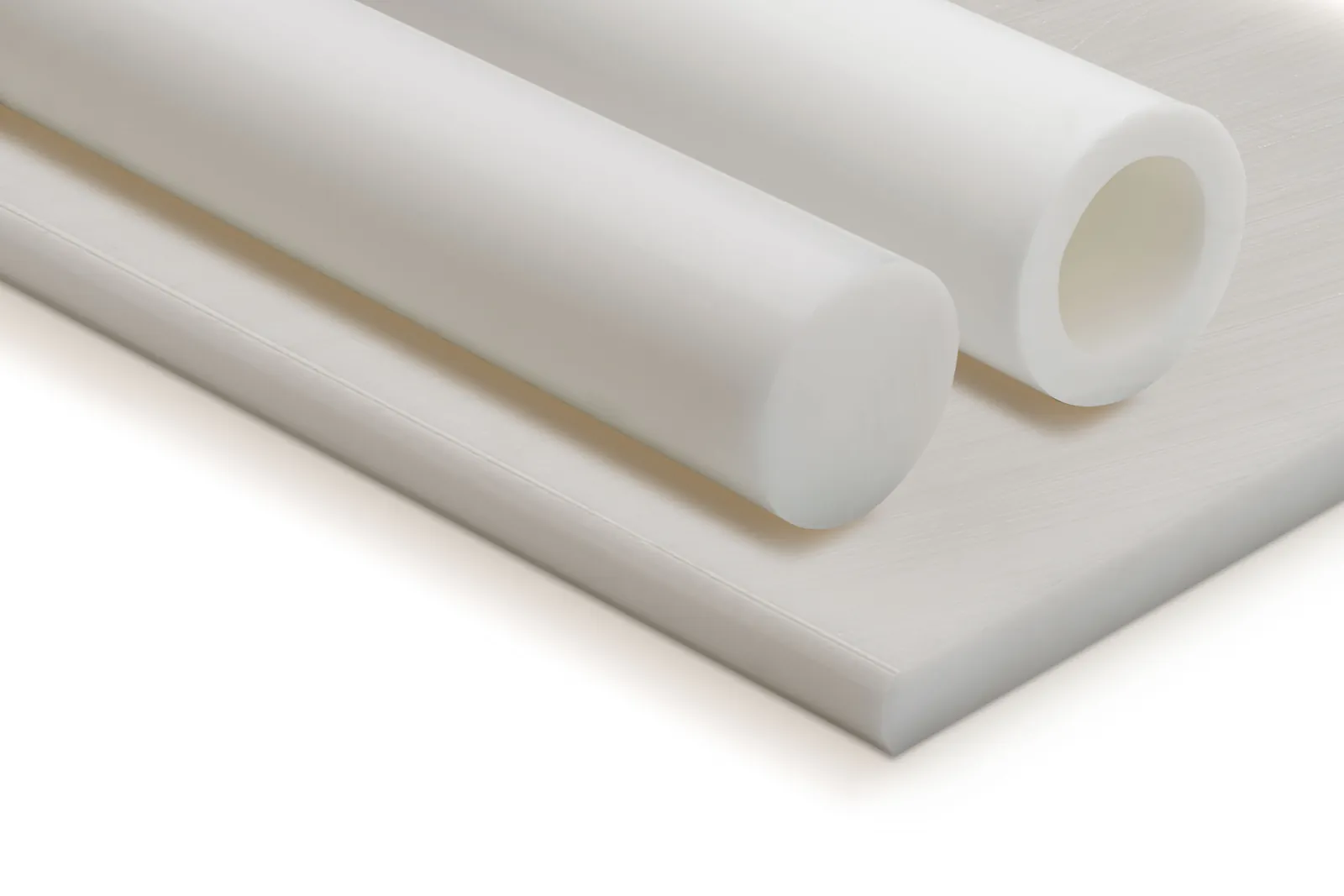
POM-C
POM-C (Polyoxymethylene Copolymer): Properties and Applications
POM-C, also known as polyoxymethylene copolymer, is a versatile engineering plastic distinguished by an excellent combination of mechanical and chemical properties. It belongs to the polyacetal family and is frequently used in industry as a high-performance material for precision components.
Properties of POM-C
- High strength and hardness: POM-C is known for its exceptional mechanical strength, high rigidity and hardness. This makes it ideal for the manufacture of components exposed to high loads.
- Low friction and wear resistance: The material has low sliding friction and high abrasion resistance, which makes it particularly suitable for moving components that require a long service life.
- Excellent dimensional stability: POM-C shows only slight changes in shape under different environmental conditions. Even with temperature fluctuations it remains stable and retains its shape, which predestines it for precise mechanical components.
- Good chemical resistance: It is resistant to many solvents, oils and greases, which means it can be used in industrial environments where chemicals are present.
- Wide temperature range: POM-C can be used in a temperature range of approximately -40 °C to +100 °C without losing its properties.
- Low water absorption: Compared with other plastics, POM-C absorbs very little moisture, which preserves its stability and mechanical properties even in damp environments.
Applications of POM-C
Thanks to its versatile properties, POM-C is used in many industries, above all where mechanical precision and durability are required:
- Mechanical engineering: POM-C is frequently used for the manufacture of gears, bearing bushes, guide rails, rollers and other mechanical components. The high abrasion resistance and low friction make it ideal for moving parts.
- Automotive industry: In vehicles, POM-C is used for various components such as door locks, window regulator mechanisms, seals and guide elements.
- Electronics: Because of its good electrical insulating capability and dimensional stability, POM-C is used in electrical and electronic components such as connectors or switches.
- Medical technology: POM-C is also used in medical technology, in particular for components that must be sterilisable and mechanically load-bearing, such as instrument parts or valves.
Differences from POM-H (polyoxymethylene homopolymer)
POM-C is the copolymer version of polyoxymethylene. Compared with POM-H (homopolymer), POM-C offers better chemical resistance and lower stress sensitivity, which makes it more advantageous in some areas of application. However, POM-H is slightly superior in certain mechanical properties (such as rigidity and strength), which can be an advantage in applications that require particularly high load-bearing capacity.
POM-C is an extremely resilient and high-performance plastic characterised by high strength, wear resistance and good chemical resistance. These properties make it a preferred choice in the production of precise mechanical parts and components in many different industries, including mechanical engineering, the automotive industry and medical technology.