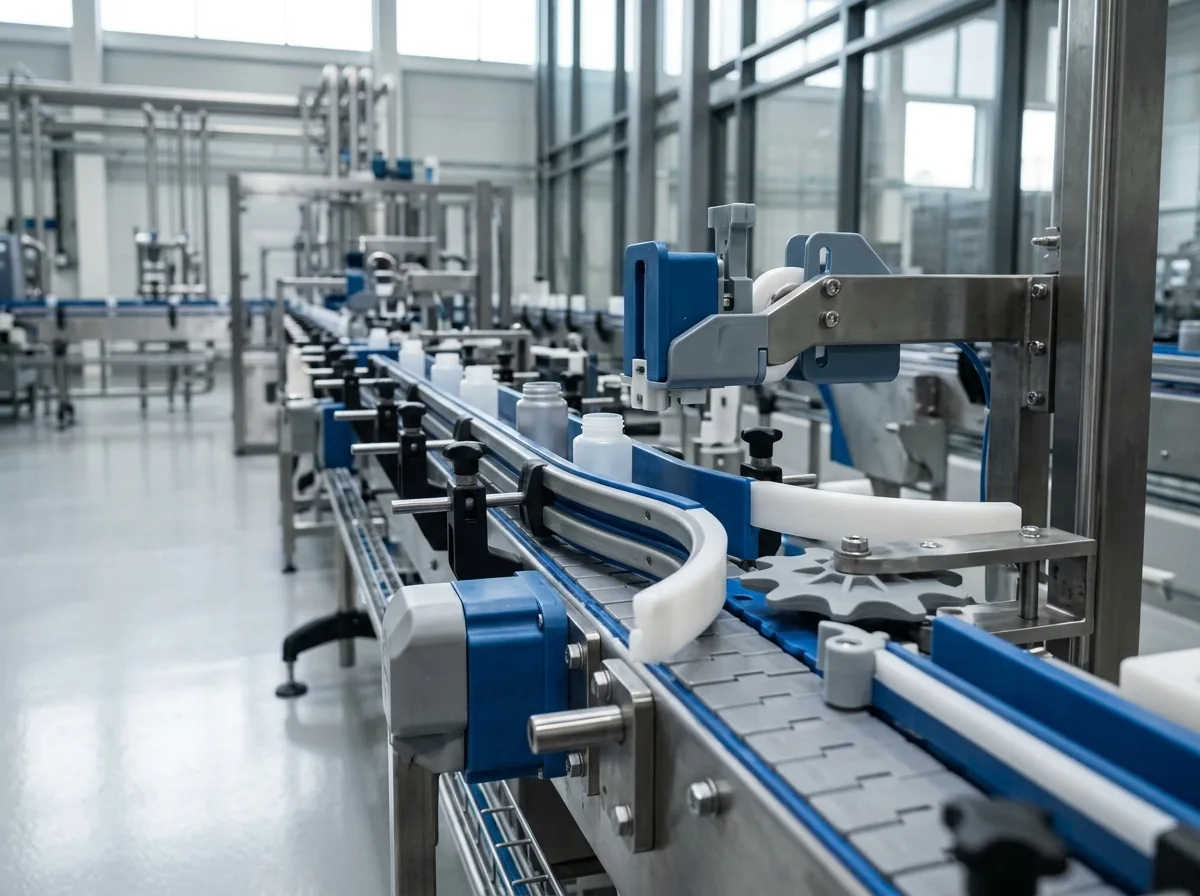
 This image was created with artificial intelligence – marked under Art. 50 of the AI Act, Regulation (EU) 2024/1689. It is a placeholder until the company's photos arrive.
Bio-based plastics: an alternative for industry?
Discover how bioplastics can be used as a sustainable alternative in industry, with advantages and challenges.
In a time of increasing environmental impact and rising demands for sustainability, bio-based plastics are moving into the focus of industry as a promising alternative to conventional plastics. These so-called bioplastics offer the potential to conserve fossil resources and improve the CO2 balance of products. But how realistic is their use in an industrial context, and what challenges exist?
What are bioplastics?
Bioplastics are plastics that are either made from renewable raw materials or are biodegradable – or both. They are by no means a homogeneous group of materials. Rather, the term covers a large number of different materials with specific properties and applications.
Two main categories can be distinguished:
- Bio-based, non-biodegradable plastics, such as bio-PE or bio-PET, which are obtained from plant-based raw materials such as sugar cane, but whose properties are the same as those of conventional plastics.
- Bio-based, biodegradable plastics, such as PLA (polylactide) or PHA (polyhydroxyalkanoates), which both consist of renewable raw materials and are biodegradable.
Not all bioplastics are biodegradable, and not all biodegradable plastics are bio-based – this difference is crucial when selecting suitable materials for industrial applications.
Advantages of sustainable alternatives for industry
The industrial use of bioplastics offers several potential advantages:
- Raw material independence: By using plant-based raw materials, dependence on fossil resources can be reduced.
- Reduced CO2 emissions: Bio-based materials bind CO2 during their growth, which can have a positive effect on the climate balance.
- Consumer-friendly image: The use of sustainable alternatives strengthens companies' positioning in the area of Corporate Social Responsibility (CSR).
Despite these advantages, companies face important questions: Are bioplastics just as capable? Is switching worthwhile economically? How well can they be integrated into existing production processes?
Areas of application and challenges
Bioplastics are already used in various areas: packaging, agricultural films, single-use items or medical technology. There are also initial pilot projects in automotive engineering and the electronics industry. Nevertheless, technical, economic and regulatory hurdles remain.
An overview of key aspects:
| Criterion | Bioplastics | Conventional plastics |
|---|---|---|
| Raw material base | Renewable raw materials | Crude oil |
| CO2 balance | Potentially more climate-friendly | Often high emissions |
| Biodegradability | Possible depending on type | Generally not biodegradable |
| Mechanical properties | Variable, sometimes lower than conventional | Very good resistance |
| Costs | Higher than for commodity plastics | Inexpensive due to established processes |
| Availability | Partly limited | Widely available worldwide |
Many bioplastics have (as yet) lower mechanical properties than established plastics. They are therefore not always suitable for technical applications with high requirements. Costs are also often higher, which limits their competitiveness. In addition, the recycling infrastructure is usually not designed for the new materials.
Future prospects and innovation potential
Despite existing limitations, the development of bio-based plastics is being driven forward intensively. Research and industry are working on new polymer structures, improved additives and cost-efficient manufacturing processes. The use of residual materials, such as agricultural waste, as a raw material source is also gaining in importance.
Political framework conditions such as the EU ban on certain single-use plastic products or CO2 pricing could further accelerate the shift to the sustainable alternative.
Companies that invest in bioplastics at an early stage not only position themselves as pioneers in sustainability, but could also benefit economically if demand for environmentally friendly products continues to rise.
Conclusion: Bioplastics as an industrial opportunity with development potential
Bioplastics represent a promising sustainable alternative to conventional plastics – especially in areas with a short product life cycle or increased ecological pressure. However, further progress in material properties, cost structure and infrastructure is required for widespread use in industry. Technological change is in full swing, and bioplastics could play a supporting role in the long term in the transformation to a sustainable industry.