Terpolymer
Terpolymers are a fascinating class of copolymers characterised by the arrangement of three different types of monomer in a linear macromolecule. Unlike conventional copolymers, in which only two types of monomer are involved, terpolymers offer a broader range of properties and applications due to their complex structure.
Terpolymers can be produced in various ways, including bulk polymerisation and graft polymerisation. In bulk polymerisation, the three types of monomer are brought together in a solution or melt and polymerised under suitable conditions, producing the terpolymer.
Graft polymerisation, by contrast, involves attaching the monomer chains to an already existing polymer strand, resulting in a terpolymer with specific properties.
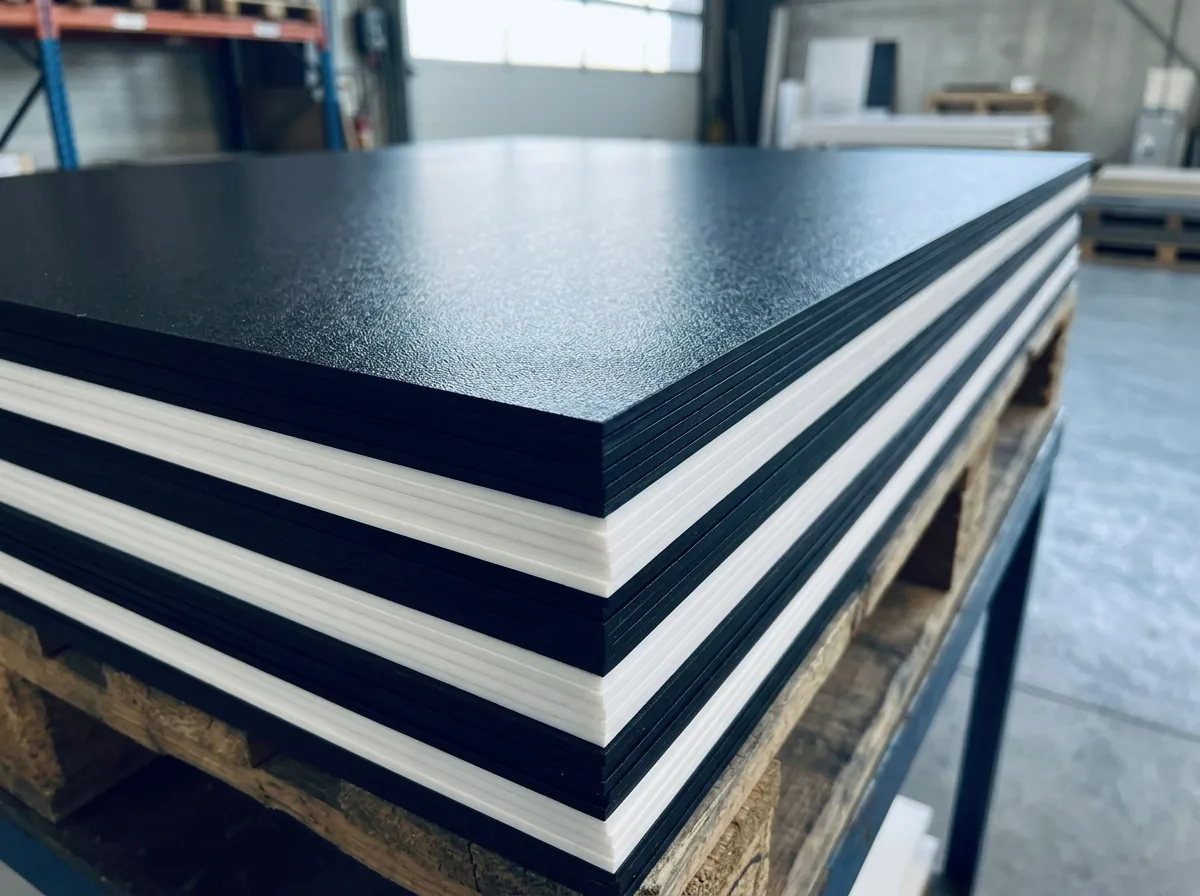
A well-known example of a terpolymer is acrylonitrile/butadiene/styrene (ABS). This compound combines the properties of the individual monomers and yields a material with a unique combination of strength, toughness and formability. ABS is used in a wide variety of applications, from the automotive industry to household appliances, due to its versatile properties and its ability to be easily moulded and machined.