Laminated materials
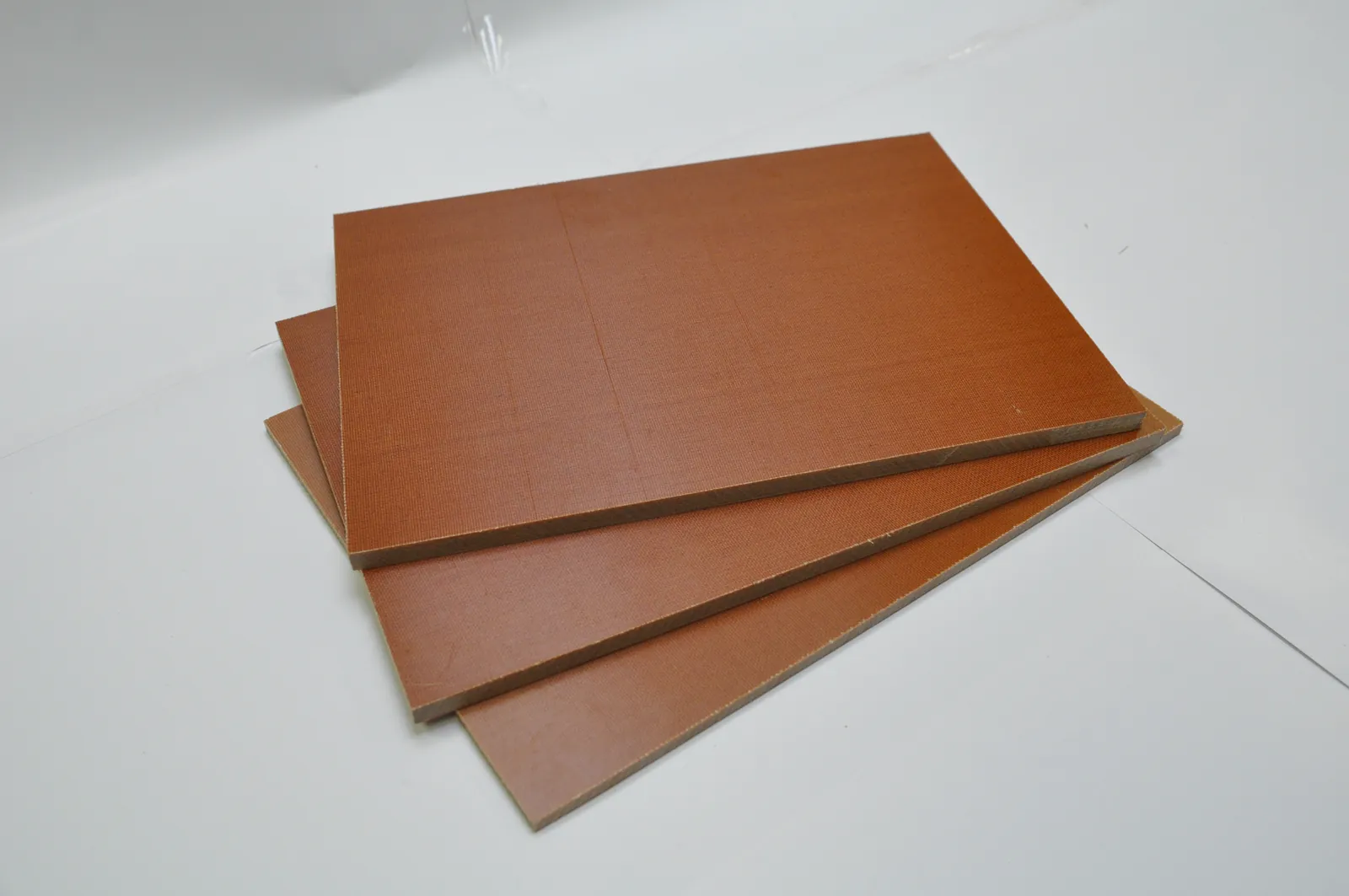
Laminated materials for industry: paper-reinforced laminate, fabric-reinforced laminate and glass-fabric-reinforced laminate as sheets, cut pieces and machined components. Enquire now.
Laminated plastics are thermosetting composite materials in which carrier materials such as paper, cotton fabric or glass fabric are bonded with a heat-curing resin and pressed under pressure into a solid material. The combination of resin system and reinforcement produces materials with mechanical, electrical and thermal properties that can be specifically adjusted.
Martan Plastics supplies laminated plastics as technical semi-finished products and machined components for industrial applications. Depending on load, environment and required insulation properties, we support you in selecting a suitable material grade and in further processing.
Technical laminated plastics as thermosets
Laminated plastics are among the thermosetting plastics. During production, the resin used cross-links permanently. As a result, the materials gain their dimensional stability and cannot be melted again after curing.
The entire material structure is decisive for the subsequent properties. Binders used include, for example, phenolic, epoxy, melamine or polyester resins. These are combined with different carrier materials. The IEC or DIN EN 60893 series of standards describes technical laminated plastic sheets for electrotechnical applications and distinguishes different material groups according to resin and reinforcement.
Further information on the superordinate material group can be found under our thermosetting plastics.
Which laminated plastics are there?
The properties of a laminated plastic are determined essentially by the carrier material used and the resin system. The following material groups are particularly relevant for industrial applications:
| Laminated plastic | Typical structure | Typical focus areas |
|---|---|---|
| Paper-based laminate | Paper with synthetic resin | electrical insulation, easy machinability, technical components |
| Fabric-based laminate | Cotton fabric with synthetic resin | mechanical stress, wear parts, structural components |
| Glass fabric laminate | Glass fabric with synthetic resin, often epoxy resin | high mechanical strength, electrical insulation, dimensionally stable components |
| Glass mat laminate | Glass mats with thermosetting resin | insulation, mechanical stability and technical applications |
Which variant is suitable therefore cannot be decided on the basis of the designation "laminated plastic" alone. An electrically insulating component, for example, places different demands on the material than a mechanically highly stressed structural component.
Properties of laminated plastics
Technical laminated plastics combine the properties of a thermosetting resin system with the properties of the embedded carrier material. Depending on the material grade, different focus areas can therefore be set.
Important properties include:
- high mechanical strength
- good shape and dimensional stability
- electrical insulation properties
- good machinability
- comparatively low weight
- high compressive and flexural strength with suitable grades
- temperature resistance depending on resin system and structure
- varying resistance to moisture and chemical media
The specific technical values differ considerably between the individual laminated plastic types. When selecting a material, the requirements of the application and the technical data of the intended grade should therefore be considered together. DIN EN 60893 also expressly points out that the selection should be made on the basis of the actual requirements of the respective application.
Which laminated plastic is suitable for your application?
For material selection, it must first be clarified which properties are decisive in subsequent operation.
| Requirement | Important selection criteria |
|---|---|
| Electrical insulation | dielectric strength, tracking behaviour, moisture absorption |
| High mechanical load | flexural strength, compressive strength, impact toughness and reinforcement |
| Dimensionally accurate components | dimensional stability, moisture behaviour and temperature |
| Elevated temperatures | resin system, thermal class and continuous operating conditions |
| Wear stress | surface load, friction and material structure |
| Precisely machined components | material thickness, type of reinforcement, machining direction and tolerances |
Paper-based laminate can be of interest, for example, when electrical properties and an economical technical solution are the main priorities. Fabric-based laminate offers advantages for mechanically more heavily stressed components thanks to the textile reinforcement. Where there are high requirements for mechanical stability and electrical insulation, glass fabric-reinforced laminated plastics are often considered.
Martan Plastics takes into account not only the material designation but also the specific load on the subsequent component when selecting the material.
Laminated plastics according to DIN EN 60893
For technical laminated plastics, the DIN EN 60893 or IEC 60893 series of standards is particularly relevant. It describes industrial sheets made of laminated plastics based on heat-curing resins for electrotechnical purposes. In addition to general requirements, it covers different resin systems and material types.
The material groups covered by the standard include laminated plastics based on:
- phenolic resins
- epoxy resins
- melamine resins
- polyester resins
- silicone resins
- polyimide resins
For epoxy resin laminated plastics, for example, DIN EN 60893-3-2 contains requirements for different types of reinforcement and material types. However, the standard does not replace testing of the specific operating conditions of a component.
If a defined standard grade is required for your application, this should already be specified in the enquiry together with the required properties.
Laminated plastic sheets, cut pieces and finished parts
Laminated plastics are often used in sheet form and then brought to the required dimensions or component geometries.
Martan Plastics supports you both in the provision of suitable laminated plastic semi-finished products and in the manufacture of individual components. As a result, material selection, cutting to size and machining can be coordinated with one another.
Depending on the project, the following are possible, for example:
- sheets and panels
- cut pieces to size
- milled components
- drilled and contoured parts
- individual parts and spare parts
- prototypes
- small and series components to drawing
Information on further semi-finished products can be found under plastic semi-finished products.
Machining laminated plastics
For individual components, cured laminated plastics are predominantly machined by cutting or by suitable separation processes. Depending on material structure, reinforcement and geometry, milling, drilling, turning or cutting are possible, for example.
Particularly with fabric- and glass fibre-reinforced laminated plastics, machining processes and tools must be matched to the material structure. The aim is clean contours, defined tolerances and the least possible impairment of the layer or reinforcement structure.
Martan Plastics manufactures technical plastic parts to drawing and can combine machining with the selection of the suitable semi-finished product. Further information can be found under plastic machining and CNC milling.
Areas of application for laminated plastics
Electrical industry and electrotechnology
Electrical insulation is one of the classic fields of application for technical laminated plastics. Suitable material grades are used, for example, for insulating structural elements, supports, covers, spacers or other components of electrical systems.
The IEC 60893 series of standards expressly relates to industrial laminated plastic sheets for electrotechnical purposes.
Further information can be found under our plastics for the electrical industry.
Mechanical and plant engineering
In mechanical engineering, the mechanical properties, dimensional accuracy and low weight of certain laminated plastic grades are of particular interest. Depending on the material, structural intermediate layers, guides, supports, spacer parts or mechanically stressed components can be manufactured from it, among other things.
More about our solutions for this industry can be found under mechanical and plant engineering.
Equipment and apparatus engineering
Laminated plastics are also suitable for constructions in which electrical and mechanical requirements must be met simultaneously. Through different combinations of resin and reinforcement, the material selection can be specifically adapted to the respective construction.
Laminated plastics instead of thermoplastics?
Whether a laminated plastic or a thermoplastic is the better solution depends on the respective application. Laminated plastics offer advantages above all when a combination of dimensional stability, mechanical load capacity and electrical insulation is required.
Thermoplastics, by contrast, offer other design possibilities and, depending on the material, can have advantages with regard to formability, weldability or special sliding and wear properties, for example.
A technically sensible selection should therefore always start from the specific operating conditions.
Enquire about laminated plastics and select material
Do you need laminated plastics as a sheet, cut piece or fully machined component?
Please send us your drawing or the required dimensions as well as information on quantity, temperature, mechanical load, electrical requirements and ambient conditions. If a material or standard designation is already specified, you can state this directly as well.
On this basis, we will check a suitable laminated plastic grade as well as the technically and economically sensible implementation.
Enquire about laminated plastics and components now
Frequently asked questions about laminated plastics
What are laminated plastics?
Laminated plastics are thermosetting composite materials. Carrier materials such as paper, cotton or glass fabric are bonded with a heat-curing resin and processed under pressure into solid sheets or semi-finished products.
What is the difference between paper-based laminate and fabric-based laminate?
The essential difference lies in the carrier material. In paper-based laminate, paper forms the reinforcement, while fabric-based laminate is based on a textile fabric. This also means that the mechanical and electrical properties of the materials differ.
Is glass fabric laminate a laminated plastic?
Yes. In glass fabric laminate, glass fabric forms the reinforcement of the thermosetting composite material. Epoxy resin-based laminated plastics with different reinforcements are covered, for example, in DIN EN 60893-3-2.
Can laminated plastics be milled?
Many laminated plastics can be machined by cutting. The tool and the machining parameters must be adapted to the resin system, reinforcement and component geometry.
Which standard applies to laminated plastics?
For industrial laminated plastic sheets for electrotechnical purposes, the DIN EN or IEC 60893 series of standards is particularly relevant. It covers definitions, test methods and requirements for different material groups.